































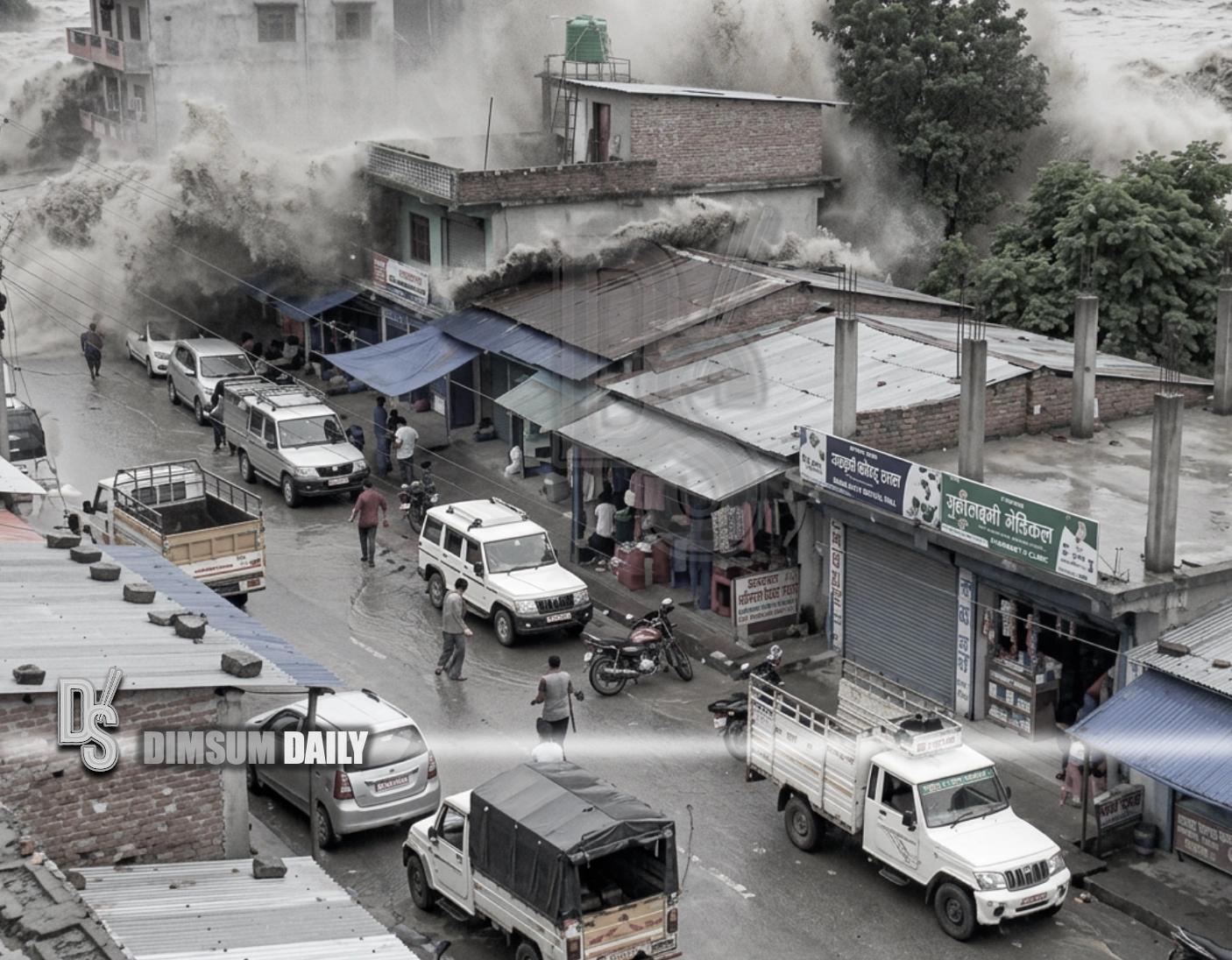
28th August 2026 – (Kathmandu) Catastrophic flash flooding in Nepal has left a devastating humanitarian crisis in its wake, with the death toll now approaching four hundred and almost one thousand four hundred people, most of them tourists, still missing. The disaster was triggered by a glacier collapse in the Himalayas, sending torrents of water, ice and debris surging through communities along the Nepal–China border. Authorities in both countries have issued urgent warnings as two newly formed lakes, one on each side of the border, continue to swell, heightening fears that a further breach could unleash another round of destruction. Nepal’s disaster authority has advised all residents, emergency workers and travellers to exercise extreme caution and avoid river banks and other high-risk areas, as the precarious dams of mud and rock could collapse without warning.
Rescue operations are ongoing, although efforts are hindered by damaged infrastructure and the remoteness of the region. More than four hundred and sixty people have been pulled to safety, while families overseas and at home anxiously await news of missing relatives. There are mounting fears for the welfare of at least thirty-nine Australians still unaccounted for, with other foreign nationals among the missing, including British and American citizens. In the UK, communities such as those in Berkshire and Kent are desperately seeking news of loved ones who have not been reached. Among the Nepali diaspora worldwide, the trauma is keenly felt as communication lines remain cut and entire villages have been swept away.
The humanitarian response is ramping up as the International Federation of Red Cross and Red Crescent Societies has launched an emergency appeal for thirty-one million US dollars to aid immediate and longer-term recovery, following an initial release of one million Swiss francs for lifesaving support. Nations including Britain, Australia, China, India, the United States and the European Union have pledged assistance in the form of funds, emergency teams and relief supplies, recognising the immense needs of tens of thousands left without shelter or livelihoods. In Australia, Foreign Minister Penny Wong confirmed an assistance package and rapid deployment of specialists to support local consular staff, as Australians with family ties to the region try to reach relatives in the disaster zone.
The region remains under threat as rainfall forecasts suggest further increases in lake levels, raising the likelihood of secondary flooding. Experts have warned that such catastrophic events may become increasingly common as the climate crisis destabilises mountain environments, resulting in glacial collapses and unpredictable water surges.