































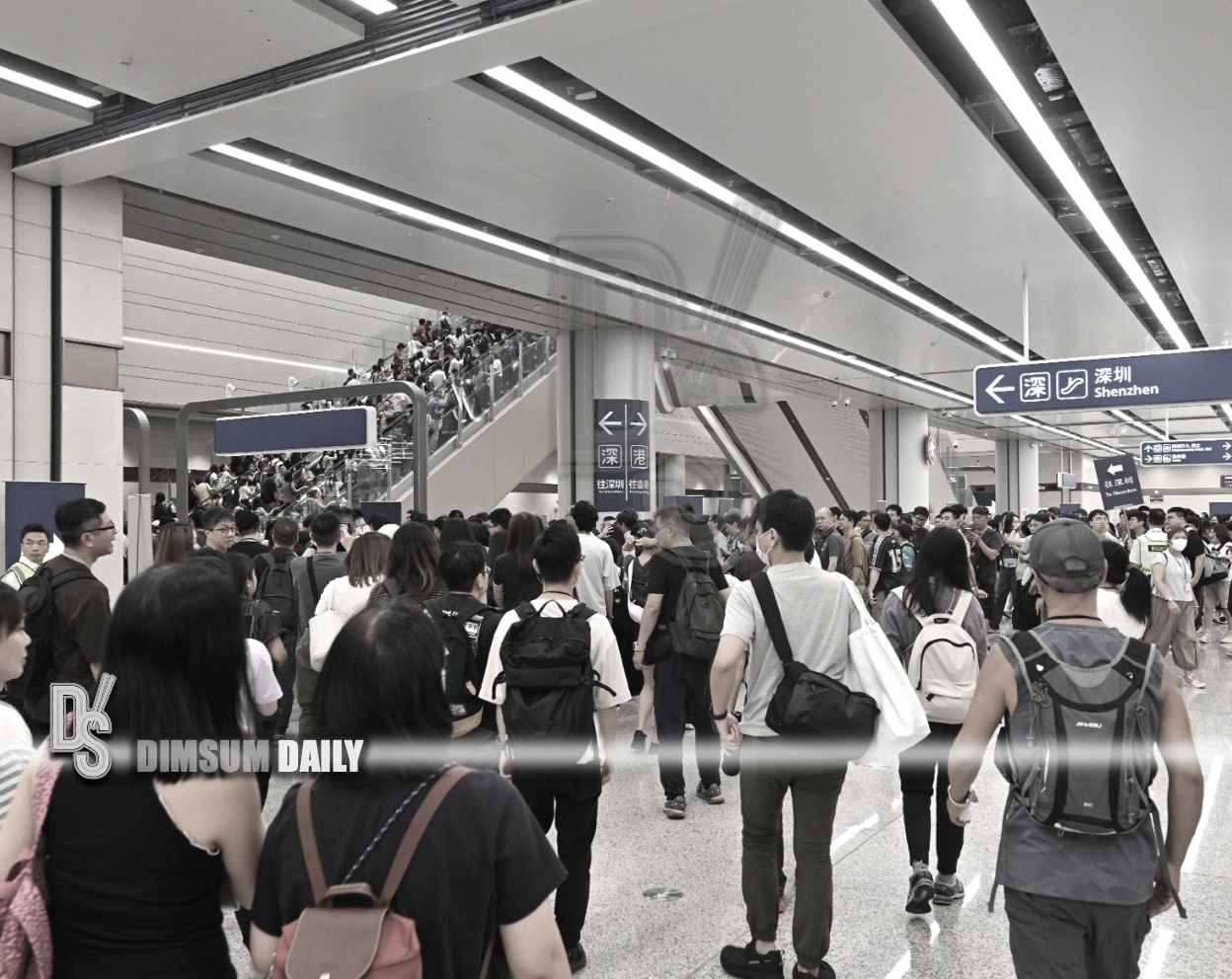
29th August 2026 – (Hong Kong) The Secretary for Security, Chris Tang Ping-keung, together with the Commissioner for Transport, Winnie Tse, addressed the media following a major stress test of the new Huanggang Port. This fourth and largest cross-boundary drill mobilised more than twenty thousand civil servants from over seventy government departments and agencies, assessing both passenger and vehicular peak flow management prior to the port’s official opening.
During the exercise, the innovative “joint one-stop” lane system was trialled for the first time, enabling vehicles to complete the entire clearance sequence in a single pass via a new connecting road. Batches of private cars and buses underwent risk assessment at designated customs kiosks before proceeding through five-party joint inspections overseen by Hong Kong and Shenzhen authorities. Technological enhancements, including integrated data capture devices, facilitated instant collection of travel documents, body temperature, facial and fingerprint data. Passengers also experienced boarding and alighting processes for the automated and manual immigration counters, while random vehicles were directed to deeper customs inspections. Altogether, over six hundred vehicles and more than six hundred public transport departures were coordinated during the cyclical trial.
To replicate real-world crowd scenarios, concentrated surges of participants were released periodically, imposing deliberate pressure on the port’s public transport interchange facilities and clearance systems. Emergency preparedness was tested with the Fire Services Department staging a drill simulating an electric vehicle fire, deploying high-pressure water jets and specialised equipment to control the blaze, with paramedics on site for casualty care.
Despite the successful operational sequence, significant technical issues were noted regarding public Wi-Fi speeds. Connectivity was recorded as low as 330Kbps, up to 3.1Mbps in high-density areas, a marked shortfall from the intended public Wi-Fi standard of ten to thirty Mbps. Mr Tang described this as unsatisfactory, with ongoing work to further optimise the technological and logistical elements of the process.
Responding to questions, Mr Tang underscored that, from now on, Hong Kong residents crossing at Huanggang Port’s e-Channels may use either a Hong Kong identity card or their Home Visit Permit, regardless of whether they are travelling to or from Shenzhen. The use of both documents, complemented by facial recognition, aims to streamline travel for Hong Kongers. Passengers must, however, continue to carry both forms of identification, as on-site checks may still be required. Authorities from both Hong Kong and Shenzhen will continue bilateral reviews to identify any procedural deficiencies and enhance cross-border co-ordination.
Francis Fong Po-kiu, honorary president of the Hong Kong Information Technology Federation, explained that the purposefully extreme network test—with thousands of users connecting simultaneously—well exceeded the real-world capacity of individual Wi-Fi connection points, which typically support only several hundred users. He advised that additional access points will be installed wherever feasible, which should accommodate normal passenger demand.