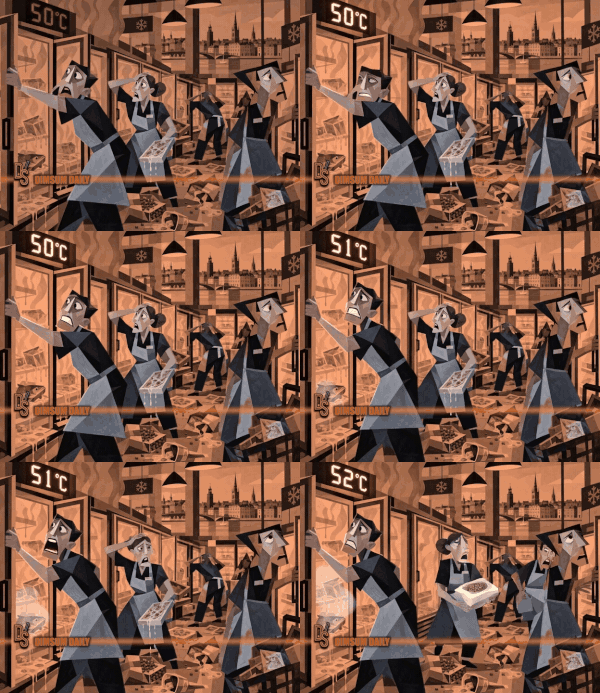


























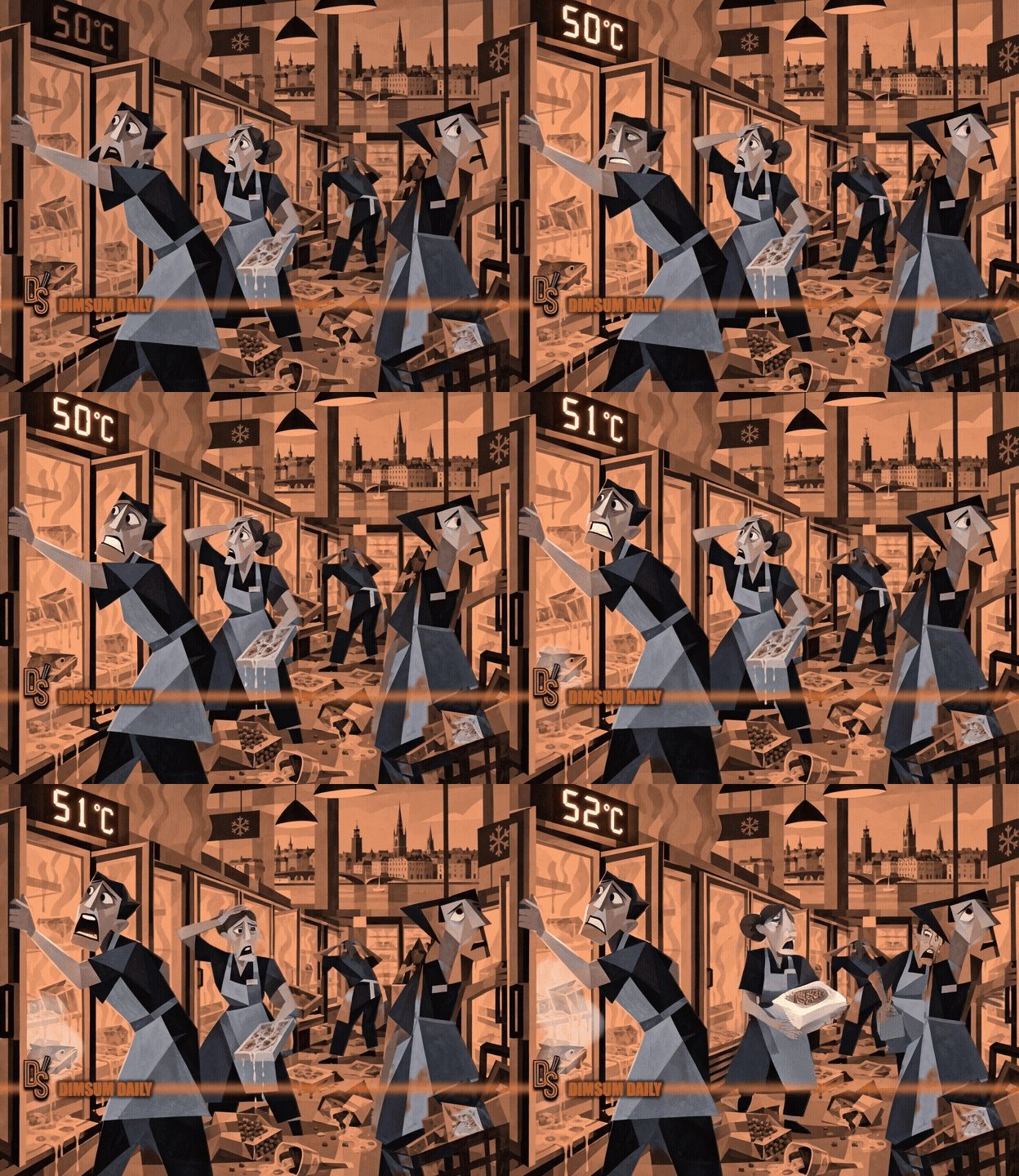
2nd November 2026 – (Stockholm) Overnight, freezers in Swedish, Belgian, Irish, Dutch, Estonian, Luxembourg and Finnish supermarkets were switched into defrost or heating mode and pushed to as much as 50°C. A Delhaize branch in Hoeilaart lost about €100,000 of stock. A butcher in Hove put his loss at around €15,000. Musgrave pulled chilled and frozen goods from 13 SuperValu stores in Ireland. Carrefour said 15 of its 700 Belgian stores were hit. In the Netherlands, at least 17 companies reported attacks on their cooling systems. Nobody has claimed responsibility and nobody has asked for money.
Criminals who break into a company usually want to be paid. These intruders destroyed goods and then said nothing. Security specialists have noted that this looks like sabotage, not extortion. Sabotage needs a motive, and a motive points to a person.
So who is behind it? The evidence we have points to people, not autonomous machines. France’s cyber agency ANSSI said the October attacks on French supermarkets used basic failures such as weak passwords and missing defences. In Sweden, the stores hit were mainly ones running outside central networks. Stephan Moelans of Sabcobel, which runs refrigeration for Delhaize, said some equipment cannot be fixed with a software update and needs physical changes. None of this needs a swarm of AI agents. A patient human with a list of exposed devices and a default password could do it.
Then there is the six-month question. In September, Anthropic’s Dario Amodei warned that within six to 12 months a more capable but similarly misaligned swarm might take over the internet with a persistent botnet. That was a conditional warning about what could happen, not a forecast that it will. Black October does contain hints of machine-driven intrusion. Warp’s chief executive said the attack on his platform looked like an “agent swarm”, though that has not been independently verified. Railway said its intruders wanted AI keys and had large computing resources behind them. However, the incidents with confirmed explanations look much older-fashioned. The FBI has blamed the Binance theft on TraderTraitor, the North Korean-linked group behind the Bybit theft in 2025. LiteLLM traced its breach to an administrative credential that had been exposed earlier. The honest answer is that humans are still holding the controls, and AI is making them faster.
This is also where attribution gets harder. Major American banks are now blocking third-party AI agents because, as one executive told Axios, they cannot reliably tell whether an agent is acting for its user or has gone rogue. If a bank cannot tell a person from a bot inside a single account, investigators will struggle to tell a state operation from an automated one across 350 French shops and dozens of Belgian ones. When nobody knows who is responsible, there is room for fear and for convenient blame.
Why would anyone attack a supermarket? Because it is cheap, visible and personal. A data breach is abstract. An empty frozen aisle is something every shopper sees. There is a history here. Danfoss has said that in 2022 hackers targeted or broke into supermarkets in Russia and Israel using old versions of its controllers. US prosecutors have charged a Ukrainian woman over a 2024 attack that ruined more than 2,000 pounds of meat at a meatpacking plant. Food has been a target in wartime before. A series of attacks across countries, with nothing demanded, looks like someone testing how far they can go, or showing what they can do, before they have said why.
The fake alerts in Ukraine and Russia show how much higher the stakes can get. Late on Sunday, Ukrainians received false warnings of radiation, chemical threats and an incoming Oreshnik missile. Russia said hackers used its emergency ministry’s app to send a false alert across 33 of its 89 regions at 2.45am Moscow time. It happened the same night a limited ceasefire in Kherson ended, and weeks before three-way talks involving Washington are expected. It is not clear whether the two attacks were linked. Ukraine’s air force said the app is separate from military command. That separation matters. In a war, a believable false alarm at the wrong hour could be read as the start of an escalation, and someone could act on it before anyone checks.
Hong Kong is already living with a quieter version of the same problem. The privacy commissioner said victims of follow-on scams after the Cathay Pacific, Hong Kong Airlines, Malaysia Airlines, YOHO and Broadway data breaches have lost between HK$10,000 and more than HK$1.5 million each. Fraudsters used real flight details and real purchase histories to make their messages convincing. The data was stolen first and the losses came afterwards.
Will there be more attacks? Almost certainly. Old controllers cannot all be replaced overnight. PHP patches take time to reach every server. And whoever cooked Europe’s freezers has not yet told anyone what they were after, which suggests they are not finished.
The Newsweek map now shows 33 countries advising households to keep supplies, although much of that advice is decades old and has simply been brought back to the front page. The less obvious lesson from Kyiv is that a household also needs some way to get trusted information that does not depend on a single app. Ukraine told its citizens to rely on physical sirens while the app was restored. Hong Kong’s privacy commissioner told people to check through official channels or go to a physical store. Both pieces of advice amount to the same thing. When screens can lie, keep a second way of checking, offline if possible, and take your time before you trust an alert.