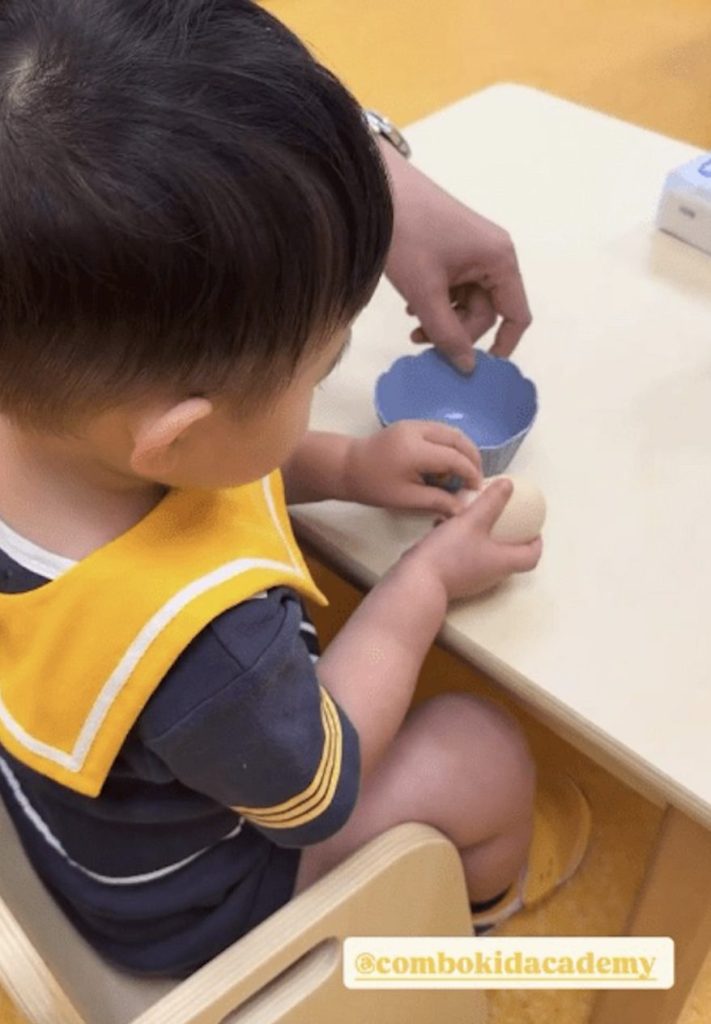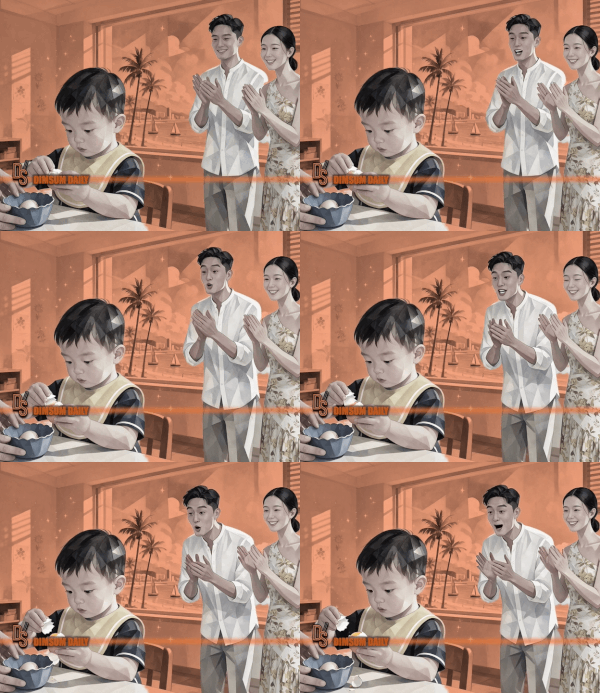



























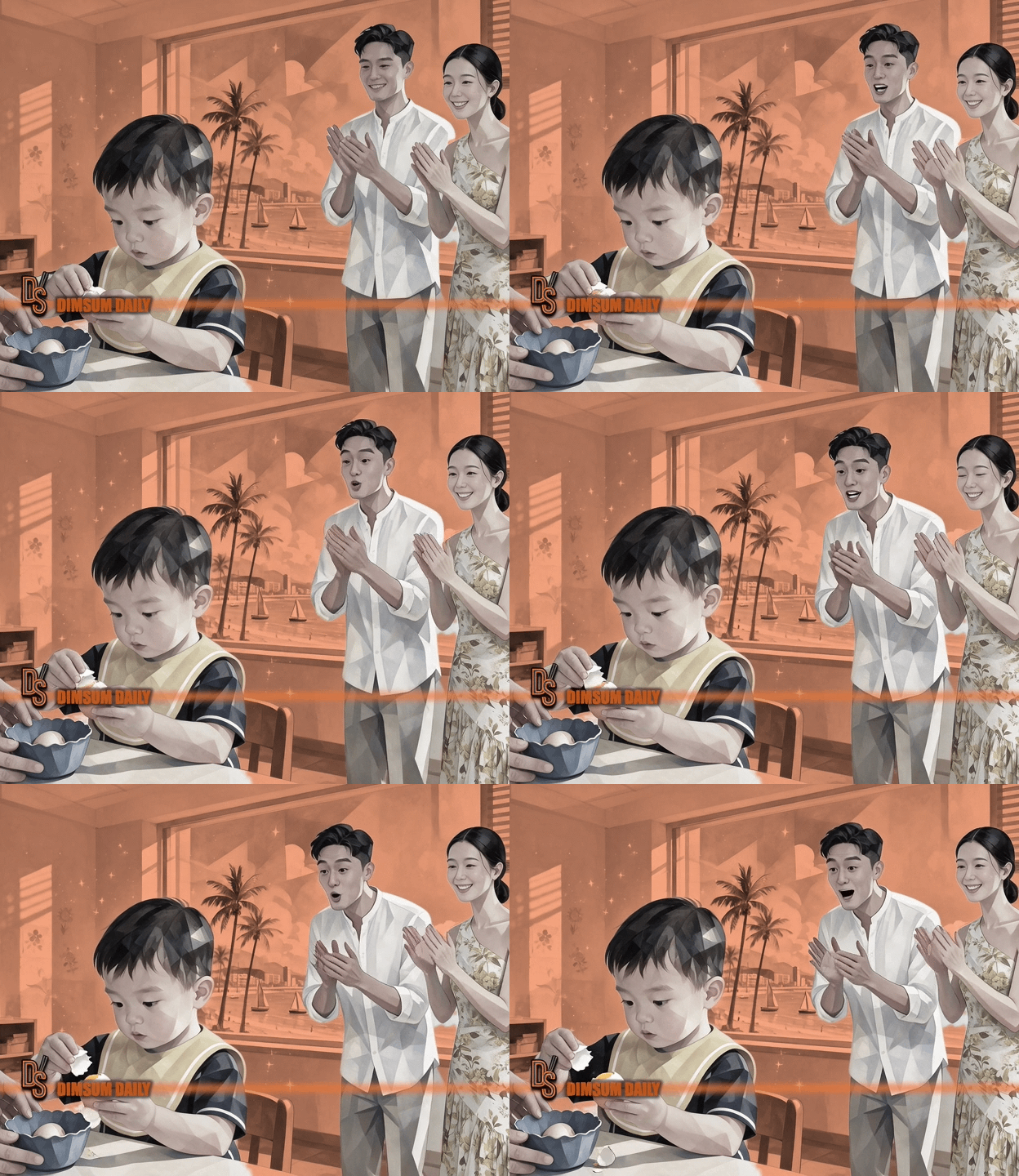
2nd November 2026 – (Hong Kong) At first you notice a small boy; on a second viewing you become aware of the adults around him. A toddler with a bright yellow schoolbag walks into a classroom without tears. At snack time he carefully peels a boiled egg, drops each bit of shell into a small blue bowl, and then eats the egg. That is the entire clip. HK01 ran it with a headline claiming the 18‑month‑old son of former Miss Hong Kong Louisa Mak had inherited “top‑scholar genes” and was showing self‑care skills beyond his age.
The report also said the boy had once “studied” an aircraft safety card with great seriousness, and that a copy of One Hundred Thousand Whys had been spotted beside him. Then it listed his family credentials. His mother got ten A’s and went to Cambridge. His father is a pilot. His grandmother is an occupational therapist and parenting expert. The child has been handed a pedigree before he has a vocabulary.
The boy did nothing wrong. He peeled an egg, which children do and which almost every adult in the world will do over breakfast tomorrow with nobody watching. Toddlers spend this stage of life learning what their fingers can do, and plenty of them handle fiddly food at about this age. No employer in 2048 will ask about his egg-peeling record.
Mak wrote that being a mother made her reluctant to let go, but that seeing her son adapt was comforting, and that if you let go a little, children can do more than you imagine. It is a kind thought, and many new parents agreed with it. However, letting go is an odd thing to film and post for thousands of followers. A boy learning to be independent has quietly become content. The psychologist Shefali Tsabary, author of The Conscious Parent, suggests one question for the moment a parent reaches for the phone. “Whose need is being met right now? Mine, or my child’s?” A boiled egg answers it more honestly than most parents would like.
Hong Kong has a busy market of playgroups and pre-nursery classes that take children well before their second birthday, some from about 15 months. They sell care, but mainly they sell reassurance. In a city that tells parents a child must “win at the starting line”, paying for a place at 15 or 18 months tells everyone that your family can afford it and that your child will not fall behind. The photographs from class may be worth more to the parents than the lessons are to the child. A toddler who peels an egg on camera is a fine advert for the school and an even better one for the family.
Look at how these children actually spend their weeks. Hong Kong employs more than 368,000 foreign domestic helpers, and in many middle-class and wealthy homes the helper does the feeding, bathing, school runs and bedtimes. We are not describing any particular family, and plenty of parents are closely involved. However, the general pattern is familiar. A child spends his days with a helper, his mornings in a fee-paying class, and his evenings with parents who often see his milestones first as clips on their phones. When that child’s most widely shared moment is sitting alone at a table with a teacher nearby, the city should ask who is actually raising him.
The research on early childhood is fairly consistent here. Studies of academic pressure in pre-school find that early gains tend to fade, and children pushed hard early can later fall behind their peers. At this age, a child’s real tasks are feeling secure, learning to manage emotions and playing freely. Specialists such as the Child Mind Institute warn that when every action is treated as a performance, children learn that love comes from being impressive. That is a heavy thing to teach someone who still needs help putting on his shoes.
There is also an irony these parents would rather not think about. The race they are entering so early is heading for a finish line that keeps moving. A Tes report last week on a survey of more than 4,800 international students found that almost one in four said AI had changed their university plans. One international school head in China described a sharp rise in students’ fear of picking a “useless degree” because AI might replace the jobs they hoped for. The children of Hong Kong’s anxious professionals are being prepared for a contest whose rules will probably change before they get there. The skills that last are judgment, curiosity and patience with hard problems. Those grow from play, boredom and adults who are actually around, not from a head start bought at 15 months.
So the egg is not the story. Any healthy child will peel one eventually, without a headline, a sponsor or a family tree attached. The question is who was watching and why. A boy who walks happily into a classroom deserves to do it without becoming evidence of his family’s quality. Hong Kong’s more ambitious parents could start by putting the phone down at snack time. The boy will manage the egg either way. The harder part is whether the adults can stop treating every small step as a medal for themselves.