


















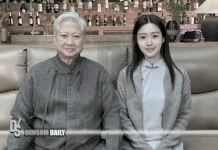













23rd July 2023 – (Hong Kong) In the bustling streets of Hung Hom district, an eccentric elderly woman has become a local legend. 79-year old Leung May-chun, appears to be just another homeless woman sleeping on the streets. But behind her disheveled appearance lies a secret fortune of over HK$100 million.
Leung spends her days scavenging the neighbourhood for discarded junk and trash. She builds walls and barricades from the garbage around her makeshift sleeping area in a shopfront alcove. Her hoarding frequently blocks pedestrians and shopkeepers, leading to sanitation complaints. Yet no one dares evict the woman, for she owns not just the shopfront, but the entire building. She wears torn pants, two old watches, and eats free meals from nearby shops. She has no permanent residence, preferring to sleep on the streets, and her favourite pastime is scavenging. She turns the nearby garbage station into her “treasure trove,” frequently rummaging through piles of trash to collect discarded metals, plastic bottles, and cardboard, which she treats as valuable treasures. She then uses a handcart to transport her finds to the storefront of a real estate agency on Station Lane, where she builds a “paper wall” and uses some of the cardboard as a makeshift bed, sleeping among her collection of trash.
To Leung the value of money is measured by her values, not by the price tag. She is willing to spend nearly a thousand Hong Kong dollars to get her eyebrows tattooed regularly, but she is reluctant to buy new clothes or discard her broken watch. When asked about her sleeping arrangements, she avoids the subject, using evasive tactics to prevent the interviewer from prying into her life. She sometimes says, “I don’t know,” or “I don’t have any money.” But when pressed by a local media reporter, she claimed that she lost a lawsuit and now owes over HK$20 million in legal fees. When asked why she doesn’t sell some of her properties to pay off the debt, she dismissively said, “It’s useless. Those properties are all liabilities. Even if I sell them, it won’t be enough to pay off my debt.”
Leung has amassed an empire of nearly 20 properties across Hong Kong, now worth well over HK$100 million. She owns multiple shops, apartments, and car parks scattered throughout Kowloon, Hong Kong Island, and the New Territories. Her one tenement building in Hung Hom is valued at HK$55 million alone.
Yet despite her vast wealth, Leung lives in squalor and dresses in rags. When reporters interviewed her, she wore tattered pants and two broken watches, and had not bathed in days. “I haven’t showered for a long time,” she freely admitted. She survives on free meals from a nearby vegetarian restaurant. At night, she sleeps curled up on piles of garbage bags and flattened cardboard boxes.
Why does a multi-millionaire heiress choose to live on the streets? Leung carefully guards the secrets to her eccentric life. When asked, she gives cryptic or contradictory answers. At times she claims that lawsuits left her millions in debt. Other times she cites her aching knees and feet as stopping her from climbing the stairs to her properties.
Yet locals reveal that neither excuse seems fully true. An acquaintance says that just a few years ago, Leung lived comfortably in a 2nd floor flat of her own building. Her hoarding habits eventually drove her out onto the streets. According to a tenant, Sister Spring confided her deepest fear – dying alone and undiscovered in an empty flat. Sleeping in the crowded alleyway guarantees her human contact and attention.
Leung was not always so eccentric. She came from an educated middle class family, the eldest of three children. In the 1990s, a dispute over inheritance drove a wedge between Sister Spring and her siblings. When her mother passed away in 1992, she left behind an estate of HK$17 million divided between her three children. But her mother produced a new will leaving everything to her. Her siblings accused her of forgery. She was convicted and briefly jailed in 1994. Over the next decade, Leung and her siblings sued each other repeatedly over control of their mother’s properties. Leung also sued her own tenants on multiple occasions. The protracted legal battles likely took both an emotional and financial toll.
Locals theorise that the lawsuits left her distrustful of people. As her hoarding habits worsened, she retreated fully onto the streets by the late 2000s. There she surrounds herself with junk, keeping everyone else at a distance.
Ironically, Leung’s miserly habits make her a beloved landlord in the community. She keeps rents low and avoids raising them excessively. Her building is now subdivided into tiny 300 sq ft flats renting for only HK$7,000 a month. The shopkeepers and businesses along her street are especially grateful. Many have rented the same shop units from her for over a decade. “She could charge double or triple the rent if she wanted to, but she’s kept rents affordable for us,” says a tenant.
When asked if she had applied for public housing or a home for the elderly, Leung responded indignantly, “Some social workers suggested I apply for public housing, but I have assets that disqualify me. I could enter a home for the elderly, but I’ve seen them, and the monthly rent is too high, costing tens of thousands of dollars. I want to find a place with a monthly rent of less than HK$2,000, with a separate room, high ceilings, and good air quality.”
The neighbourhood feels sympathetic towards Leung’s difficult past. Residents visit her alleyway to chat and bring food. “She has a good heart, but also many demons,” says Mr. Chung, an acquaintance of 30 years. “We keep hoping she will move off the streets someday.”
Money can buy financial security, but not happiness. Hoarding and eccentric habits are often symptoms of underlying mental health issues. Effective counselling or treatment could greatly improve her wellbeing. Now in her late 70s, Leung has likely found her own way of coping with life’s struggles. But perhaps, with some luck and help from kind neighbours, Leung may still find peace and purpose in her twilight years.