

























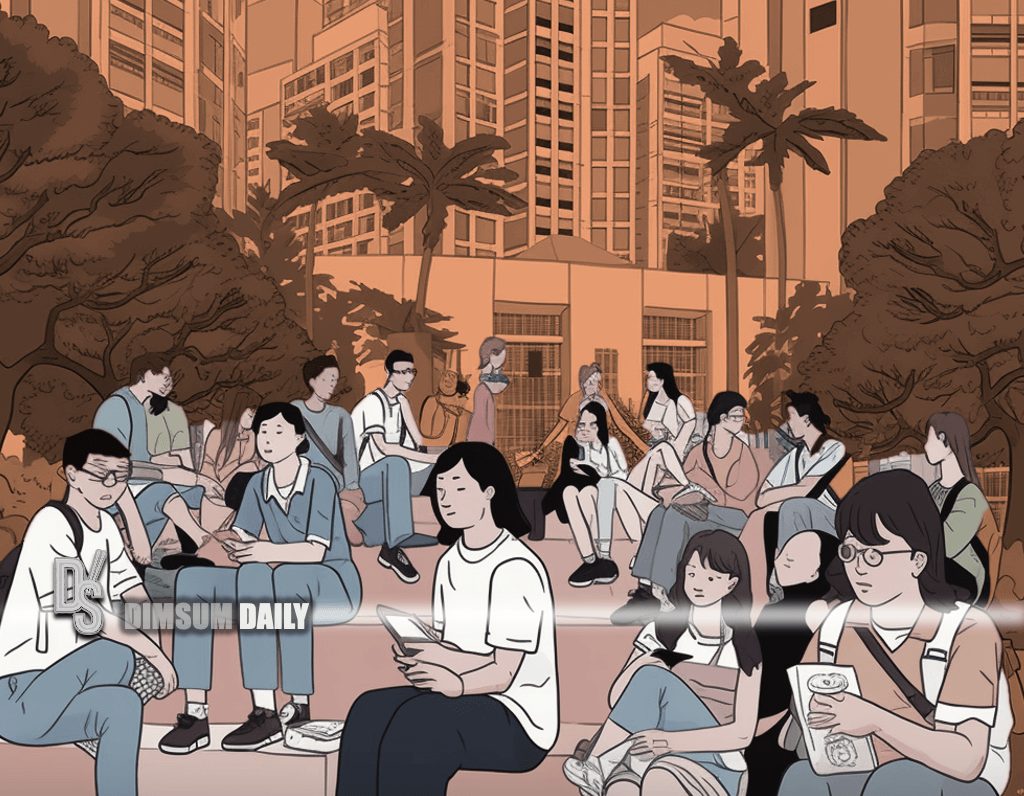
1st June 2025 – (Hong Kong) The Trump administration’s ban on Harvard University admitting international students—described by former Financial Secretary John Tsang as “shooting oneself in the foot”—has precipitated an immediate surge in applications to Hong Kong’s universities. This development underscores the city’s academic appeal but represents only a reactive benefit. Hong Kong’s true strategic imperative lies in transforming itself into a global higher education hub by actively courting elite international universities to establish campuses within its borders. This forward-looking approach would solidify Hong Kong’s position as a dynamic bridge between East and West while insulating it from geopolitical turbulence.
Hong Kong’s universities responded to the Harvard crisis by offering displaced students streamlined admissions, accommodation, and visa support. While commendable, these measures address symptoms rather than root causes. Student loyalty to institutions runs deep—a Harvard applicant rejected by Princeton rarely embraces Columbia—and relocating mid-degree poses significant psychological and logistical challenges that administrative efficiency alone cannot resolve. Though Hong Kong boasts three universities ranked among the world’s top 50, it cannot instantly replicate centuries-old institutional legacies. Dependence on crisis-driven opportunities remains inherently unsustainable.
The deeper vulnerability lies in America’s escalating academic isolationism. The Harvard ban signals a precarious climate for international students across U.S. institutions. With over 331,000 Indian and 300,000 Chinese students contributing $50 billion annually to the U.S. economy, such policies risk accelerating a global “brain drain.” Hong Kong’s current application surge, while significant, remains tethered to U.S. political volatility.
Hong Kong’s endgame should be attracting autonomous campuses of elite global universities—transitioning from contingency plan to premier destination. The University of Nottingham’s Malaysia campus exemplifies this model’s viability. Since opening in 2000, it now hosts 5,000 students, generates reinvestable surpluses, and delivers identical degree standards through its “one university, multiple campuses” philosophy. Similarly, New York University’s Abu Dhabi and Shanghai campuses thrive by embedding students within regional economies while maintaining academic rigour.
Hong Kong offers compelling advantages for such ventures. Its “one country, two systems” framework provides stability amid U.S.-China tensions. The city serves as an unmatched gateway to mainland innovation hubs like Shenzhen and Guangzhou. World-class infrastructure, robust intellectual property protections, and global connectivity create an ideal operational environment. Partnerships could integrate with China’s “Belt and Road” education initiatives, as demonstrated by Xiamen University’s thriving Malaysia campus with over 8,700 students from 50 countries.
Elite institutions face pressures that Hong Kong can resolve. U.S. tuition revenue is jeopardised by visa uncertainties—offshore campuses diversify funding, as seen with Illinois Tech’s Mumbai campus opening in 2026. Proximity to China’s tech ecosystem creates unique research partnerships, exemplified by Purdue University’s semiconductor centres in India. With over 50% of global youth in Asia, branch campuses tap into vital demographics where future growth resides.
To counter perceived risks like geopolitical friction or academic freedom concerns, Hong Kong should deploy tangible incentives. Land grants and tax breaks could subsidise campus development in Northern Metropolis innovation zones. A regulatory “sandbox” allowing autonomy in curriculum and faculty hiring would mirror Dubai’s successful Academic City model. Cross-border research funds could establish joint laboratories with Shenzhen, accessing mainland resources.
Hong Kong’s Education Bureau should establish a task force specifically targeting universities with Asia-facing strategies and STEM strengths, leveraging alumni networks like Tsinghua’s influential base. Hybrid degree pathways enabling students to split studies between home campus and Hong Kong—such as a Berkeley student researching fintech in Hong Kong’s financial labs—would create unique value propositions. Digital integration could establish “phygital campuses” using Hong Kong’s tech infrastructure, similar to Tsinghua’s Global MOOC Alliance. Crucially, diplomatic bridge-building with Beijing would position Hong Kong as the preferred gateway for initiatives like China’s expanding Luban Workshops vocational programmes.
Without bold moves, Hong Kong risks losing ground to regional rivals. Singapore hosts Yale-NUS and INSEAD; Qatar houses Georgetown and Carnegie Mellon. Even Saudi Arabia now lures institutions like the University of New Haven with campuses planned for 13,000 students. Meanwhile, academic decoupling accelerates, as evidenced by Berkeley severing ties with Tsinghua Berkeley Shenzhen Institute under political pressure. As John Tsang observed, the U.S. ban exposes a historic “talent forfeiture” moment. By transforming crisis into opportunity, Hong Kong can emerge not merely as a refuge for displaced students, but as the architect of higher education’s next epoch—where East-West collaboration replaces isolation, and campuses become microcosms of global citizenship.