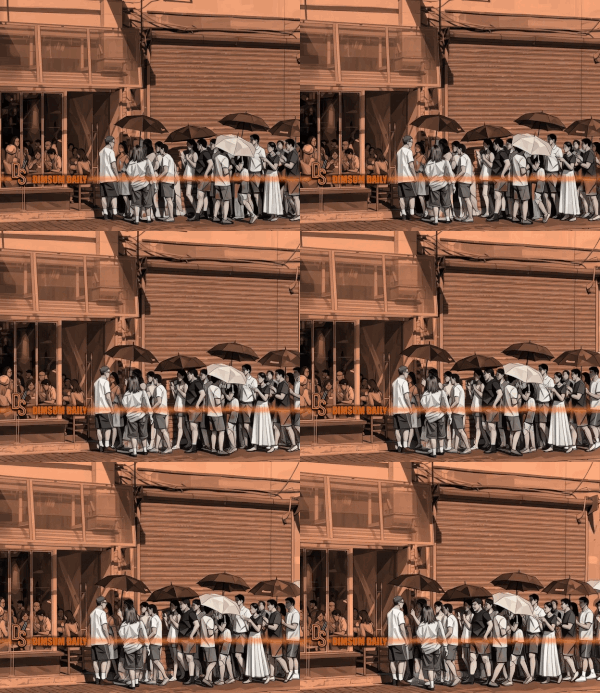


















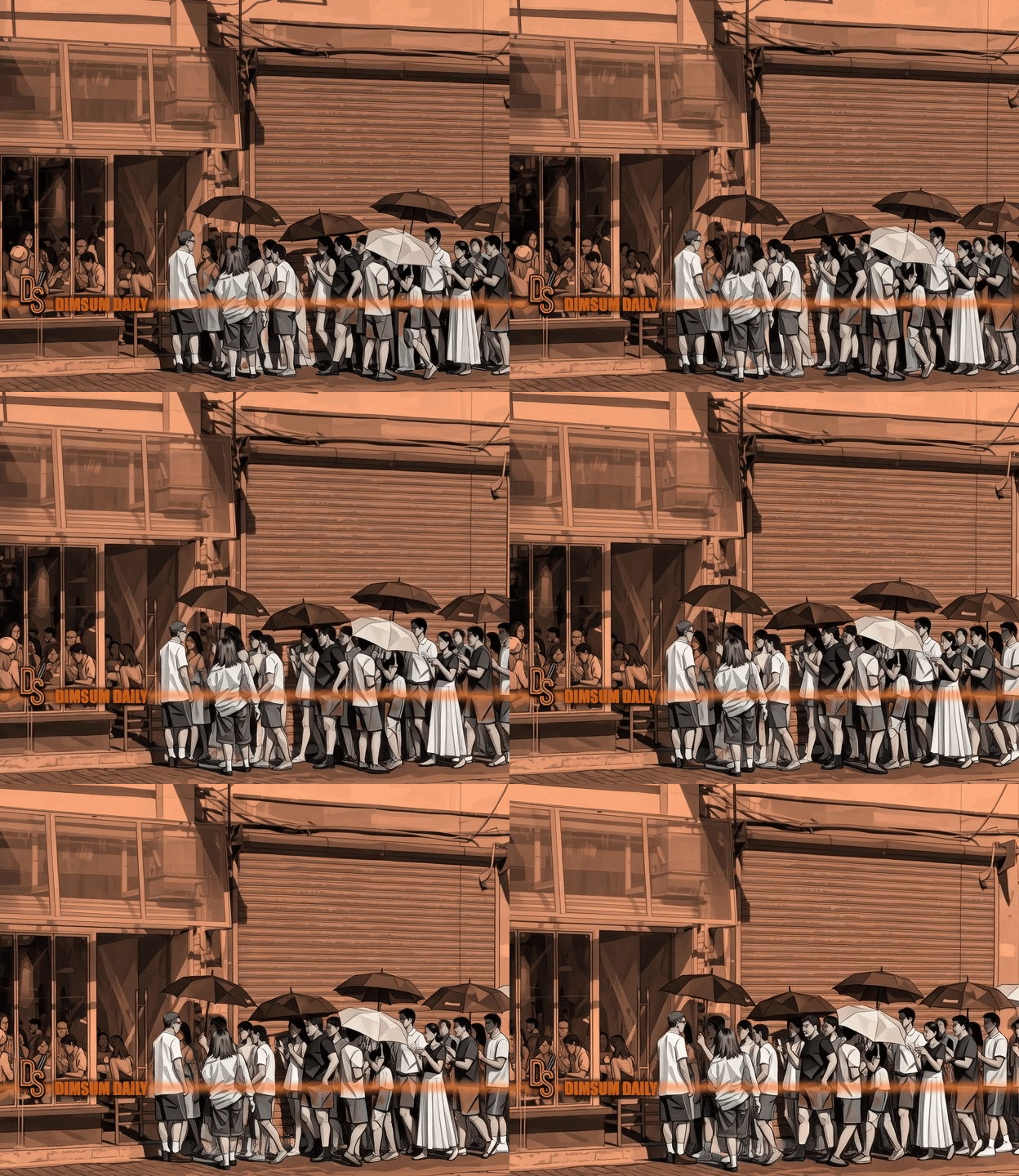
28th October 2026 – (Hong Kong) If you watch a lunchtime queue in Hong Kong for long enough, a pattern shows up. The people at the front check their phones less than the people at the back. Umbrellas go up when the sun clears the buildings opposite. Every few minutes a server opens the door, calls a number or counts heads, and the line moves forward by about one body. Nobody complains. Nobody pushes in. It is orderly and calm, and when you think about it, it is a strange way to look forward to a meal.
A Mainland visitor called Taki saw a line like this outside a restaurant with no signboard. On Xiaohongshu, Taki wrote that dozens of people were holding umbrellas in 30-degree sun just to get a seat. Taki added that a very ordinary milk tea shop in Shenzhen had roomier seating, and said “I really hate Hong Kong’s queuing culture.” The post got 131 likes and 278 comments, which shows how much it touched a nerve. Some commenters said Hong Kong should copy the Mainland habit of taking a number on a mini-programme, wandering off, and coming back when the app says the table is ready.
Eating out is supposed to be a pleasure, and the diner is paying for it. Yet the usual Hong Kong experience asks the customer to pay twice. First comes the wait outside, standing in heat and humidity on a pavement that shoppers, delivery riders and buses also need. Then comes the cramped interior – a shared table, a stool with no back, the elbow of a stranger, and a bill placed on the table before the last bite as a hint to leave. Diners here already complain that restaurants are too small. Queuing does not make up for that. It puts a second discomfort on top of the first.
Many Hong Kong commenters defended the city, and some of their points were fair. The most-liked reply was just “if you don’t eat there, you don’t have to queue”. Others said the real problem is small shop sizes, not queuing culture. They noted that ticket machines cost money that a family-run shop may not want to spend. They also pointed out that chain restaurants in malls already offer online queuing, and you can wait there in air-conditioning. These points come from a city that has lived with high rents and small spaces for a long time. The defensiveness makes sense too. When a visitor criticises a habit, it can sound like a criticism of the people who keep it.
However, the defence mixes up two things – order and method. No one is asking Hong Kong to stop being orderly. The suggestion is only to move the wait off the pavement. A QR code system does exactly that. The customer scans a printed code at the door with a phone camera, with no app to download. They enter a name and phone number, see their place in the line on a live web page, and get an SMS or WhatsApp message when the table is ready. The system does not make the wait any shorter. If 300 people want 30 seats, the numbers stay the same. What changes is where you spend that wait. You can sit somewhere in the shade, buy a drink, or do an errand instead of standing on hot concrete.
The objections from the comments can be answered too. One commenter said a popular Tsim Sha Tsui shop with a ticket machine still had customers blocking the pavement. Another explained that people stay because they are afraid of missing their number. A live tracker deals with exactly that fear. The rule that the whole group must be present before being seated also works better when the group gets a message ten minutes ahead. As for cost, a printed code linked to a basic web service costs far less than a machine, and much less than a lost customer.
So why do so many restaurants avoid it? Here we have to be honest about incentives. A queue on the street is free advertising. It can be seen from across the road. People photograph it, post it, and write about it, and articles like this one keep the cycle going. A list stored on a phone hides that demand. For some restaurants, the hungry crowd on the pavement does not show the system failing. It is the marketing plan. The customer’s time and comfort are spent so the shop looks popular.
A middle path is possible. A restaurant could keep a short physical line of perhaps ten people and put everyone else on a digital list. It could post realistic waiting times. Trade associations or tourism bodies could offer small shops a free, simple template so cost is no longer an excuse. As summers get hotter, making customers stand in the midday sun also becomes a health question, not just a matter of manners.
Hong Kong’s willingness to queue is worth keeping. It is a promise between strangers that nobody will take another person’s place. That promise does not require the strangers to stand in the sun. A city that has spent decades getting good at waiting in line can now get good at waiting comfortably.