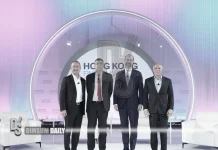



























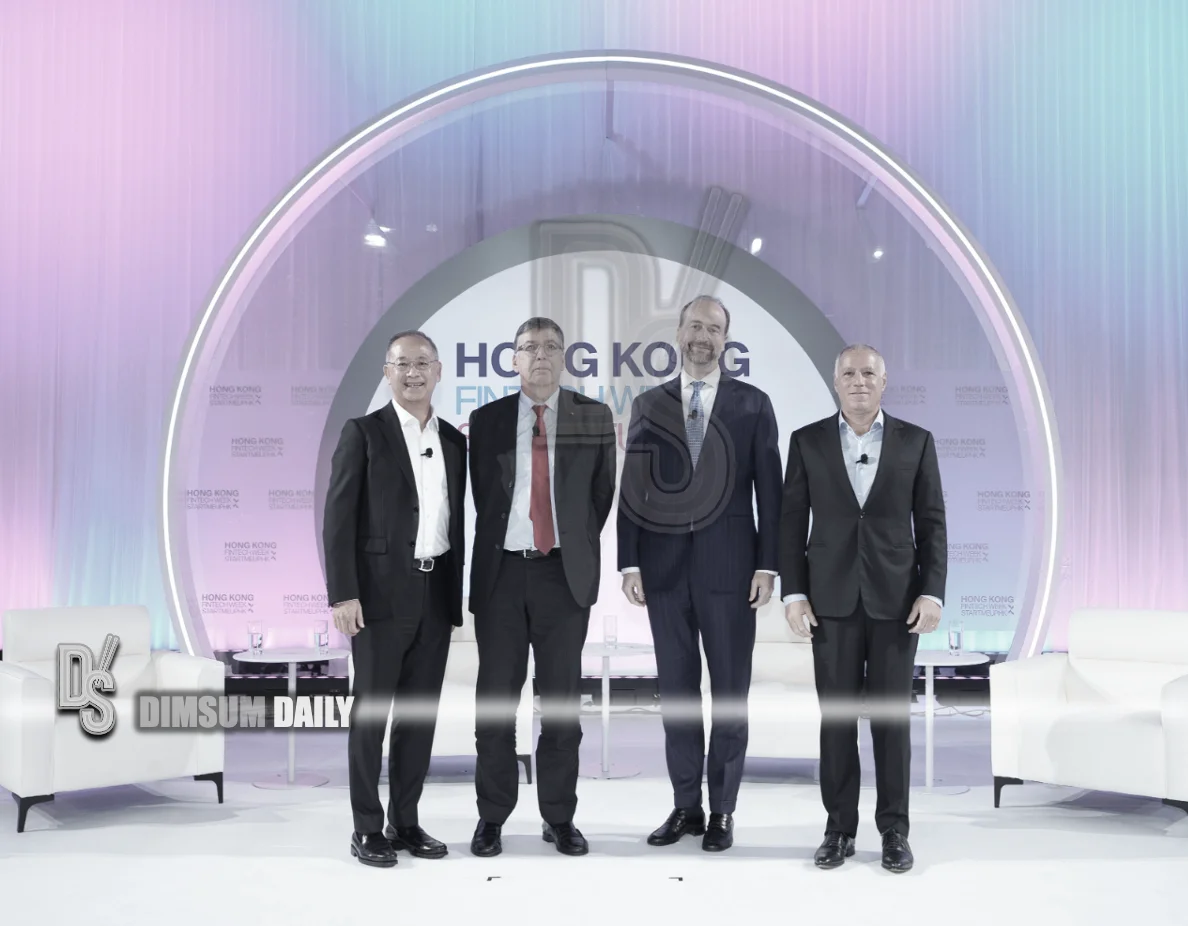
2nd November 2026 – (Hong Kong) Hong Kong FinTech Week opened at the Convention and Exhibition Centre with Chief Executive John Lee setting out the administration’s first five-year plan to leverage the city’s unique advantages and deepen integration with national development. He said firms establishing or expanding operations this year have brought more than HK$70 billion in investments, adding that Hong Kong will continue to help companies scale into mainland and international markets. He noted that the Northern Metropolis will promote a new pattern of finance in the south and innovation and technology in the north, reinforcing Hong Kong’s pivotal role in capital, capability and connections.
Regulators pointed to tangible progress in priority areas. Hong Kong Monetary Authority chief executive Eddie Yue Wai‑man said tokenisation has moved beyond sandbox trials into real‑world use, while Securities and Futures Commission chief executive Julia Leung Fung‑yee reported that 17 tokenised public funds and bonds have been authorised with an aggregate volume of about US$1.3 billion, up 34 per cent year on year. Organisers said this year’s event gathers around 1,000 government, finance and technology leaders from over 100 countries and regions, with roughly 800 exhibitors and start‑ups and more than 30 delegations. The main forum features ten specialist streams covering policy and vision, artificial intelligence and frontier technologies.
Speakers from the mainland underscored Hong Kong’s super connector function for companies going global. Wang Yu of the Peking University Financial Alumni Association said the Yanyuan Sci‑Tech Innovation Ecosystem has incubated more than 100 early‑stage hard‑tech projects with a combined valuation exceeding 60 billion yuan, and that over 30 per cent of Peking University‑affiliated start‑ups have defined international expansion plans with Hong Kong earmarked for deployment. He stressed that the platform tailors support to help firms choose optimal destinations ranging from Singapore to markets across the Middle East, Central Asia and Europe.
Liu Yong of the Zhongguancun Fintech Industry Development Alliance said the platform has helped technology firms establish at Cyberport and Hong Kong Science Park, noting that around 240 Beijing‑based companies are listed in Hong Kong, accounting for roughly a quarter of the market’s capitalisation. He suggested that the Northern Metropolis, drawing on Hong Kong’s cluster of financial institutions and its access to top universities, could evolve into a powerful engine for translating research into commercial success.
From the Greater Bay Area delegation, Mu Rong said fintech companies increasingly prefer to combine strengths for overseas expansion rather than act alone. Many specialise in discrete workflow segments such as risk control, know‑your‑customer, core banking or teller systems; by bundling capabilities into end‑to‑end solutions, they can better meet financial institutions’ demand for one‑stop services. She added that several outbound providers have set up branches in Hong Kong and some serving insurance, securities and asset management have turned profitable, with overseas orders now exceeding their mainland business. The Hetao cooperation zone is serving as a core testbed for Shenzhen‑Hong Kong pilots, including sandbox trials aimed at easing cross‑border data bottlenecks, with hopes for meaningful breakthroughs to support cross‑boundary finance.
The HKMA outlined further initiatives under its “Fintech 2030” strategy and the DART framework of Data and Payment, AI, Resilience and Tokenisation. Project SAGE (Securing Agentic Finance with Governance and Enablement) was launched to guide responsible development of agentic finance, backed by a cross‑sector expert group and a discussion paper on supervisory considerations for banks using agentic AI. To prepare for the quantum era, the HKMA and the Hong Kong University of Science and Technology introduced a Post‑Quantum Cryptography Toolkit to help banks plan and execute transitions as standards mature. Under Project Ensemble, EnsembleTX has advanced to enable 24×7 real‑value settlement of tokenised transactions, with trial trades completed by Recognised Dealers in secondary market transactions of tokenised Exchange Fund Bills and plans to expand to regulated stablecoins. In partnership with Cyberport, the HKMA launched tConnect Launchpad to validate use cases and speed tokenisation adoption. On payments, the Faster Payment System will link with UnionPay International by year‑end, progressively allowing users to scan QR codes at over 100 million merchants across Hong Kong, the mainland and more than 40 overseas markets for greater convenience locally and when travelling.