


















12th October 2024 – (Hong Kong) In Hong Kong, where money talks and connections are everything, a new generation of silver-spoon-fed heirs is attempting to rewrite the narrative of their privileged existence. These scions of tycoons and magnates, born into fortunes that most Hong Kongers can only dream of, are now embarking on what they call “entrepreneurial journeys” – a thinly veiled attempt to legitimise their predetermined success in a city where true social mobility remains an elusive dream for the masses.
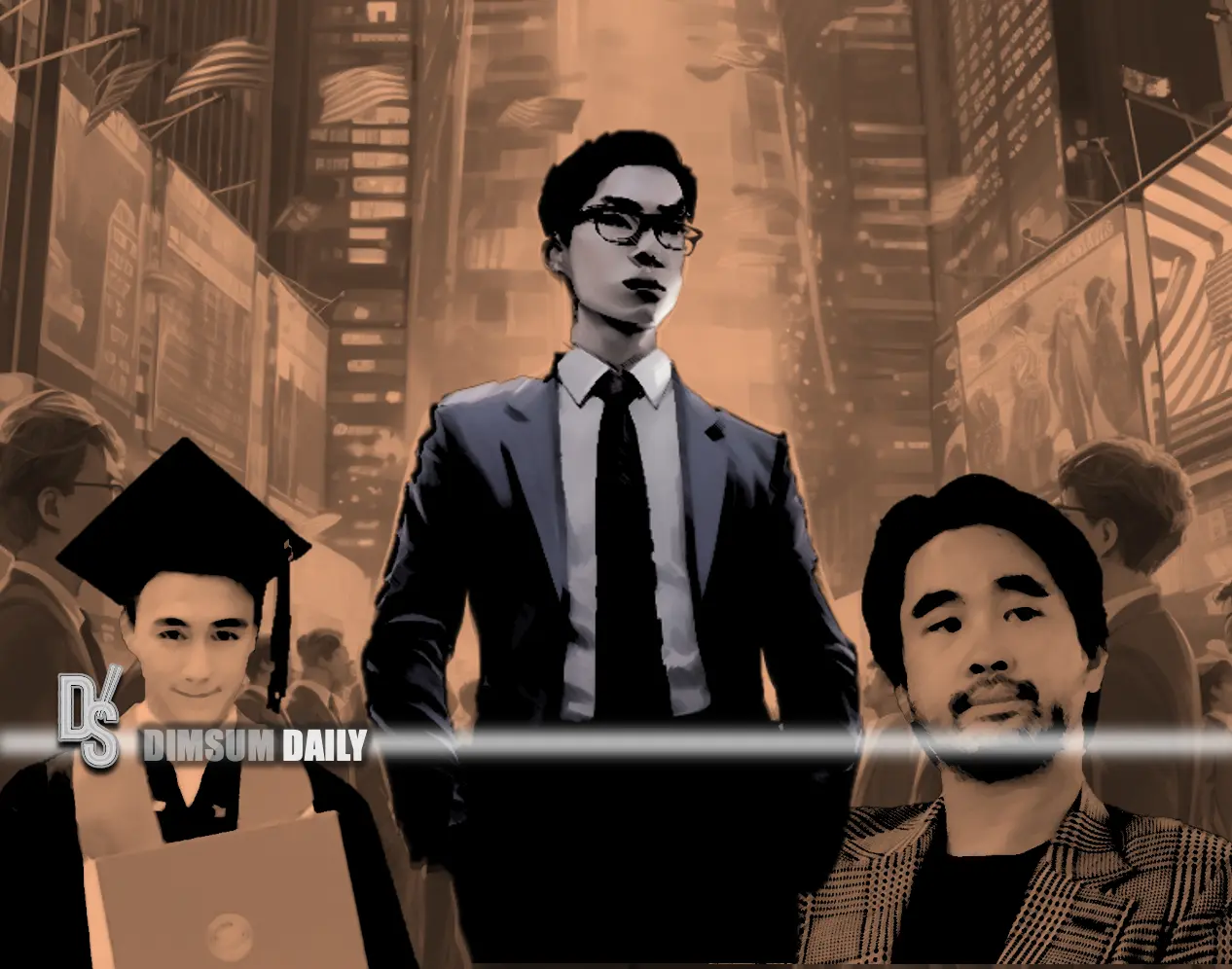
Take Mario Ho, for instance, the son of the late casino mogul Stanley Ho. At the tender age of 29, Mario has already “achieved” the distinction of being the youngest Asian to found a NASDAQ-listed company. But let’s be clear: this “achievement” is less a testament to his business acumen and more a reflection of the vast resources and connections at his disposal from birth. His success in the esports industry, while lauded by some, is merely the expected outcome for someone with his background – a playground venture funded by generational wealth.
Mario’s insistence on independence is nothing more than a carefully crafted PR strategy. His claims of refusing family investments lose credibility when one considers the invisible advantages he enjoys—from elite education to invaluable social networks that open doors closed to ordinary Hong Kongers. His entrepreneurial “aspirations” are a luxury afforded by the safety net of immense family wealth, a safety net that ensures he will never truly know failure or financial insecurity.
Adrian Cheng, scion of the New World Development empire, presents a narrative strikingly similar to that of Mario Ho. Born into immense privilege as the grandson of Cheng Yu-tung, Adrian has long sought to distance himself from the image of a mere heir, instead cultivating a persona as a visionary entrepreneur and cultural patron. He speaks passionately about his “Artisanal Movement” and the need to redefine luxury retail, positioning himself as a self-made innovator rather than a beneficiary of generational wealth. However, the stark reality of K11 MUSEA’s financial woes tells a different story. Despite his Harvard education and carefully crafted image as a global tastemaker, Cheng’s ambitious project has faltered under the weight of its own grandeur. The projected HK$20 billion loss and ballooning debt reveal the perils of confusing inherited resources with genuine business acumen. Like Mario Ho, Cheng’s attempts to prove his worth independent of his family name have led to a venture that, while visually stunning, struggles to justify its existence in practical terms. This highlights the reality that even with numerous advantages, the children of tycoons are not shielded from the harsh truths of the business world—a realm that frequently assesses their efforts through the unyielding lens of their privileged backgrounds.
This phenomenon isn’t limited to Hong Kong. Across the South China Sea, we find Anthony Tan, co-founder of Grab, peddling a similar narrative of self-made success. Despite building a company on the back of his family’s connections and resources, Tan has the audacity to speak of the difficulties of entrepreneurship. His feigned surprise at the challenges he’s faced is an insult to the millions of truly self-made entrepreneurs who start with nothing but their wits and determination.
The concept of “wealthism” – prejudice against the rich – is often decried by these heirs as unfair discrimination. But let’s call it what it really is: a justifiable scepticism towards those who were born on third base and act as if they hit a triple. This so-called discrimination is not baseless; it’s a natural response to the unearned advantages and opportunities that these individuals have enjoyed from day one.
In Hong Kong’s hyper-competitive business environment, these young “entrepreneurs” face no real battle. The playing field is tilted so heavily in their favour that their success is all but guaranteed. Their struggles, if they can be called that, are not the struggles of the common man trying to make ends meet, but the existential crises of the privileged trying to find meaning in a world where everything has been handed to them.
The pressure these heirs claim to face from their families is nothing compared to the real pressures faced by ordinary Hong Kongers. While they worry about living up to their family legacies, the average citizen worries about putting food on the table and keeping a roof over their head in one of the world’s most expensive cities.
It’s true that these heirs have unparalleled opportunities, education, and networks. But this is precisely why their achievements should be viewed with scepticism. How impressive is it really to succeed when failure was never a possibility? Their ventures into “emerging industries” or philanthropy are not acts of innovation or altruism, but safe, calculated moves to diversify already massive family fortunes.
The cognitive dissonance these individuals display is staggering. They work tirelessly to distance themselves from their family fortunes while simultaneously relying on those very connections to succeed. This is not a reconcilable contradiction; it’s a fundamental hypocrisy that underlies their entire existence in the business world.
The media’s portrayal of these wealthy heirs, focusing on their individual “accomplishments,” is a disservice to the public. It perpetuates the myth of meritocracy in a system where the deck is stacked from birth. The real story is not their success, but the systemic inequalities that make such success inevitable for them and nearly impossible for others.
As these heirs step into the spotlight, claiming to be catalysts for change, we must remember that true change cannot come from those who benefit most from the status quo. Their ventures, no matter how innovative they may seem, serve primarily to entrench existing power structures and wealth disparities.
The journey of these wealthy heirs is not a reflection of identity, legacy, or the evolving nature of success. It is a carefully orchestrated performance designed to legitimise inherited privilege in an era that increasingly questions the morality of such vast wealth inequality.
For Hong Kong, the success of these next-generation leaders is not crucial for maintaining its position as a global financial hub. Rather, it represents a continuation of the oligarchic control that has long defined the city’s economy, stifling true innovation and social mobility.
As these heirs navigate Hong Kong’s business world, they are not redefining success; they are repackaging old money in new, more palatable forms. Their struggles and triumphs offer no valuable insights, only a reminder of the entrenched inequalities that persist in one of the world’s wealthiest cities.
The challenge for Hong Kong society is not to move beyond judgments based on family background, but to recognise and address the systemic advantages that make such backgrounds determinative of success. The environment these heirs operate in is already tailored to ensure their victory; changing our perspective on their achievements won’t change this fundamental imbalance.
As Mario Ho, Adrian Cheng, Anthony Tan, and their peers continue to play at being self-made successes, we must not lose sight of the reality: they are not fighting against the perception of being “rich kids” – they are rich kids, playing in a game rigged in their favour from the start. Should their ventures crumble under the weight of their own hubris or incompetence, they will never face the harsh consequences that await the average entrepreneur. While ordinary Hong Kongers risk financial ruin and destitution in pursuit of their business dreams, these gilded heirs can rest assured that they will never find themselves sleeping rough on the streets of Sham Shui Po or queuing for social welfare.