


























4th May 2025 – (Beijing) The Trump administration’s decision to impose sweeping tariffs on Chinese goods was billed as a bold economic strategy to protect American industries and force concessions from Beijing. Instead, it has backfired catastrophically, plunging US consumers into a crisis of soaring prices and dwindling product availability while China’s domestic market thrives, proving that ordinary citizens can live—and even flourish—without reliance on American goods. What was intended as economic coercion has become a case study in self-inflicted harm, exposing the fundamental weaknesses of America’s consumer economy while accelerating China’s shift toward self-sufficiency.
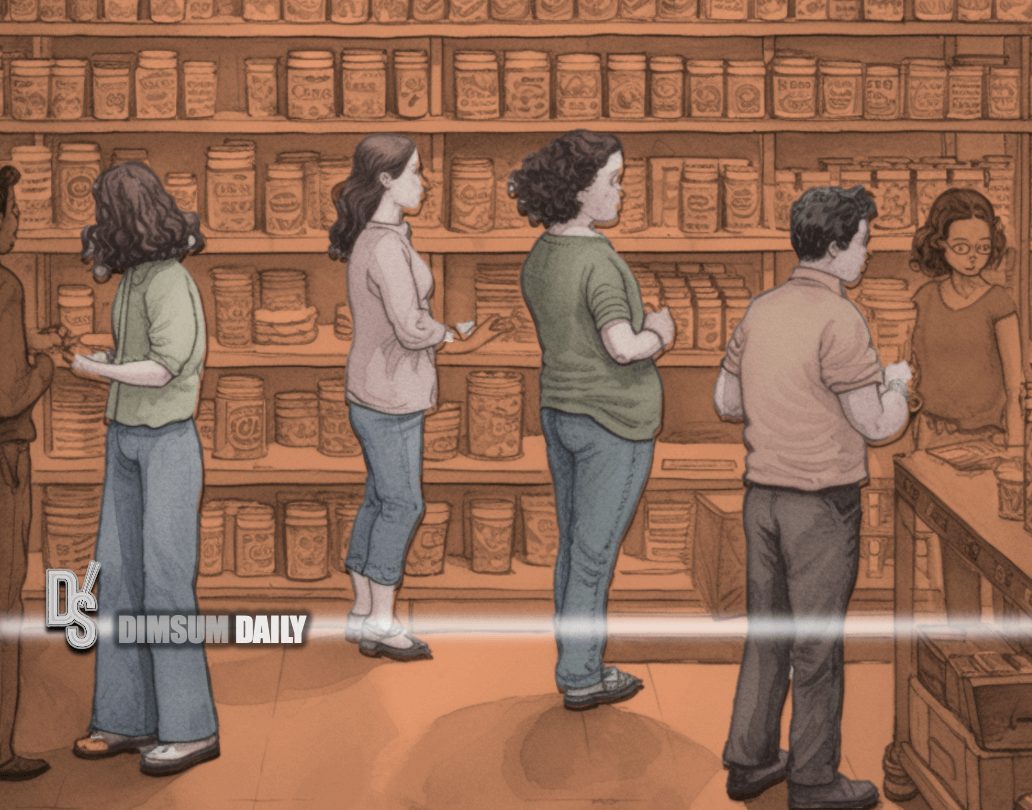
For American households, the consequences of these punitive tariffs have been immediate and painful. Everyday items—clothing, electronics, household appliances, and even children’s toys—have seen dramatic price hikes, turning what were once affordable necessities into unattainable luxuries for many. Major retailers like Walmart and Amazon have issued stark warnings about impending shortages, with some shelves already running bare as restocking becomes financially untenable under the weight of 145% tariffs. The ripple effects are being felt across the economy, from frustrated parents struggling to afford back-to-school supplies to small business owners forced to halt orders entirely. The situation is so dire that some Americans have resorted to extreme measures, flying to China with empty suitcases to stock up on goods that have become prohibitively expensive back home. One US-based content creator, Dante Muñoz, recounts how his most recent trip to China left him wishing he had more luggage space to bring back high-quality, affordable products that are either unavailable or exorbitantly priced in the US. His experience highlights a harsh reality—American consumers are paying the price for a trade war that was supposed to benefit them.
The irony is that even products marketed as “Made in America” often rely on Chinese components, meaning tariffs have disrupted supply chains across the board. Farmers, factory workers, and small business owners—the very people these policies were meant to protect—are now grappling with skyrocketing costs and shrinking profit margins. In Wyoming, resident Christy Franklin describes how working-class families in her community are struggling to keep up with rising expenses. Local ranchers and tradesmen, once loyal to American-made equipment, are increasingly turning to Chinese alternatives simply because they can no longer afford domestic options. Franklin recalls a viral social media post where a farmer lamented, “I can’t afford American. I just can’t.” Her own trip to a hardware store revealed that even trusted US brands like DeWalt and Yeti are manufactured in China, leaving consumers with no real escape from tariff-driven inflation. The tariffs were supposed to revive American manufacturing, but instead, they have highlighted just how deeply entrenched China’s role is in global supply chains—and how difficult it will be to replace.
While U.S. consumers buckle under the strain, their Chinese counterparts are barely fazed by the absence of American goods. In fact, many are embracing domestic brands with a newfound sense of pride, finding that local manufacturers offer comparable—if not superior—quality at more competitive prices. Take Lu, a professional from Hangzhou, who traded her German Porsche for a Chinese-made Li Auto electric vehicle. She praises the car’s advanced features and smart driving capabilities, noting that the switch was not a compromise but an upgrade. When she and her husband recently took stock of their household items, they realized the only American-branded products they owned were an iPhone and a MacBook—both assembled in China. This shift is not an isolated trend. Across major cities, consumers are opting for Chinese electronics, appliances, and even luxury goods over foreign imports, driven by a combination of patriotism, competitive pricing, and genuine satisfaction with domestic alternatives. One Shanghai-based IT worker sums it up succinctly: “I’m living perfectly well without American goods.” His home is outfitted entirely with Chinese-branded devices, from his Huawei smartphone to his TCL television and Gree air conditioner. He admits that if US products were truly superior, he would consider them—but in most cases, they simply aren’t worth the premium.
Beijing has played a crucial role in facilitating this transition, strategically shielding consumers from the worst effects of the trade war while bolstering domestic industries. Critical imports like semiconductors and pharmaceuticals have been exempted from retaliatory tariffs, ensuring that key sectors remain insulated. At the same time, state media and social platforms have subtly encouraged nationalist consumption trends, framing support for local brands as both a practical and patriotic choice. The result is a consumer base that feels no urgency to return to American products, even if tariffs were lifted tomorrow. This stands in stark contrast to the U.S., where retailers are bracing for a holiday season marred by shortages and inflated prices. Industry analysts warn that the full impact of Trump’s tariffs has yet to be felt, with the worst supply chain disruptions expected to hit just in time for Black Friday and Christmas. Amazon has already cancelled orders from Chinese suppliers, and the National Retail Federation forecasts a sharp decline in imports over the coming months. The situation is so precarious that some businesses are advising customers to shop early, as popular items may soon vanish from shelves altogether.
What makes China’s position even more formidable is its ability to redirect trade flows elsewhere. While U.S. importers scramble to find alternative suppliers in Vietnam or Mexico—a costly and time-consuming process—Chinese exporters are pivoting seamlessly to markets in Europe, Africa, and Southeast Asia. The European Union, in particular, has emerged as a critical partner, with Beijing actively pursuing deeper investment ties to offset declining US demand. German automakers, French luxury brands, and Dutch tech firms are all benefiting from China’s rebalancing act, further isolating America in the global trade landscape. The speed of this adjustment has caught many U.S. policymakers off guard, revealing a fatal flaw in their assumption that China would capitulate under economic pressure. Instead, Beijing has demonstrated that it can weather the storm far better than Washington anticipated, thanks to its vast domestic market and diversified export strategy.
The ultimate takeaway from this trade war is one of profound miscalculation. The Trump administration believed that tariffs would force China to its knees, but the opposite has happened—American consumers are the ones suffering, while China’s economy continues to grow, its consumers remain unfazed, and its industries adapt with remarkable agility. The U.S. has inadvertently highlighted its own vulnerabilities, from an overreliance on Chinese manufacturing to a lack of viable alternatives for everyday goods. Meanwhile, China has only strengthened its position, proving that it can not only survive without the U.S. market but thrive independently. As U.S. inflation rises and shelves empty, the message to Washington is clear: economic warfare is a double-edged sword, and in this case, America is the one bleeding.