































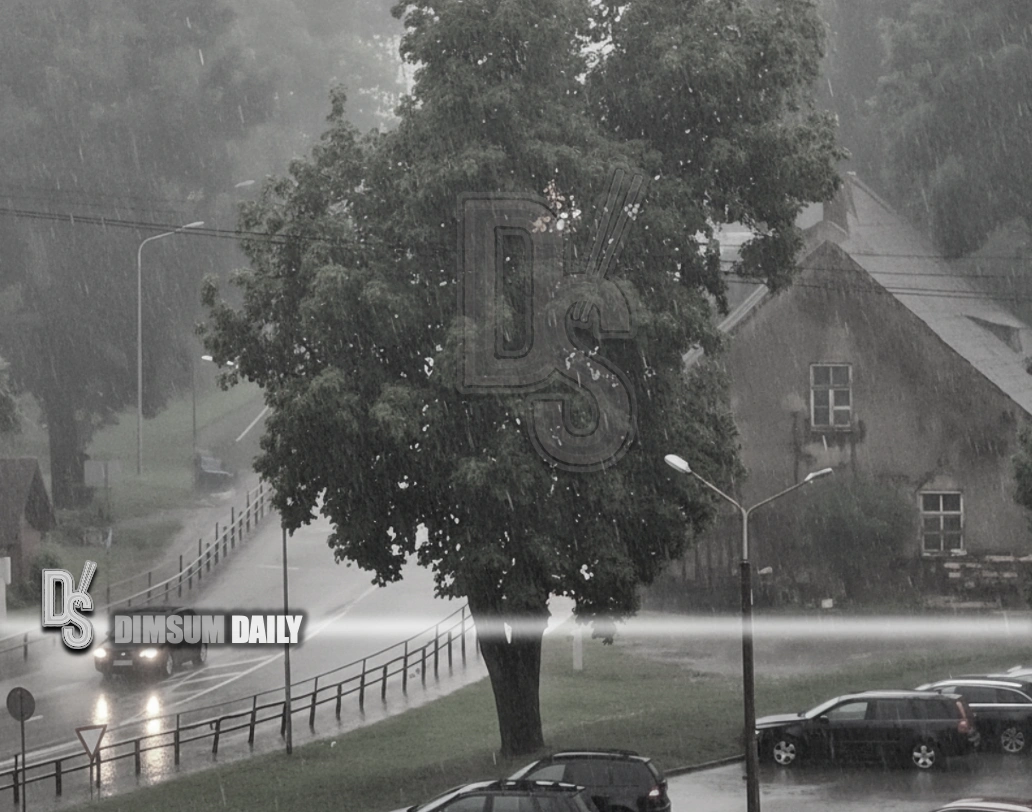
23rd August 2026 – (Riga) Latvia has been struck by one of its most severe storms in recent memory, as a powerful cyclone swept in from the south on Saturday evening, unleashing torrential rainfall and forceful winds that brought down trees, damaged buildings and caused significant disruption across the nation. The intensity of the storm led to what local media described as the most destructive weather event since January 2005. By 9.00pm, over 160,000 electricity customers were left without power, with the majority of outages resulting from widespread damage to the power distribution network caused by toppled trees.
Central regions were particularly hard hit, with rainfall during the day reaching nearly half the local monthly average in several areas. In response to the hazardous conditions, the Latvian Environment, Geology and Meteorology Centre kept a red warning in effect for heavy rain in both central and western parts of the country, while an orange warning for strong winds extended across nearly the entire nation. Cell broadcast alerts were used by authorities to repeatedly warn residents of the risks posed by the intense weather, and Friday had also seen red, orange and yellow warnings put in place for rain and wind, leading to the cancellation of numerous outdoor events.
The country’s rail operator reported delays on multiple train services as the storm battered transport links. The State Fire and Rescue Service experienced a sharp surge in emergency calls, mainly to clear roads blocked by fallen trees. In Daugavpils, the high winds tore the roof from a building, while in Jekabpils fallen trees caused damage to several vehicles and a residential property.
According to Sadales tikls, Latvia’s electricity distribution system operator, the scale and complexity of network damage meant restoration would take longer than usual, and some households could be without power for more than twenty-four hours. Emergency teams worked throughout the night to address outages, but the widespread devastation underlined the storm’s exceptional impact, marking a major challenge for both disaster response and recovery efforts.