




























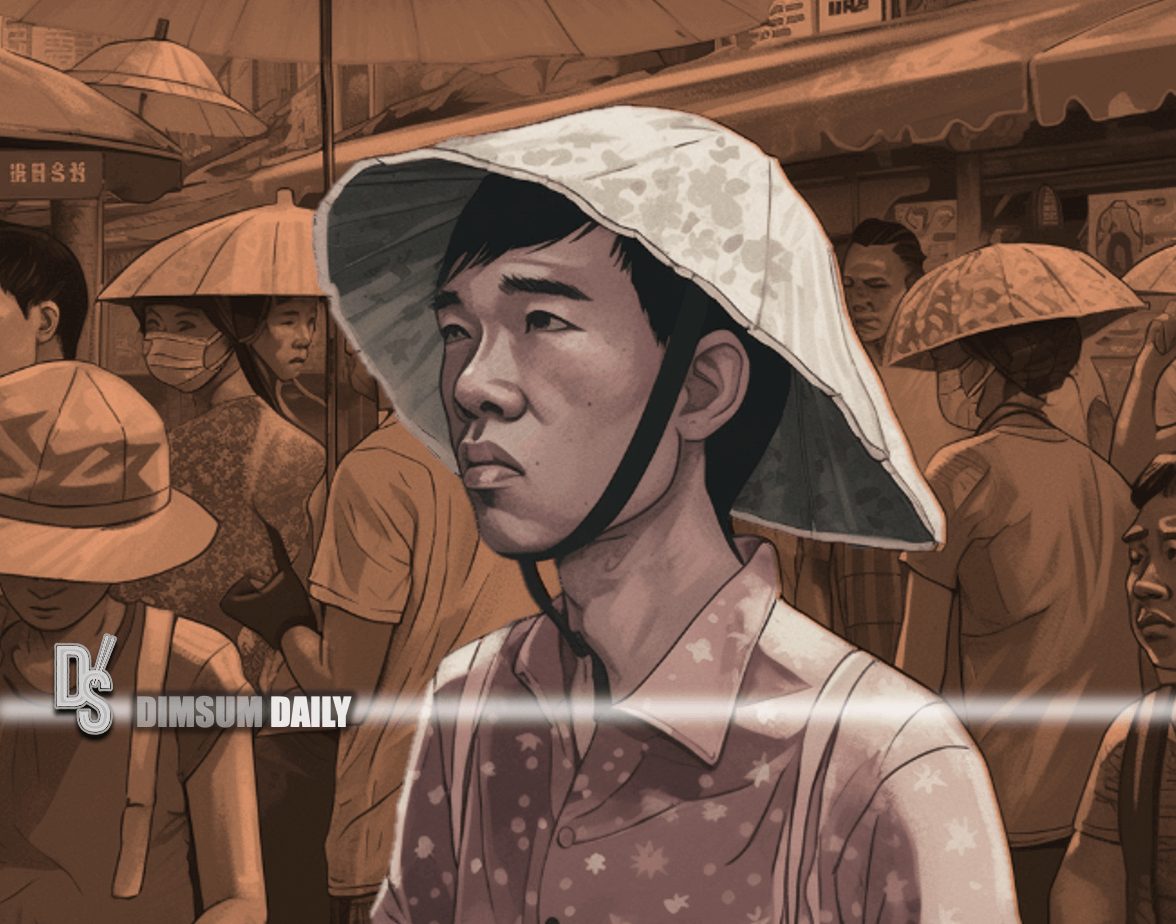
3rd May 2024 – (Hanoi) Well before summer’s inferno tightens its grip, the early arrival of extreme heat is already threatening a humanitarian emergency across the farmlands and urban slums of Southeast Asia. Record-shattering temperatures have ravaged crops, triggered health emergencies and yet again exposed the devastating vulnerability of the region’s poorest to the accelerating climate crisis.
From the rice bowls of Vietnam’s Mekong Delta to the drought-stricken villages of Thailand’s northeast, the impacts have provided a visceral preview of the staggering socioeconomic tolls looming if global warming’s advance remains unchecked. As heatwaves turbo-charged by El Niño conditions scorch agricultural heartlands that feed hundreds of millions from Manila to Yangon, urgent adaptation appears the only barrier to impending food insecurity on a staggering scale.
“Once again, those least responsible for driving climate change are being battered as the unjust harbingers of an overheated future,” said Orla Murphy, Regional Emergency Advisor for the UN World Food Programme (WFP). “Marginal farming communities sliding into debt traps, slum children fainting in classrooms, entire cities coping with crippling blackouts – this is the human reality we must grapple with here and now.”
The bleak panorama across mainland Southeast Asia captures how heatwaves have rapidly evolved from freak occurrences to chronic crises with systemic impacts. Thailand has already witnessed over 30 heat-related fatalities so far this year, as the national meteorological agency forecasts this summer will be up to 2 degrees Celsius hotter than 2023’s scorcher when hospital admissions spiked by over 65,000 heatstroke cases.
On the streets of Bangkok, where atmospheric heat indices have soared past 50C (122F), WFP staff describe children falling unconscious on pavements during the sweltering afternoon school runs while waiting for parents unable to afford taxis or buses. A particular cruelty is reserved for the urban poor seeking out precarious livelihoods as street vendors or labourers denied any respite in shaded workplaces.
“What we’re witnessing is a humanitarian catastrophe unfolding in slow motion,” said Murphy. “These communities have virtually no margin to cope with rising temperatures – how will they withstand it at the catastrophic levels we’re hurtling towards by 2100 under current emissions trajectories?”
If the heatwave’s urban toll spotlights the threat to enclaves of entrenched poverty in aspiring “middle-income” nations, Southeast Asia’s rural heartlands lay bare the existential climate risks faced by even more vulnerable food production systems underpinning regional and global food chains.
In Vietnam, the world’s third-largest rice exporter, prolonged drought has decimated harvests and depleted vital waterways like the Mekong River system that irrigates the nation’s agricultural belt. Dire supply shortfalls have been compounded by saltwater intrusion that has rendered over 200,000 hectares of fertile farmland unviable, displacing farmers en masse.
“Villages once known for their lush, vibrant paddy fields were landscapes of pure devastation – cracked, parched expanses as far as I could see,” said WFP staff member Sebastian Oates during a recent distribution effort in Vietnam’s Mekong Delta region. “These communities have been battered by cumulative impacts there’s simply no defences against – from the heatwaves to rising tides to prolonged droughts.”
According to the UN’s Food & Agriculture Organisation, Vietnam’s rice production has plunged by over 9% year-on-year, triggering major inflationary shocks. Bangkok already resorted to rationing supplies when rice prices spiked nearly 25% at the height of last year’s scorching summer.
While climate-fueled inflation is compounding food insecurity for impoverished households across the region’s major conurbations, Vietnamese farmers uprooted by the erratic weather patterns are among the heatwave’s most tragic victims. At one relief distribution point, the WFP’s Oates met farming communities driven from their ancestral lands by advancing saline inundation, now living in abject squalor under canal overpasses with little prospect of resettlement or alternate livelihoods.
“These were whole multi-generational family units we encountered – proud patriarchs now sleeping in makeshift hovels by fetid canalsides with their children,” he recalled. “How do these people – whose very identities and traditions are stitched into those devastated deltas – summon the resilience to build back when the forces unravelling their worlds seem so unstoppable and existential?”
It’s a haunting query resonating across Southeast Asia’s climate frontlines. In Indonesia, a top-five global rice producer, protracted drought not only withered last year’s harvests and exacerbated supply crunches, but sparked disturbing unrest as panicked consumers began hoarding staples.
Muhammad, a rice farmer in Central Java, knows the vicious cycles all too well. His earnings have cratered amid cascading catastrophes unleashed by Indonesia’s hottest March in over six decades – crop failure, spiralling production costs and precipitous price collapses as distressed farmers desperately off-loaded inventories before they perished completely.
“We can normally harvest eight tonnes of rice per hectare for around $1,700 after costs,” Muhammad said. “This year I sold barely one tonne for under $200 – how does a family continue at those returns? Very soon, I may have no choice but to abandon these lands entirely and join the exodus to the overcrowded slums hoping for any work.”
Such crippling financial blows to smallholder growers is driving widespread outmigration that only exacerbates food insecurity across Southeast Asia, a region where over 30 million remain under-nourished, according to WFP estimates. A looming spate of farm bankruptcies could erode crop yields further as agricultural systems collapse, placing even more upward pressure on rice, maize and cooking oil prices already inflated by global supply crunches.
And in a vicious spiral, the compounding nutritional deprivation and socio-economic dislocation unleashed by heatwave-driven price shocks and crop failures create fertile conditions for civil unrest, political upheavals and even armed conflicts – all of which merely deepen humanitarian emergencies.
It’s a dystopian scenario climate experts have long warned could manifest with gathering momentum from 2025 onwards – and one that could ripple across multiple risk arcs spanning mass population displacements to intertwined food-water-energy crises.
“These aren’t doomsday predictions or apocalyptic visions, but reflect the interconnected systematic shocks the scientific community has been sounding the alarm about for decades – shocks we’re wholly unprepared to handle at this scale,” said Professor Saleemul Huq, Director of the International Centre for Climate Change and Development in Bangladesh.
“We’re seeing those shockwaves propagate across these rural agricultural communities in slow-motion. It’s imperative the world doesn’t just stand by watching.”
For the World Bank and other development agencies operating in the region, the heatwave’s devastation has starkly underscored the colossal adaptation costs ahead for nations whose rural populations remain highly climate-exposed. While richer Singapore or Malaysia can leverage urban density and dynastic wealth to buffer food system breakdowns, poorer nations like Myanmar or Cambodia face grim humanitarian emergencies without intervention.
“There’s no simple blanket solution – the adaptation challenge differs from the Mekong’s low-lying croplands to Indonesia’s mountainous highland basins,” said Stanford Woods, Vice President for the World Bank’s Asia Sustainable Development Unit. “We’re having to apply multiple instruments plus innovation from technology to crop genetics to redesigned infrastructure across diverse geographies while building social safety nets.”
While the World Bank has marshalled over $2.5 billion in co-financing for climate-resilient infrastructure and agriculture across Southeast Asia’s least-developed areas, Woods admits the region needs a massive uplift in adaptation funding. Estimates suggest the mean annual costs of climate-resilient infrastructure and agricultural adaptation programs could require a staggering $610 billion per year by 2030.
Bleak tallies indeed, but obscured by the data are the very human costs for farming communities overrun by heatwaves that defy their centuries-honed knowledge of agrarian cycles, soil dynamics and monsoon patterns. For communities like Vietnam’s Ngoc Bien, the megadrought scorching their coconut, mango and rice livelihoods reduced them to destitute refugees trapped in ‘tropical slum cities’ forming on Hanoi’s peripheries.
“We tried our best to withstand the droughts and saltwater intrusion but eventually there was nothing left to save from those lands we once called home,” said 48-year-old Dang Nguyen, a former village patriarch who now leads a community of uprooted farming families squatting in Han Dai, one of Hanoi’s biggest slum sprawls.
“So many others fell into despair and turned to alcohol, but here we’ve tried to stay together as people of the soil while awaiting any opportunities to work as paid labour. But there is little dignity in this wretched half-life for farmers who once thrived self-reliantly.”
Walking the ramshackle alleys of Han Dai, one is quickly disabused of the “slum idyll” romantic tropes peddled by advocacy groups. Desperate children begging or hauling scavenged scrap, infants soothed in squalid lean-tos by mothers whose exhaustion hints at unspeakable privations – all bracketed by opportunistic landfill piles, cockeyed storm drains and a carcinogenic haze from open-air kitchen fires.
A 2021 World Bank study cautioned that the ‘tropicalisation’ of such informal settlements fuelled by climate migration could reach catastrophic levels by mid-century – overtaking the sprawling Vietnamese capitals in sheer population density and immiserating over 3 million people in ‘atmospheric ghettos’ choked by noxious air pollution and severe heat stress.
“Leaders need to recognise the costs of reducing heatwave and drought vulnerability aren’t just economic, but spiritual and psychic for uprooted communities,” said Harvard University’s Prof. Shailee Arora, a social anthropologist who has closely studied the ‘development displacement’ across Southeast Asia’s climate frontiers. “You’re dealing with identities wrested from ancestral soil, rituals and practices rendered obsolete and a way of life erased forever.”
While debates over managed relocation sparks fears of dystopian ‘Ozymandian’ planning flaws, the realities confronting displaced farming communities are far grimmer. Arora recounts her interviews with a Bangkok slum’s migrant settlers – generations of proud Isaan rice farmers whose lands now host a salvage scrapyard and housing speculation.
“These were not just land losses, but severed connections to transcendent connections with Thailand’s rice-growing soul,” says Arora. “One septuagenarian told me his grandfather still cannot understand how their fields were washed into nothingness overnight by record floods, nor how their gods acquiesced to such cosmic ruptures.”
With planetary heating on course for over 2.5C this century, a sobering study by McKinsey suggests over one-fifth of Southeast Asia’s population already faces annual heatwave exposure by 2050. The correlating risks – plummeting agricultural yields, cascading water and food crises, runaway urbanisation as rural communities disintegrate – represent an ‘existential threat multiplier’ for countries still striving for upper-income prosperity.
“These hazards could rapidly become unmanageable without concerted interventions urgently operationalised at scale,” said Stanford Woods. “We’re talking generational setbacks to poverty, nutrition, human capital development and macroeconomic stability across emerging markets that are the engines powering the broader Asian Renaissance.”
For World Bank and WFP field teams dispersed across the region’s climate hotspots, the heatwave has reinforced burning imperatives. Innovative public-private partnerships to upscale transformative technologies like drought-tolerant rice, saltwater-resistant crops and remote environmental monitoring systems via satellite data and Artificial Intelligence now seem bare minimums.
Without concerted initiatives to build climate resilience across food systems, power grids and civic heat action plans, the cruelties of heatwave exposure could elevate into a regional calamity – displacing millions, degrading human development across multiple countries, sparking conflicts over depleted river systems and food stocks. It’s an apocalyptic scenario that seems unthinkable yet daily creeps closer to reality.