































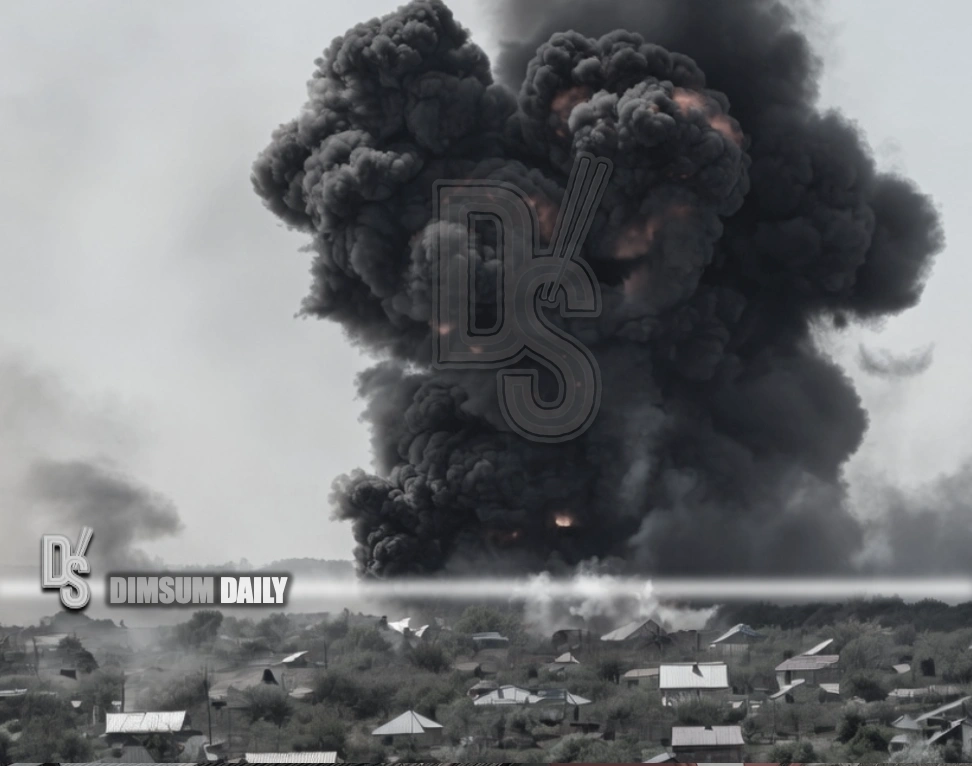
31st July 2026 – (Moscow) Russia this week asserted progress on multiple fronts in Ukraine’s Sumy, Kharkiv and Donetsk regions just as Kyiv replaced both its defence minister, Mykhailo Fedorov, and its commander‑in‑chief, Oleksandr Syrskii. The reshuffle, completed within days, came against a deteriorating picture in parts of the east, where Ukrainian soldiers warned that Kostiantynivka — one of four so‑called “fortress cities” Russia has targeted — was being effectively cut off. A soldier quoted by Ukrainian outlet Hromadske said the city was “effectively already lost” as Russian troops pressed defenders into a corner. A local commander reported Russian movement into the villages of Molocharka and Izhevka to the north and cautioned that his forces could be encircled within one to two months without reinforcements or tactical changes.
The Kremlin has cast Kostiantynivka as pivotal, with President Vladimir Putin calling it key to securing the remaining parts of the self‑declared Donetsk People’s Republic. Ukrainian assessments have varied: shortly before his dismissal on 21st July, Syrskii estimated around 145 Russian infiltrators inside the city and said they were taking significant daily losses as Ukrainian drone units hunted them. Another commander, identified by the call sign Kurt, told Suspilne that Kyiv’s forces still held most of the city and that Russian troops were operating largely on the flanks, attempting to bypass positions while relying heavily on KAB glide bombs to smash defensive strongpoints.
Russia’s intensified use of KABs — aerial munitions with warheads ranging from 500kg to 3,000kg — has compounded pressure on Ukrainian lines, reinforcing Kyiv’s repeated pleas for additional air‑defence systems. The Institute for the Study of War (ISW) recently revised its assessment of Russian presence in Kostiantynivka from about 37 per cent, largely through infiltration, to most of the city. Even so, ISW data suggest Russia’s broader momentum has slowed over time: average daily territorial gains of 16.6sq km in the first half of 2025 fell to around 1sq km in June 2026, while in July Russia has been assessed as losing territory at a rate of 1.6sq km a day. Ukrainian officials nonetheless say Moscow is seeking to regain the initiative. Robert Brovdi, who leads Ukraine’s Unmanned Systems Forces, reported a month‑on‑month increase in Russian personnel engaged in offensive operations — up 12 per cent from June and 18 per cent from May — with casualties rising in similar proportions.
Further north, Russia claimed strikes on 10 Ukrainian UAV control centres in Sumy and Kharkiv on 27 July, followed by advances in several settlements three days later, achieved in part by using drones to disrupt ammunition supplies. A local Russian official said 13 settlements in Kharkiv had been seized this month. Ukraine denied that Nova Sich had fallen, and Al Jazeera said it could not independently verify Moscow’s battlefield claims. In parallel, President Volodymyr Zelenskyy warned of a potential autumn push by Russia, citing intelligence that the Kremlin plans an “expanded mobilisation” after September’s parliamentary elections, aiming to raise 300,000–500,000 troops despite heavy losses this year. He also alleged preparations to house 30,000 North Korean troops in Voronezh, following earlier deployments said to have supported Russian operations near Kursk.
Kyiv has sought to offset pressure at the front with long‑range strikes deep inside Russia. Ukraine reported hits on oil facilities including the Subkhankulovo tank farm in Bashkortostan, multiple refineries, an oil terminal in Rostov‑on‑Don, and depots in occupied Crimea and Udmurtia — part of a campaign that it says has disabled 42 per cent of Russian refining capacity this year. A Financial Times analysis using satellite imagery has put the figure at 45 per cent of nominal and 30 per cent of actual capacity, with damage expected to last weeks or months. Moscow has extended a fuel export ban from end‑August to end‑January in response. Ukraine also reported strikes on defence‑industrial sites such as the Avitek plant in Kirov and an S‑400 radar, and said it had downed a Forpost‑R heavy drone on 27th July, only the sixth of the war.
Brovdi’s units continued efforts to degrade Russian logistics in Crimea and beyond, claiming attacks on 37 electricity substations and four oil tankers during the week, bringing July’s tally to 164 power‑grid nodes and 205 tankers hit across the Black and Azov seas. Ukrainian forces also targeted warehouses linked to online retailer Wildberries — which Kyiv suspects of supplying equipment to mobilising troops — with fires reported in Voronezh, Leningrad, Simferopol, Udmurtia and Penza, taking the number of warehouses struck to 12 and estimated damages to $2.2bn. Russia said it had conducted large‑scale drone and missile attacks on Ukrainian military targets, though a number of civilian areas were hit. A supermarket strike in Chernihiv on 26th July killed one person, while an attack in Radushne on 30th July destroyed a family home, killing all inside; Kyiv authorities said a record 56,000 people sheltered overnight in the metro that day.