

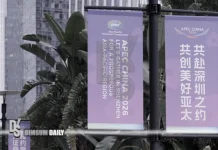




























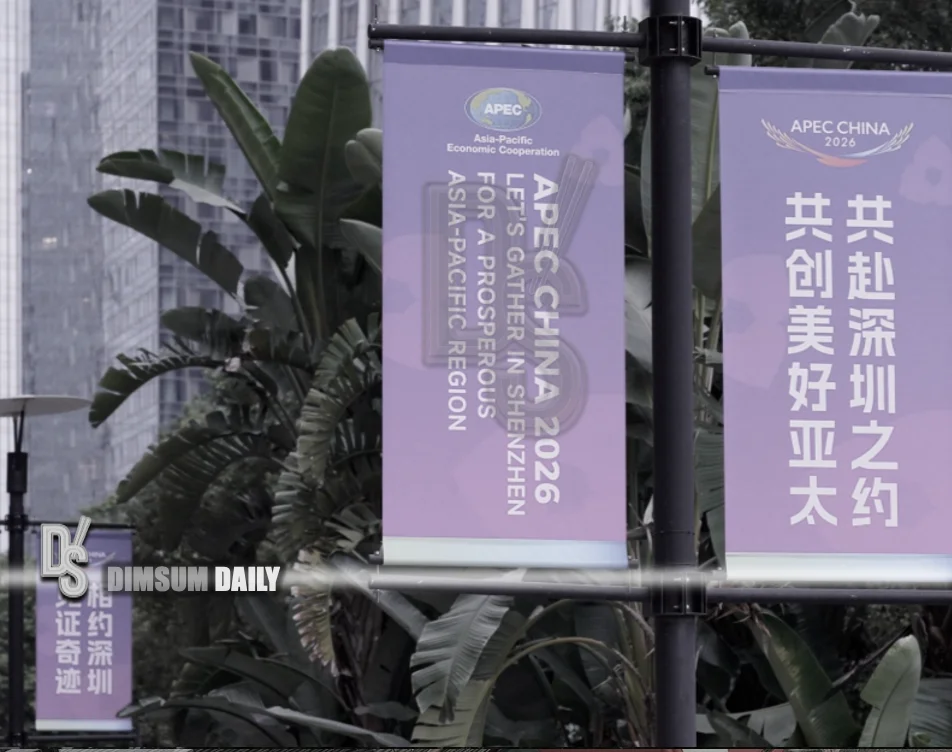
1st November 2026 – (Shenzhen) Guangdong’s public security forces have moved into a decisive Asia-Pacific Economic Cooperation security phase from today, launching high-level duties and drafting officers from across the province to reinforce Shenzhen ahead of the mid-November leaders’ meetings.
The Guangdong Provincial Public Security Department convened a province-wide mobilisation meeting on Sunday to set out the final stretch of APEC security work under direction from the provincial party committee, the provincial government and the Ministry of Public Security. CPC Guangdong Provincial Committee Standing Committee member Ma Senshu attended and addressed the session, while Vice Governor and provincial public security chief Liu Guozhou delivered the mobilisation briefing.
From today, forces across Guangdong are to treat APEC protection as an all-out operational push and activate the higher duty grade. Commanders at every level, leadership team members and heads of key police branches are required to stay on post throughout, keeping command and dispatch continuous rather than leaving gaps as the summit window approaches.
Manpower on the street is to rise under the same package. Units have been told to put substantial numbers into public view for tight supervision and control, lifting how often officers are seen, how actively they intervene and how strong a deterrent presence the force presents in ordinary neighbourhoods as well as around sensitive sites.
Prevention measures are to thicken in parallel. Patrols and targeted crackdowns are to be stepped up, key locations more closely guarded, and controls on logistics and courier shipments as well as hazardous and explosive materials tightened, with the stated aim of keeping the wider social sphere calm and orderly while the summit calendar runs.
A layered perimeter is also going live. Higher-grade screening is to operate on the “moat” ring around Shenzhen and on the broader Guangdong security belt, with the brief to intercept security risks before they reach the host city. Officers drawn from across the province are to be sent into Shenzhen so that the reinforcements can be put to effective use rather than left idle on paper.
Low-altitude airspace sits in the same six-point checklist. Drone no-fly rules are to be enforced more firmly, with action against illegal flights and against unlawfully built or firmware-cracked craft that could defeat controls, so that the airspace over venues and approaches stays secure.