























4th May 2025 – (Washington) In the realm of political communication, humour can be a double-edged sword. When wielded with precision, it can humanise leaders, bridge divides, and make complex issues more accessible. But when misused, it can alienate, offend, and undermine the gravitas of the office. Donald Trump’s recent decision to share an AI-generated image of himself as the Pope on his Truth Social platform is a glaring example of the latter—a misjudged attempt at levity that has drawn widespread criticism, particularly from the Catholic community, and raised questions about his suitability for the highest office in the United States.
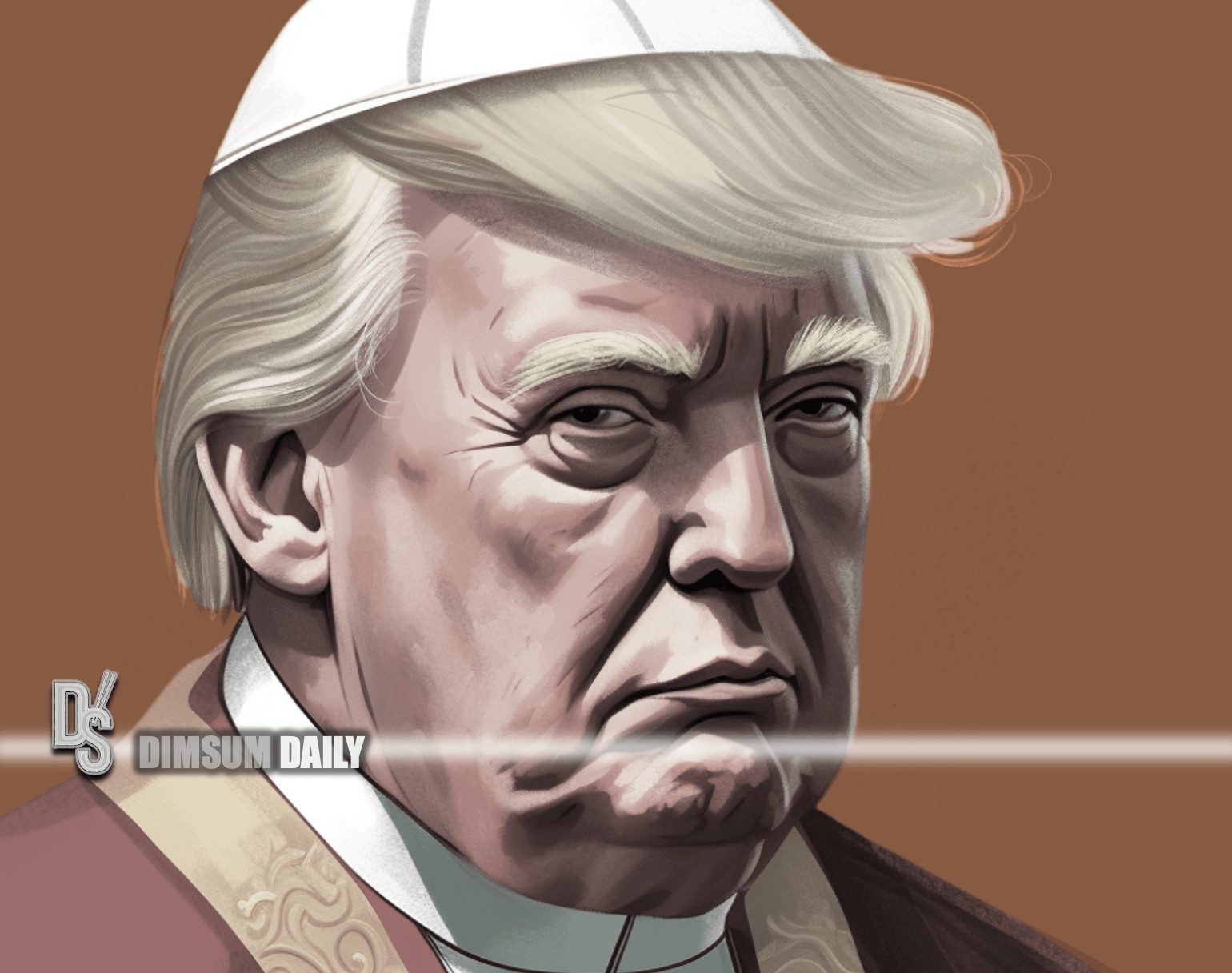
The image, which depicts Trump in papal regalia—complete with a white cassock, pointed miter, and a solemn expression—was posted just days after the death of Pope Francis and as the Catholic Church prepares for the solemn process of electing a new pontiff. The timing alone was enough to provoke outrage, but the content of the image itself struck many as a blatant mockery of the faith. The New York State Catholic Conference, representing bishops across the state, did not mince words in its condemnation: “There is nothing clever or funny about this image, Mr. President. We just buried our beloved Pope Francis and the cardinals are about to enter a solemn conclave to elect a new successor of St. Peter. Do not mock us.”
Trump’s defenders, including his press secretary Karoline Leavitt, were quick to dismiss the criticism, pointing to his attendance at Pope Francis’s funeral as evidence of his respect for the Catholic Church. Vice President JD Vance, himself a Catholic, went further, framing the post as harmless humour. “As a general rule, I’m fine with people telling jokes and not fine with people starting stupid wars that kill thousands of my countrymen,” Vance wrote on X, in response to criticism from conservative commentator Bill Kristol.
But this defence misses the mark. The issue is not whether Trump has the right to make jokes—it is whether a sitting president, particularly one with a history of inflammatory rhetoric, should be making jokes at the expense of a global religious institution during a period of mourning. The Catholic Church, with its 1.3 billion adherents worldwide, is not just any institution; it is a cornerstone of faith, culture, and history for millions. To trivialise its leadership in this way is not just tone-deaf—it is disrespectful.
This is not the first time Trump has used humour in a way that has backfired. Throughout his political career, he has repeatedly employed jokes and sarcasm as a rhetorical strategy, often to deflect criticism or downplay controversial statements. In 2016, for example, he suggested that Russia should “find the 30,000 emails that are missing” from Hillary Clinton’s private server, only to later claim he was “being sarcastic.” Similarly, he has repeatedly referred to Barack Obama and Hillary Clinton as the “founders of ISIS,” only to dismiss the remarks as jokes when challenged.
While these instances may seem like harmless quips, they reveal a troubling pattern: Trump’s use of humour often serves as a shield, allowing him to make provocative or inflammatory statements while avoiding accountability. In the case of the AI-generated Pope image, the joke—if it can even be called that—falls flat not just because it is unfunny, but because it trivialises a deeply significant moment for the Catholic Church.
Pope Francis, who passed away on 21st April at the age of 88, was a transformative figure in the Catholic Church, known for his progressive stance on issues such as climate change, poverty, and immigration. His death has left a void in the Church, and the process of electing his successor is a solemn and sacred tradition that dates back centuries. To insert oneself into this process, even in jest, is to show a profound lack of respect for the institution and its followers.
Trump’s defenders might argue that the image was intended as a light-hearted nod to his recent quip that he would “like to be Pope.” But even if this were the case, the execution was deeply flawed. Humour, particularly in the context of leadership, requires a degree of self-awareness and sensitivity that Trump has consistently lacked. A more adept politician might have used humour to connect with voters or humanise themselves, but Trump’s attempts often come across as self-aggrandising or outright offensive.
The reaction from the international community underscores the gravity of the misstep. Matteo Renzi, the left-leaning former Prime Minister of Italy, described the image as “offensive to believers, insulting to institutions, and evidence that the leader of the right-wing world enjoys clowning around.” Renzi’s words are particularly striking given Italy’s deep ties to the Catholic Church, but they also reflect a broader sentiment: that Trump’s brand of humour is not just unfunny, but deeply inappropriate for someone in his position.
The White House’s insistence that the image was not intended to mock the papacy rings hollow in light of Trump’s history of inflammatory rhetoric and his apparent inability to read the room. Humour, when used effectively, can be a powerful tool for building bridges and fostering goodwill. But when used carelessly, it can alienate and divide. In this case, Trump’s AI Pope image has done the latter, further eroding his credibility and reinforcing the perception that he is unfit for the presidency.
The incident also raises broader questions about the role of humour in political leadership. While it is true that leaders are increasingly using social media to connect with voters in a more informal and relatable way, there is a fine line between being approachable and being unserious. Trump’s use of humour often crosses this line, undermining the dignity of the office he holds and alienating key constituencies.
The AI Pope image is not just a misjudged joke—it is a reflection of Trump’s broader approach to leadership. By prioritising self-promotion over respect for institutions, he has once again demonstrated why he is seen by many as a divisive and unserious figure.As the Catholic Church prepares for the selection of a new pontiff, Trump’s ill-considered post highlights the importance of humility, respect, and gravitas in leadership—qualities that he has consistently failed to demonstrate.