






















29th October 2026 – (Hong Kong) Spend a weeknight at a converted indoor venue in a shopping mall in Wan Chai or Tseung Kwan O, and the first thing you notice is the sound. Pop. Pop. Pop. Then someone laughs loudly, and someone else shouts “Yours!” at a partner who was never going to reach the ball either. The ball is plastic and full of holes. The paddles look like oversized chopping boards. Nobody is sweating much, and everyone seems happy about it.
This is pickleball, and Hong Kong can’t get enough of it. Booking sites now list more than 40 venues across the city, and private courts cost between HK$300 and HK$800 an hour. Last Sunday, more than 2,000 spectators filled Kai Tak Arena for the finals of the Hong Kong Slam. Clubs have names like Dink City and Dink & Chic, which tells you a lot about who they hope will walk through the door.
A meme going around Instagram explains the craze better than any trend report. Take tennis, it says, and make the court smaller so it is easier. Make everyone play in pairs so they can yell at each other. Then put a bar or dessert place next door so they can gossip afterwards. The joke works because it is barely a joke. It is close to the actual business plan.
A pickleball court measures 13.41 metres by 6.09 metres, about the size of a badminton court and less than a third of a doubles tennis court. Less ground means less running. Less running means fit and unfit players end up far closer in level than they ever would in tennis. That was always the intention. The game was invented in 1965 on Bainbridge Island, near Seattle, by fathers trying to keep bored children busy. It was meant to let the whole family play on equal terms.
Then look at the rules, which read like a list of things athletes are not allowed to do. The serve must be underhand, so the most powerful shot in tennis is gone. Players can’t volley inside a seven-foot zone in front of the net, known as the kitchen, so the next most powerful shot is gone too. The plastic ball slows down quickly in the air. What remains is the dink, a soft tap that drops just over the net and invites a soft tap in reply. To anyone watching, a long rally looks like two people politely refusing to end a conversation.
This is where the “kid-version tennis” jibe makes sense. Tennis is cruel to beginners. You can take lessons for a year and still spend most of an hour picking up balls from the back fence. The serve alone humbles grown adults. Pickleball skips that stage. A newcomer can rally within 20 minutes and win a game the same afternoon. Plenty of people in this city were quietly told by a coach at Victoria Park that tennis was not for them. For them, the appeal is obvious.
Hong Kong adds reasons of its own. Space is the most expensive thing in the city, and up to four pickleball courts fit where one tennis court used to be. The weather matters too. Nobody wants to chase a tennis ball across a hard court in August humidity. Indoor pickleball offers air conditioning and a short walk from the MTR. The city also likes quick results. A game that makes you feel competent at your first session suits a place where people judge a restaurant by how fast the food arrives.
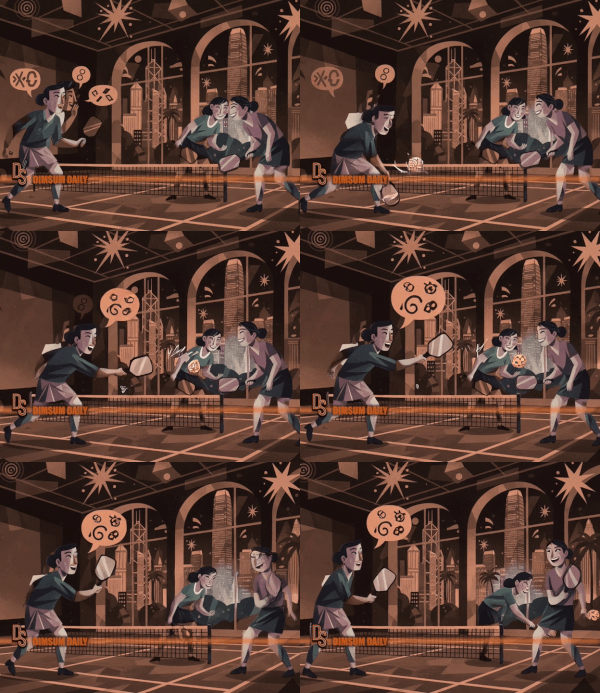
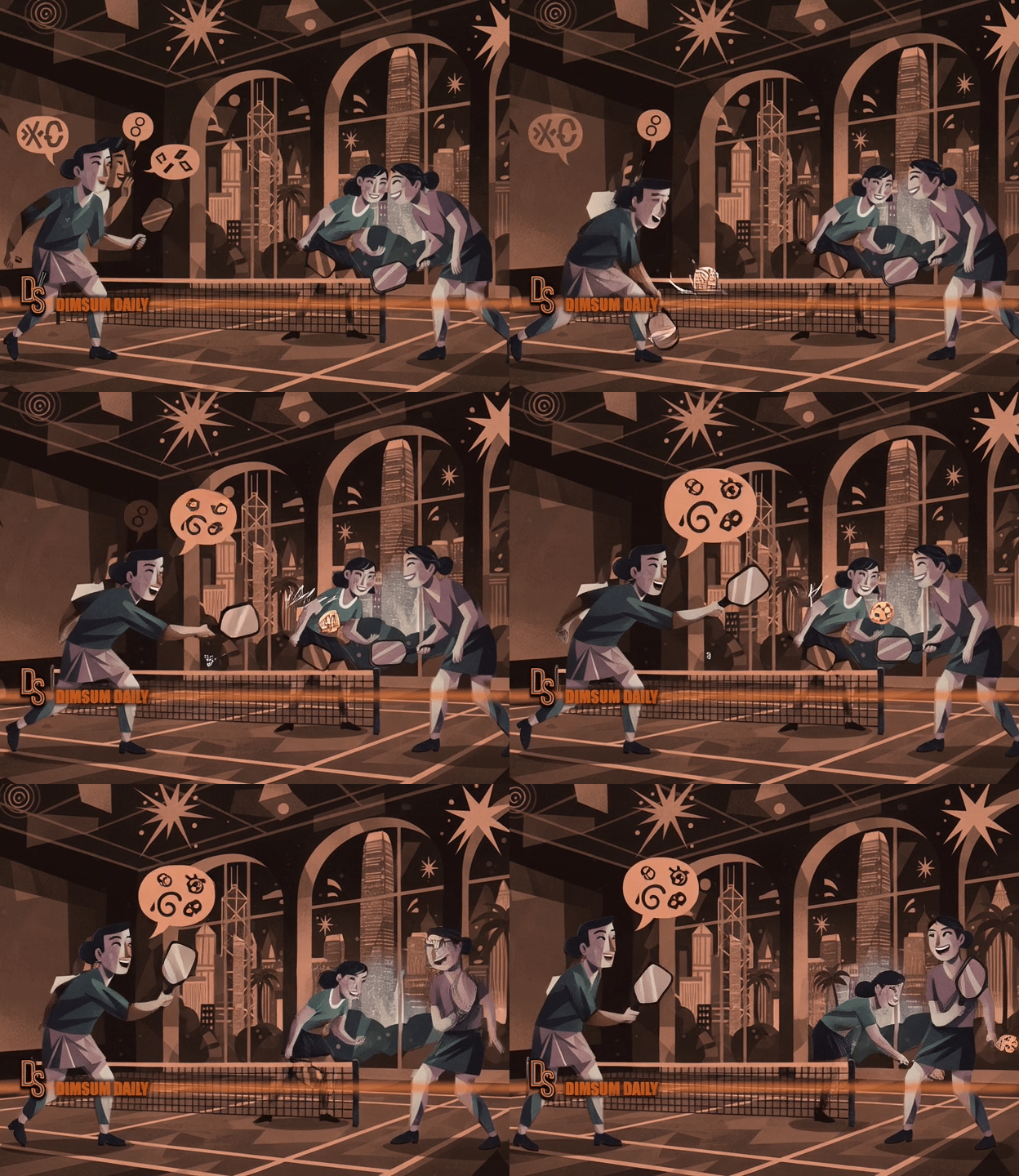
The doubles format matters more than it seems. In singles tennis, you lose alone. In pickleball doubles, there is always someone to blame, and someone to blame you. The shouts of “Mine!”, “Out!” and “Sorry, sorry!” are half the entertainment. Playing in pairs turns the game into a conversation with a net in the middle, and the conversation goes on long after everyone has forgotten the score.
Watch any group leaving a session and see where they go next: brunch, bubble tea, a bar, a long table at a cha chaan teng. The game lasts an hour. The photos, the gossip and the Instagram post last much longer. Matching outfits help. So do paddles costing more than HK$1,500, carried in bags designed to be noticed. For many players, the game is the excuse and the social life is what they are really paying for.
So is it dumb? By the standards of sport, yes, and in a precise way. It was designed to cancel out speed, power and reach, the very qualities sport normally rewards. It is slow to watch and noisy to live next to. It charges premium prices for a ball with holes in it.
Pickleball has worked out something tennis never managed in Hong Kong. Most adults don’t want to be tested. They want to move a little, laugh a lot, feel decent at something and then sit down with friends. Pickleball gives them all four in under two hours. The meme had it right. Shrink the court, add a partner, open a café next door. Hong Kong has found a better excuse to meet for dessert, and this one keeps score.