


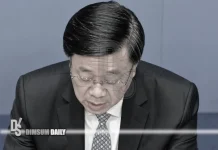


























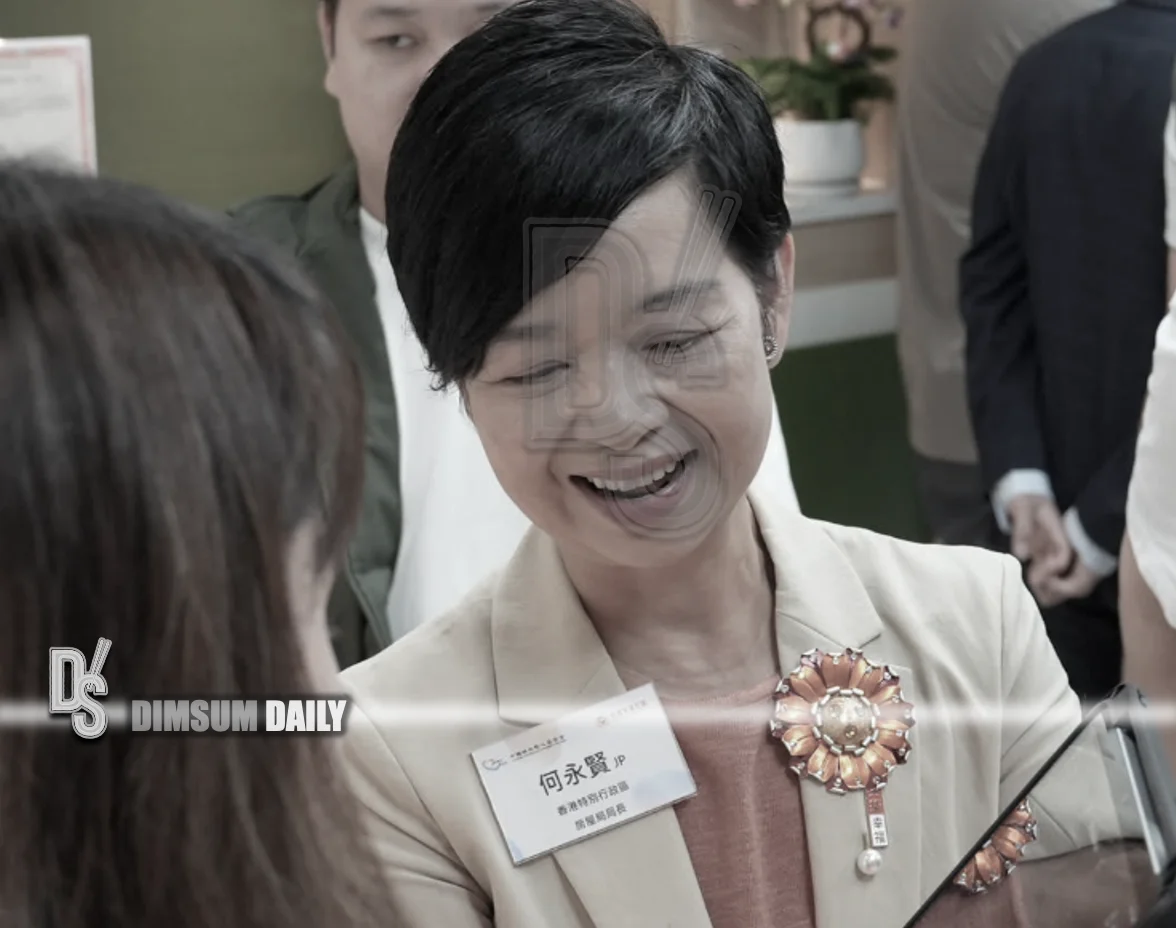
29th October 2026 – (Hong Kong) Chief Executive John Lee said this afternoon that Housing Secretary Winnie Ho should bear political responsibility for the Wang Fuk Court tragedy, and that he had accepted her resignation yesterday.
Speaking at a press conference on the independent committee’s report into the Tai Po No. 5 alarm fire that killed 168 people last year, Mr Lee framed the departure as political accountability. The Independent Checking Unit, which sits under the Housing Bureau permanent secretary’s office, regulates Housing Authority sold properties under the Buildings Ordinance — including major renovation works at Home Ownership Scheme estates. Hearings into the blaze put that unit at the centre of criticism over how fire risks were watched.
Witnesses and evidence at the hearings alleged the unit fell short as a monitor. Contractors were tipped off before scaffolding-mesh inspections on eight of ten visits. Inspectors once watched mesh burn for about ten seconds before a contractor blew out the flame — clear that it was not flame-retardant — yet the work still passed. Certificates for mesh were checked against flame-retardant standards without verifying whether they were genuine. On foam sealing of windows, the unit said no ordinance covered the practice, a view later challenged by the Buildings Department. Openings on rear staircases, blamed for smoke racing through the cores, went unnoticed; unit representatives said they thought wooden boards were shielding damaged windows, not creating access, though Wang Fuk Court then had such an opening every five floors.
Ms Ho joined the government in 1992 as an architect in the Architectural Services Department, rose to chief architect in 2009 and government architect in 2012, and became deputy director in 2018. In 2020 she succeeded Sylvia Lam Yu Ka-wai as director, overseeing Modular Integrated Construction quarantine camps, temporary hospitals and isolation facilities at Penny’s Bay and Kai Tak, as well as the Legislative Council Complex extension. When the present administration took office in 2022 and split transport from housing, she became the first Secretary for Housing. In that post she drove a programme of 30,000 Light Public Housing flats to shorten the public rental queue and steered legislation to regulate Basic Housing Units.
Her bureau also tightened the fight against public-housing abuse, introducing a tip-off reward scheme nicknamed the “ash-poking award”, strengthening tenants’ asset declarations and hardening the well-off tenants policy. That drive was shadowed last year by a tragedy at Tin Yan Estate in Tin Shui Wai. A mother and son with mental illness, accused of failing to declare assets truthfully when they applied for a flat 13 years earlier, were served a notice to quit. They appealed with a Castle Peak Hospital certificate, but the appeal board upheld the move-out order; both later died in a fall from height. Ms Ho said afterwards that they had not declared their assets honestly, that the Housing Department had handled the case with humanity and a balance of compassion and reason, and that a grace period and Social Welfare Department social workers had been arranged. Those remarks drew sharp criticism.
Controversy over her language was not new. In 2023, promoting a remote Tuen Mun Light Public Housing site, she described daily bus rides along Castle Peak Road for grassroots tenants as a “soul-cleansing happy journey” and said the rent saved meant that taking a few more buses still left households ahead. Welfare groups assisting low-income families called the comments out of touch and said she had failed to weigh different grassroots realities.