


















31st October 2024 – (Hong Kong) The eagerly anticipated revamp of Hong Kong’s renowned Choi Hung Estate represents a crucial step in the city’s public housing renewal initiatives. However, it also highlights the substantial challenge that urban planners face in tackling the broader problem of aging infrastructure. Although the 20-year project to rejuvenate the 60-year-old, rainbow-coloured estate will add 1,800 new units, it is only a small portion of Hong Kong’s aging public housing inventory that urgently needs updating.
The Federation of Public Housing Estates’ comprehensive blueprint for redevelopment identifies 14 aging estates requiring similar intervention, yet the Choi Hung project highlights why such renovations remain dauntingly complex. The primary challenge lies in resident relocation – a puzzle that has delayed countless renewal projects and continues to stymie efforts to modernise the city’s public housing infrastructure.
The scope of Hong Kong’s aging building crisis extends far beyond public housing. Over 27,000 buildings in the territory are between 30 and 60 years old, with an additional 1,100 structures exceeding 70 years. This aging infrastructure poses increasing safety risks, evidenced by recurring incidents of falling concrete and structural deterioration that endanger both residents and pedestrians.
The Choi Hung Estate redevelopment plan, while ambitious, reveals the intricate challenges facing Hong Kong’s urban renewal efforts. Set to begin in 2028, the project will relocate 2,030 households to redeveloped Mei Tung Estate in its first phase, followed by two subsequent phases stretching into 2048. This extended timeline illustrates the delicate balance required between maintaining community stability and implementing necessary infrastructure improvements.
According to the Federation of Public Housing Estates’ blueprint, priority redevelopment should be given to eight estates within the next five years, including Wo Lok Estate, the unrenovated portions of Shek Kip Mei Estate, Nam Shan Estate, Fu Shan Estate, Ma Tau Wai Estate, Sai Wan Estate, and Phase 3 of Healthy Village. Six additional estates, including Model Housing Estate and Kwai Shing West Estate, are slated for later phases. However, with Hong Kong’s public housing waiting list already stretched to breaking point, finding temporary accommodation for displaced residents remains a formidable challenge.
The mathematics of redevelopment present a sobering reality. Using the Mei Tung Estate redevelopment as a benchmark, with approximately 1,300 units per hectare, the renovation of all 14 identified estates could potentially create 36,000 new units. However, this theoretical capacity faces practical constraints, particularly in securing suitable relocation sites for existing residents during construction.
The Housing Authority’s situation epitomises the classic “chicken and egg” dilemma of urban renewal. To create more housing, existing structures must be demolished, but to demolish these structures, alternative housing must first be available. This circular problem is compounded by Hong Kong’s severe land constraints and the pressing demand for public housing from new applicants.
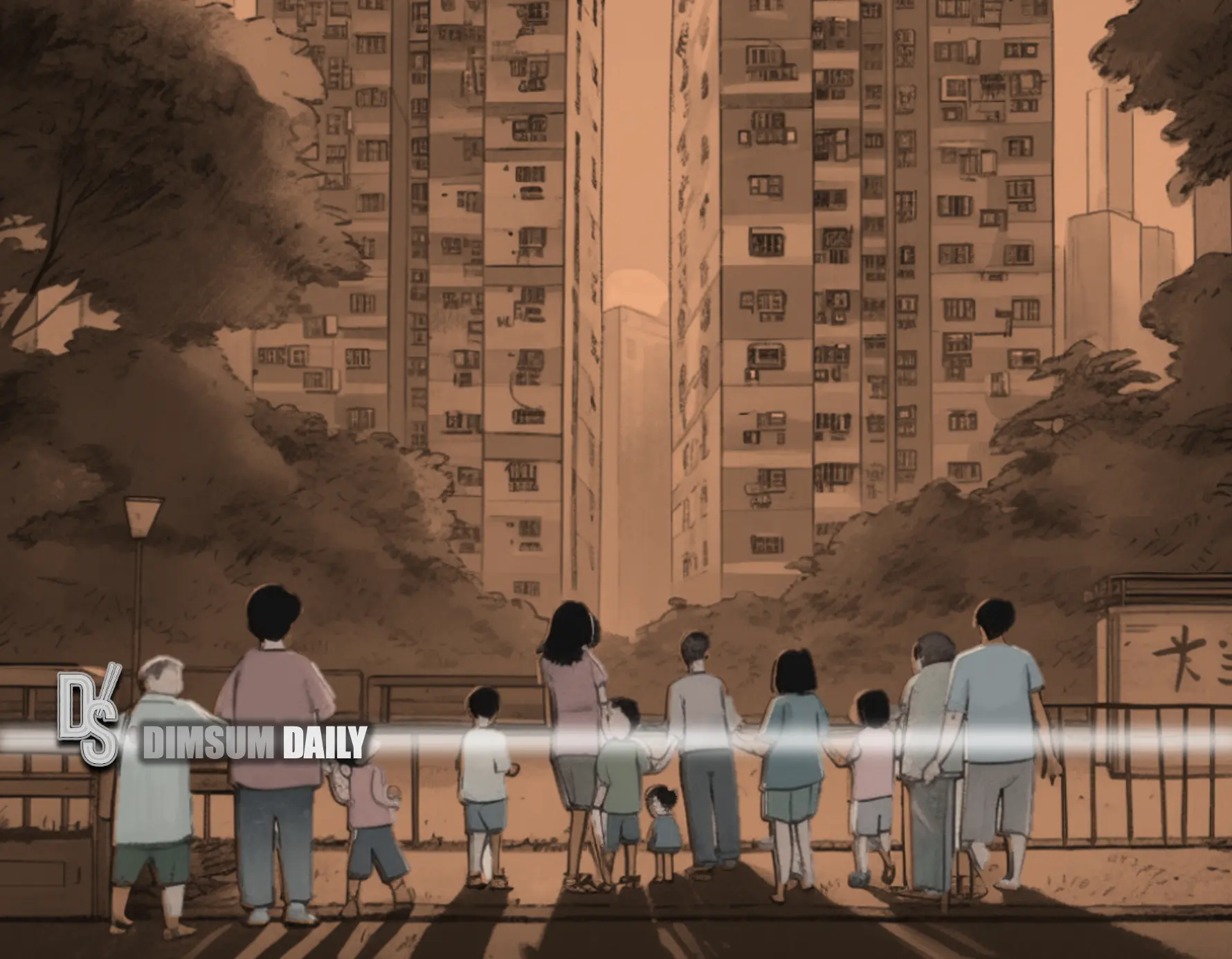
The broader implications of delayed redevelopment extend beyond housing availability. Many ageing estates face escalating maintenance costs and safety concerns. At Choi Hung Estate, frequent concrete spalling incidents and structural deterioration underscore the urgency of renovation, yet similar conditions persist across numerous other aging estates with no immediate prospects for renewal.
The government’s approach to this crisis has been necessarily methodical but arguably insufficient given the scale of the challenge. While the Housing Authority has successfully completed renovations of estates like Pak Tin and is progressing with others like Wah Fu, these projects represent only a small fraction of the agieng housing stock requiring attention.
Urban renewal experts argue for a more aggressive approach, suggesting that Hong Kong must accelerate its redevelopment timeline or risk facing a cascade of infrastructure failures in the coming decades. This would require not just financial investment but also innovative solutions to the relocation challenge, potentially including temporary housing solutions or creative use of available land.
The economic implications of delayed renewal are significant. Maintenance costs for ageing buildings continue to escalate, while the inefficient use of valuable land in low-density older estates represents a missed opportunity for housing provision in a city desperate for additional units. The social costs are equally concerning, with residents in aging estates facing deteriorating living conditions and potential safety risks.
International examples offer potential solutions. Singapore’s successful public housing renewal program, which emphasises precise planning and phased redevelopment, could provide valuable lessons for Hong Kong. Similarly, Tokyo’s experience with high-density redevelopment while maintaining community cohesion offers relevant insights.
Looking ahead, Hong Kong’s urban renewal strategy demands a fundamental reassessment. The current method of tackling projects one by one, although thoughtful and attuned to the needs of residents, may not be swift enough to keep up with the rapidly ageing infrastructure. A broader, city-wide strategy is crucial, which could include establishing dedicated transitional housing zones for quicker estate renewal, increasing development density in new projects to optimise land usage, adopting innovative construction techniques to shorten project durations, enhancing maintenance programs for estates in line of renewal, and devising creative financing methods to speed up the renewal process.
The redevelopment of Choi Hung Estate, while a noteworthy progress, acts as both a template and a cautionary example. Its meticulous planning exemplifies the best practices in preserving community integrity and implementing phased renewal. However, the prolonged timeline it necessitates highlights the acute need for quicker resolutions to Hong Kong’s building deterioration dilemma.