



















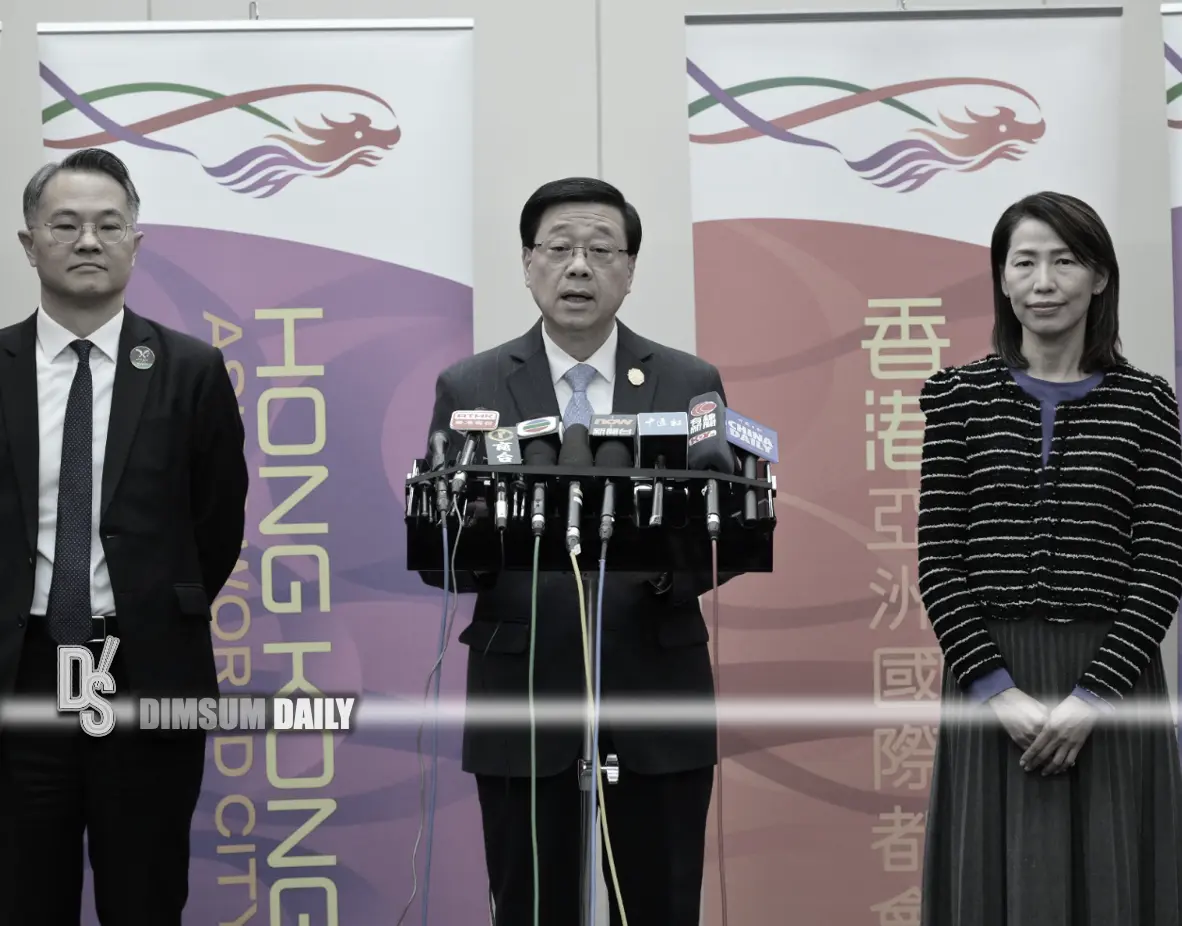
1st November 2025 – (Gyeongju) The Chief Executive briefed reporters in Gyeongju after the Asia-Pacific Economic Cooperation Economic Leaders’ Meeting, setting out takeaways on trade, regional engagement and plans to assist with the 2026 summit to be hosted in Shenzhen.
He said he used meetings on the sidelines to provide an update on social and economic conditions and noted continued support from the country’s leadership. He described consistent encouragement to focus on governance and expressed appreciation for the attention given to the city’s development.
Looking ahead to 2026, he said the Special Administrative Region Government would fully support arrangements for the APEC gathering to be held in Shenzhen, citing the neighbouring city’s proximity and close ties. He added that preparations would align with Central Government planning and APEC guidelines, and that the administration stood ready to contribute to the organisation and smooth running of the conference.
On the outcomes from Gyeongju, he highlighted the Leaders’ Declaration adopted by APEC economies, describing it as significant for its focus on economic co-operation, connectivity and resilient supply chains. He said the statement underscored shared opportunities and challenges with goals centred on connection, innovation and prosperity.
Strengthening links with the host economy was a major theme. He pointed to two weeks of ministerial participation by senior officials, including the Financial Secretary, the Secretary for Justice and the Secretary for Commerce and Economic Development. He noted that Korea is the city’s fifth-largest trading partner and said bilateral trade had grown at a double-digit pace year on year. On tourism, he cited 850,000 visitor arrivals from Korea in 2024, approximately double the previous year, and referenced K‑pop events at the Kai Tak Sports Park as a draw for travellers. He also mentioned a September memorandum of understanding with the Busan Asian Film School enabling local filmmakers to undertake an eight‑month programme, a roughly 70 per cent year‑on‑year increase in flights between the city and Busan in October, and the launch of a new route to Daegu in June.
He said engagement with Southeast Asian partners had advanced. He held a bilateral with Singapore’s Prime Minister, Lawrence Wong, resulting in plans for a delegation of Permanent Secretaries to visit Singapore, following a similar exchange in 2023 in the other direction. He reported talks with Indonesia’s President on arranging cultural and arts delegations to perform in the city. On Malaysia, he said discussions with the Prime Minister left both sides confident that a new Economic and Trade Office in Kuala Lumpur would be operational before year‑end.
Links with the Middle East were also on the agenda. He met the Crown Prince of Abu Dhabi, who, he said, viewed the city as an attractive destination for investment and a bridge to Mainland cities. He welcomed the focus on the local market and said further exchanges would be encouraged.
He also met the Managing Director of the International Monetary Fund, emphasising the city’s role as an international financial centre. He referenced last year’s IMF Article IV Consultation, which affirmed the city’s status among the world’s top three international financial centres and acknowledged the resilience and strengths of its financial regime.
He concluded that the administration would build on contacts made during the week to tighten links with counterparts, pursue follow‑up discussions and convert conversations into concrete co‑operation across trade, investment and cultural exchange.

