

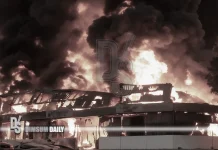




























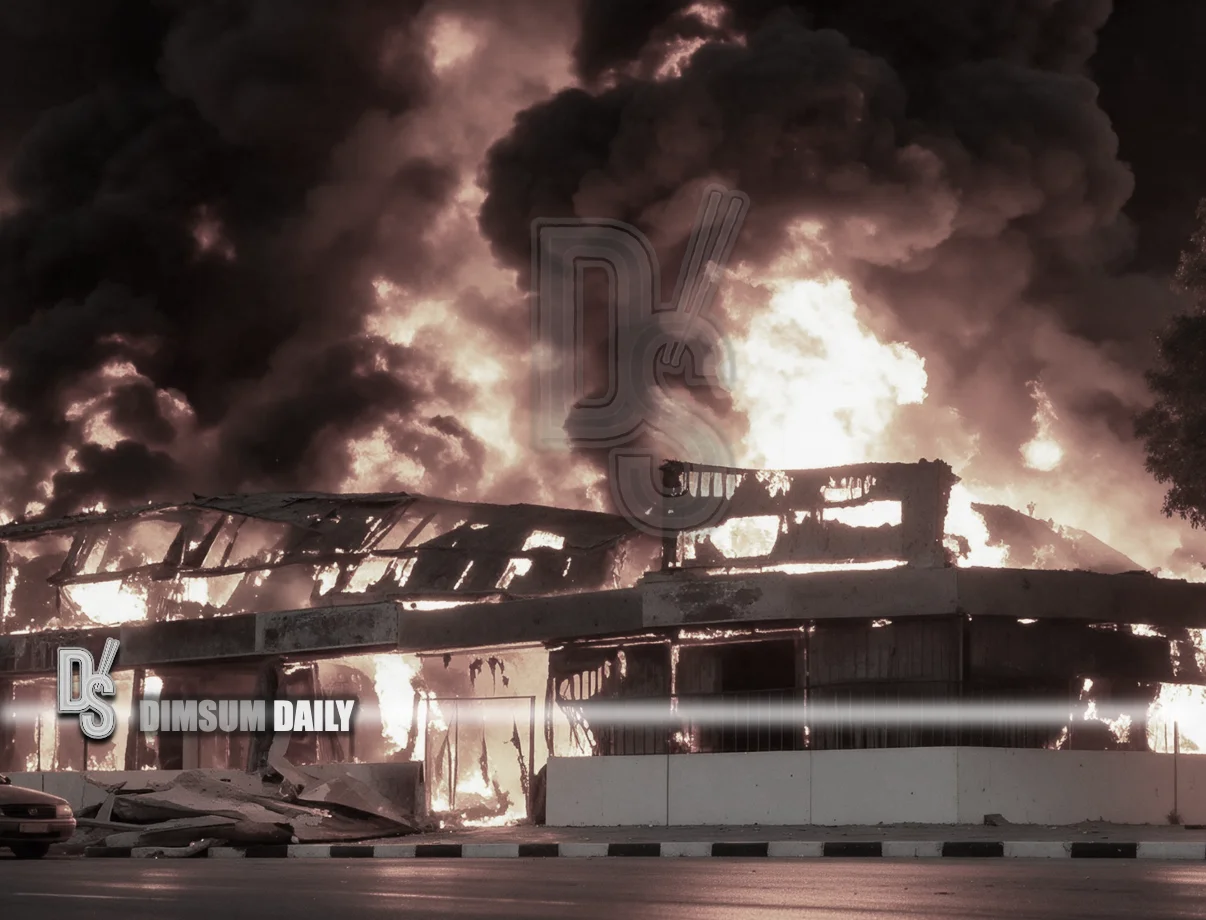
3rd November 2026 – (Washington) US officials said the military conducted limited, defensive strikes on Iran’s Qeshm Island late on Monday after Iranian forces fired at a US aircraft in the Strait of Hormuz. Iranian state media reported a series of blasts on Qeshm, while the Islamic Revolutionary Guard Corps claimed it had brought down two US reconnaissance drones south of the island and a US MQ‑9 east of the strait. There was no immediate formal comment from the Pentagon or Tehran on the scope of the action, which officials described as intended to protect US assets rather than herald a return to large‑scale operations.
The strikes arrived as mediators intensified efforts to head off a wider conflict. Iranian Foreign Minister Abbas Araghchi said “very intensive” talks with the United States were under way via Qatar and Pakistan, and Qatari spokesman Majed al‑Ansari said both sides were reviewing proposals with the aim of reaching a deal. Parliamentary speaker Mohammad Bagher Ghalibaf declared that “the ball is now in America’s court to prevent war”, while maintaining that Iran stood ready to respond. Regional officials said Israeli Prime Minister Benjamin Netanyahu had urged Washington to mount further action after the US midterm elections, though the White House signalled caution.
President Donald Trump told reporters he was in “no rush” to escalate, arguing that sanctions had already “crippled” Iran financially. He floated the possibility of striking Pickaxe Mountain, an underground site linked by Israel to Iran’s nuclear programme, calling such an operation “not a big deal” that could be executed “in one hour”, but later rejected suggestions that a broader campaign would automatically follow Tuesday’s vote. Vice‑President JD Vance said progress had been made towards a negotiated off‑ramp, adding that the administration remained focused on diplomacy alongside force protection.
The contest over the Strait of Hormuz, through which roughly a fifth of global oil and gas shipments typically pass, has intensified since the war began earlier this year. Iran has launched missile and drone attacks on commercial vessels while the United States has enforced a naval blockade, prompting efforts to shepherd tankers through with military protection. A preliminary understanding reached in June to reopen the waterway collapsed when attacks resumed and the blockade was reinstated; Tehran has insisted on retaining leverage over shipping routes and has targeted vessels using southern approaches via Omani waters.
Market nerves followed reports of the latest blasts. Early on Tuesday, Brent crude climbed to about $106.61 a barrel and West Texas Intermediate to roughly $98.06 by 7.44am GMT, reflecting fears of renewed risks to energy supplies. As diplomatic channels work to bridge remaining gaps, Washington framed the overnight action as calibrated and defensive, while Iranian officials warned that any miscalculation would be met with a robust response.