

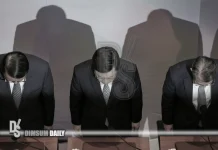
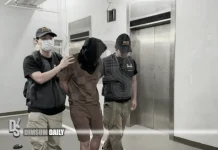

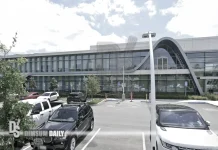
























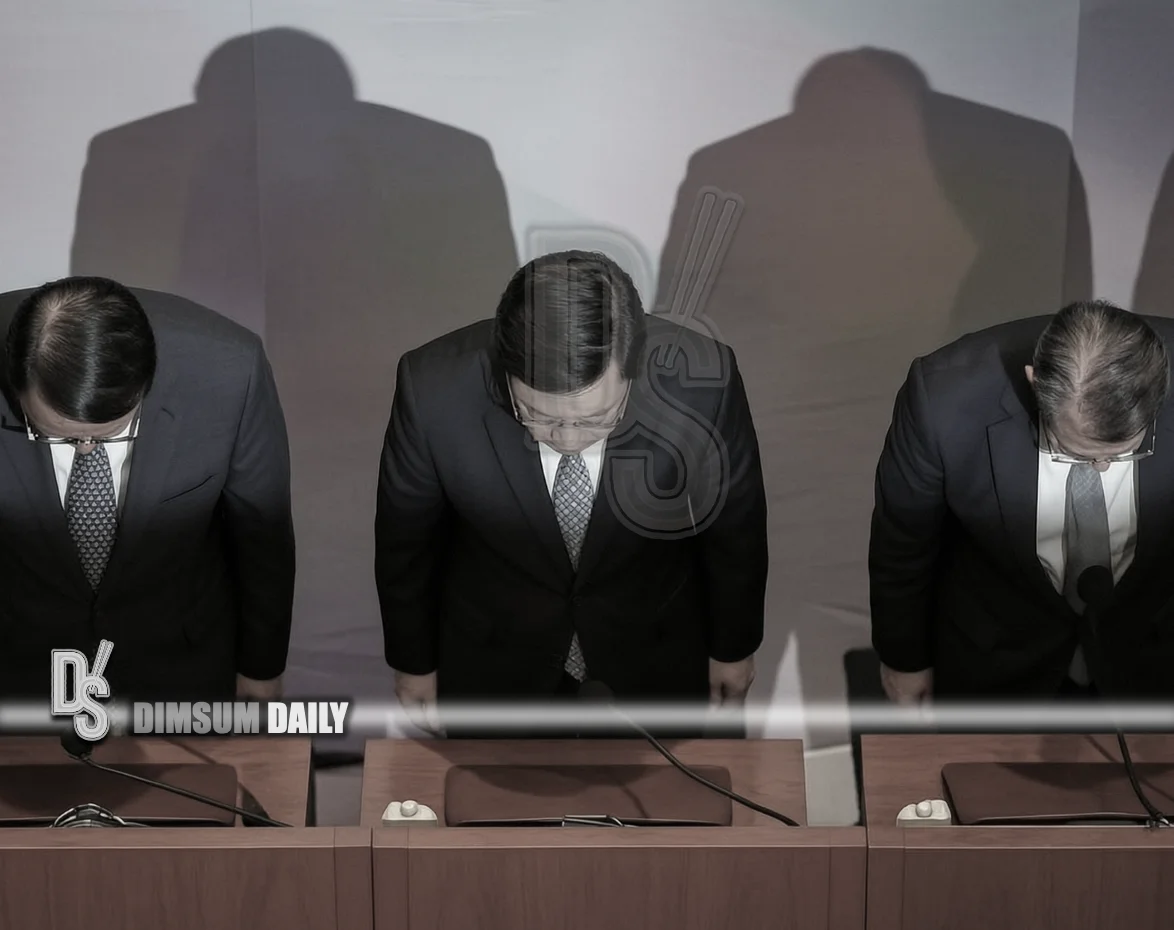
29th October 2026 – (Hong Kong) Chief Executive John Lee today led seven principal officials in an unprecedented collective bow of apology to Wang Fuk Court survivors and the wider public as the government released the independent committee’s report into the blaze that killed 168 people.
The panel submitted its findings last Thursday. At this afternoon’s briefing Mr Lee was joined by Chief Secretary for Administration Chan Kwok-ki, Financial Secretary Paul Chan, Secretary for Justice Paul Lam, Deputy Financial Secretary Michael Wong, Security Secretary Tang Ping-keung, Labour and Welfare Secretary Chris Sun and Development Secretary Bernadette Linn. He announced that Housing Secretary Winnie Ho had taken political responsibility, tendering her resignation yesterday, which he accepted. The Hong Kong and Macao Affairs Office and the Liaison Office both said the mass bow projected a responsible government — a sight unseen in previous Hong Kong crises.
Since the handover, senior officials have at times apologised for policy failings, sometimes at once and sometimes only after inquiries pinned blame. In other disasters, refusal to apologise directly drew fire, with critics saying apology was treated as an admission of legal fault.
After chaos marked the new airport’s opening in July 1998, then Chief Secretary for Administration Anson Chan spoke only of “regret” and did not apologise to the public, prompting anger. Independent and Legislative Council inquiries later named her for criticism. Four months on, in January 1999, she told a radio programme she apologised “without reservation”.
In July 2002, when a Hong Kong Exchanges consultation on delisting shares that traded below 50 cents for 30 days sparked a penny-stock sell-off, newly installed Secretary for Financial Services and the Treasury Frederick Ma bowed at 90 degrees — the first political appointee under the accountability system to apologise. He later said that, new to politics, he had “swallowed a dead cat”.
In March 2003, then Financial Secretary Antony Leung was exposed for buying a car before announcing a sharp rise in first registration tax. He apologised for negligence and hoped the public would accept it as an “unintentional lapse”, saying the purchase was for his expected newborn daughter. Then chief executive Tung Chee-hwa called the conduct “highly inappropriate”. Mr Leung resigned that July.
Eight months after the 1st October 2012 Lamma ferry collision that killed 39 people during National Day fireworks, then Director of Marine Francis Liu bowed and said: “As department head, I am deeply sorry and sincerely apologise to the families of the deceased, the injured and the public.”
When the 2016 lead-in-water inquiry report landed, then Development Secretary Paul Chan, then Transport and Housing Secretary Anthony Cheung, then Director of Housing Leung Yiu-hong and then Director of Water Supplies Lam Tin-sing apologised. Then Chief Secretary Carrie Lam did not, saying she could not see any official bearing personal responsibility. In LegCo she twisted a proverb to “an official with no desires grows bold”, accusing opponents of politicising the affair while claiming courage to admit systemic gaps and defend civil servants.
In June 2019, after mass marches against amendments to the Fugitive Offenders Ordinance, the government issued a written apology on the 16th. On the 18th Mrs Lam held a press conference, admitting inadequate work and explanation had fuelled contradiction, dispute and anxiety, and offered a sincere apology. The next day then Security Secretary John Lee also apologised in LegCo and pledged wider consultation. Protests later turned violent, paving the way for the National Security Law.
In January 2022, then Home Affairs Secretary Caspar Tsui thrice apologised after attending a hundred-person banquet birthday party for then NPC deputy Horace Chin against Covid guidelines, becoming a close contact sent to Penny’s Bay quarantine. On 31st January, before an investigation report was released, he resigned, saying a politically accountable official must own his mistakes.
Following the Grenfell Tower fire in London, which claimed 72 lives on 14th June 2017 and became Britain’s deadliest residential fire since the Second World War, then prime minister Theresa May issued a public apology a week later, acknowledging the lack of immediate support and describing the tragedy as a “failure of the state.” When the official inquiry released its report in September 2024, May again apologised directly to affected families and survivors, while current prime minister Keir Starmer also offered an apology on behalf of the British government.
Other world leaders have issued public apologies in the aftermath of national disasters. Greek prime minister Kyriakos Mitsotakis delivered a televised address to admit the state’s shortcomings in responding to the devastating 2021 wildfires that ravaged Evia island, burning more than 56,000 hectares. In Australia, prime minister Scott Morrison publicly apologised to citizens for his decision to go on a family holiday to Hawaii amid a period of catastrophic bushfires across the country.