




















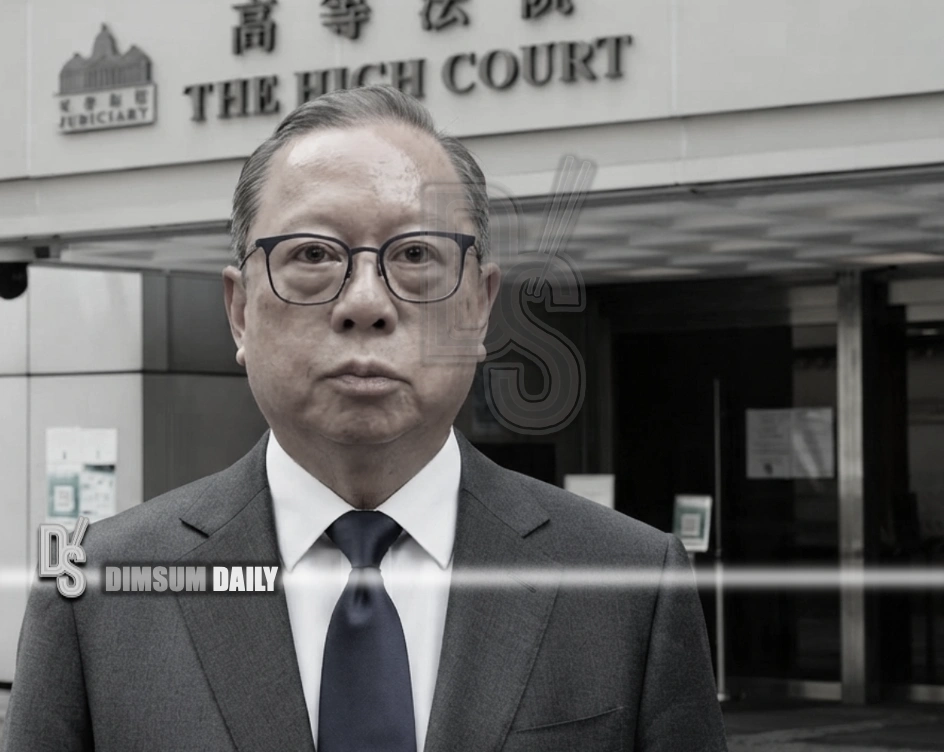
24th July 2026 – (Hong Kong) Hong Kong Tourism Board chairman Peter Lam has been formally drawn into the long-running probate battle over the estate of his late father, the industrialist Lim Por-yen, after Mr Justice Wilson Chan granted leave for him to be joined to the proceedings and ordered that the costs of the action be borne personally by Mr Lam and the plaintiffs, jointly and severally. The decision, handed down on 17th July in the Court of First Instance proceedings HCAP 4/2011, marks the first time the court has explicitly connected Mr Lam — who also chairs the HKEX-listed Lai Sun Group, encompassing Lai Sun Garment, Lai Sun Development, Lai Fung Holdings and Media Asia Group Holdings — with both the conduct and the financial consequences of the entire probate action.
Until now, Mr Lam’s involvement had remained partially veiled. He had appeared as a witness, but the action itself was brought by the executors rather than by him directly. The 17th July ruling strips away that distance. The court recorded that there was no dispute Mr Lam had funded the proceedings, a fact he admitted in an affirmation filed in opposition to the costs application. It further found that he stood to benefit from the litigation, receiving a greater proportion of the estate under the disputed arrangements, while the so-called third family would have been disinherited completely. On that basis, the judge held that Mr Lam should be joined and made liable for the costs of the proceedings.
The roots of the dispute stretch back to two competing wills. Under a 2004 will, Lim Por-yen left the vast majority of his assets to his “second family” — in particular Madam U, her son Mr Peter Lam Kin-ngok and her adopted son Mr Matthew Lam Kin-hong — together with Mr Lam Kin-ming of the “first family”. The “third family”, comprising Madam Koo Siu-ying and her children Ms Pearl Ling and Mr Eric Ling Wai-kwan, were excluded entirely. That arrangement collapsed in April last year, when Mr Justice Chan handed down his judgment in the probate action, reported as [2025] HKCFI 1401, pronouncing instead for a 1973 will in solemn form.
That earlier judgment was withering. Accepting the evidence of Dr Chan, an independent witness, the judge held the 2004 will invalid for lack of testamentary capacity, citing Mr Lim’s severe dementia, and for want of knowledge and approval. He found that Madam U’s hearsay evidence was untrue, observing that it was inconceivable she had known nothing of Mr Lim’s dementia or Alzheimer’s disease. More seriously still, he concluded that all of the plaintiffs’ principal witnesses — Mr Lam among them — could not have been telling the truth about the occasion on which the 2004 will was executed, and that their refusal to tell the truth about Mr Lim’s mental condition and what happened during and after his mental examination amounted to a “deliberate cover-up”. The 2004 instrument, the judge found, was in truth merely the product of negotiation and jockeying between beneficiaries, its contents never known to or approved by Mr Lim.
Those findings echoed directly through last week’s costs ruling. In considering whether indemnity costs were warranted, Mr Justice Chan returned to his earlier conclusions that the plaintiffs’ witnesses, including Mr Lam, could not have been truthful about the execution of the will, and to the “deliberate cover-up” finding. He stressed this was not merely a case of preferring one witness’s evidence over another’s: the deliberate presentation of a cover-up of the true events took the case “out of the norm” and justified the exceptional order of indemnity costs. Such orders, which lift the usual limits on recoverable costs, are reserved in Hong Kong practice for conduct the court regards as deserving of real disapproval.
The pressure on Mr Lam is compounded by a separate decision delivered three days earlier, on 14th July, in the related “passing over” proceedings. In that ruling he is expressly named as the Fifth Respondent and an Interested Party. The decision records that alleged transfers of Mr Lim’s shares — transfers said to have been made to Madam U and Mr Lam, individuals against whom the probate judgment made adverse comments — occurred at a time when Mr Lim had been found to lack the mental capacity for such transactions. Both decisions are available on the Judiciary’s legal reference system under HCAP 4/2011.
Taken together, the rulings illustrate a principle courts have applied with increasing willingness: that a non-party who funds litigation and stands to gain from its outcome cannot shelter behind the formal parties when the costs bill arrives. For a figure of Mr Lam’s public standing, the reputational dimension may prove as significant as the financial one.
The timing, however, ensures the judgments will be read against an uncomfortable backdrop for their author. Mr Justice Chan, who was formally reprimanded in 2023 by Chief Justice Andrew Cheung and High Court Chief Judge Jeremy Poon over wholesale reproduction of submissions, is once again under scrutiny. On 20th July, the Court of Appeal — in a family dispute over shares in Overseas Associates Ltd, CACV 198/2023 — accepted that portions of his reasoning had been copied from counsel’s written arguments and called the extent “less than ideal”, though it concluded he had exercised independent thought and declined to overturn his decision on that ground alone. Days later, in a Nam Tai Electronics-related dispute over shares worth some HK$40 million, the appeal court found that close to 95 per cent of his 2024 judgment had been lifted from one side’s submissions, quashed the decision and ordered a full retrial before a different judge. Earlier cases tell a similar story: more than 98 per cent of his ruling in the Wong To Yick Wood Lock Medicated Balm trademark dispute was found to replicate the plaintiffs’ arguments, prompting a rehearing order in 2023, while roughly 92 per cent of a judgment in a Lo family company dispute was copied, leading to reassignment.
To be clear, no party has suggested the Lim Por-yen estate findings are tainted by that controversy, and the Court of Appeal has been careful to distinguish judgments that betray an absence of independent weighing from those that merely borrow language. Yet the optics are awkward. A costs order of this severity, resting on findings that witnesses covered up the truth, demands absolute confidence in the judicial hand behind it — confidence the court system will now be anxious to demonstrate as the assessment of costs, the passing-over application and any appeals proceed.