





























 has unveiled the ‘Hong Kong Inclusion Index 2024’, revealing an overall inclusion score of 69.44, reflecting an average perception of inclusivity across the territory.)
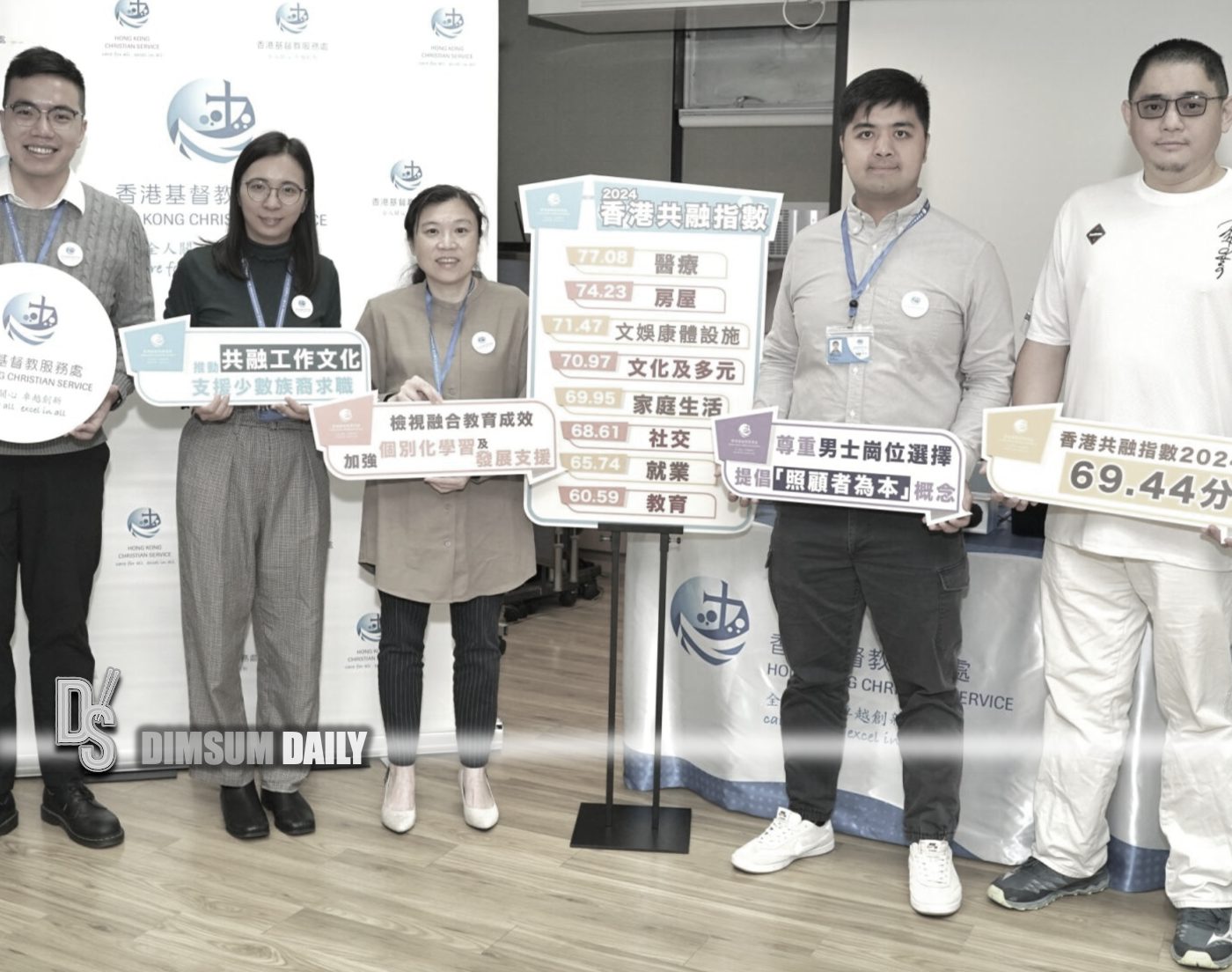
28th November 2024 – (Hong Kong) Hong Kong Christian Service (HKCS) has unveiled the ‘Hong Kong Inclusion Index 2024’, revealing an overall inclusion score of 69.44, reflecting an average perception of inclusivity across the territory. The report highlights significant disparities, particularly among males, South Asians, and residents of subdivided flats, who feel less included in society.
The Inclusion Index, developed by HKCS, assesses eight key areas: Employment, Leisure, Housing, Family Life, Social Life, Education, Healthcare, and Culture and Diversity. Notably, ‘Healthcare’ (77.08) and ‘Housing’ (74.23) scored the highest, while ‘Employment’ (65.74) and ‘Education’ (60.59) were ranked the lowest.
The survey, conducted from May to June 2024 through a combination of telephone interviews, online surveys, and physical questionnaires, gathered responses from 1,026 individuals. Among the participants, 93.7% identified as Chinese, with South Asians representing 2.9% and Indians 2.1%. The findings revealed that nearly 20% of respondents had experienced some form of discrimination in the past year, with an average of 1.1 incidents reported.
While the government has made strides in improving inclusion, particularly in healthcare and housing, the report underscores ongoing challenges. Residents of subdivided flats reported the lowest inclusion score of 58.67, even lower than that of the homeless, who scored 63.99. The inclusion score for South Asians was particularly concerning, at 67.22, with their employment score plummeting to 57.20. This demographic reported an average of 3.4 instances of discrimination, significantly higher than the 1.0 reported by Chinese respondents.
The report also highlighted gender disparities, with males scoring 68.3 compared to females at 70.68. Males reported more instances of unfriendly treatment, particularly in family life settings, where societal stereotypes regarding gender roles persist. Single father Mr Wong shared his experiences of societal pressure as a caregiver, advocating for greater recognition of men’s roles in family care.
To address these issues, HKCS has proposed several recommendations, including a review of inclusive educational practices to better support individual learning needs, promoting an inclusive work culture for ethnic minorities, and advocating for a more gender-inclusive approach to social services.