





15th February 2023 – (Taipei) Chinese Buddhist monk Hsing Yun passed away on 5th February at the age of 97. After the funeral was held at Fo Guang Shan on the 13th, his body was transported to Tainan Daxian Temple for cremation.

Meanwhile, around 25 large and small ‘Buddhist human pearls’ (Śarīra) were produced as a result of the cremation. Fo Guang Shan also confirmed the incident on the 14th. The relics appeared in red, yellow, blue, black, pearl white and other glazed colours.


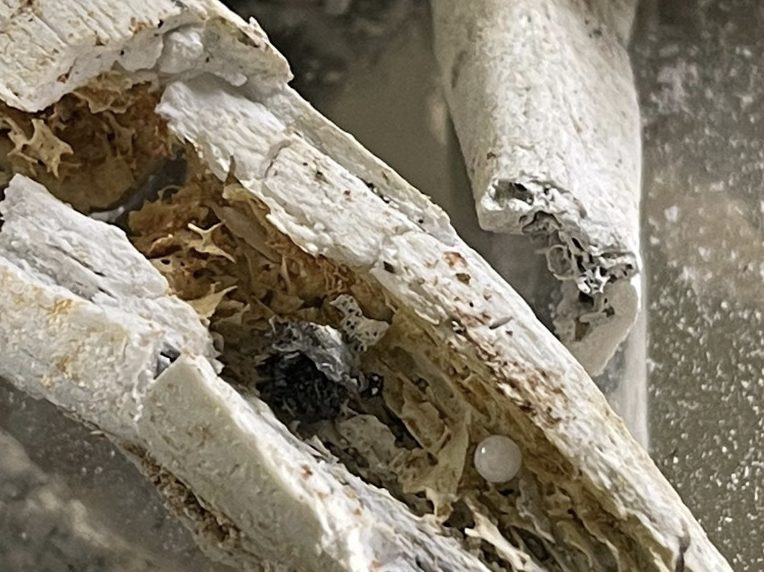
Śarīra is a generic term referring to Buddhist relics, although in common usage it usually refers to pearl or crystal-like bead-shaped objects that are purportedly found among the cremated ashes of Buddhist spiritual masters. Relics of the Buddha after cremation are termed dhātu in the Mahaparinibbana Sutta.
Hsing Yun was a Chinese Buddhist monk, teacher, and philanthropist based in Taiwan. He was the founder of the Fo Guang Shan Buddhist monastic order as well as the layperson-based Buddha’s Light International Association. Hsing Yun was considered a major proponent of Humanistic Buddhism and one of the most influential teachers of modern Taiwanese Buddhism. In Taiwan, he was popularly referred to as one of the “Four Heavenly Kings” of Taiwanese Buddhism, along with his contemporaries: Master Sheng-yen of Dharma Drum Mountain, Master Cheng Yen of Tzu Chi and Master Wei Chueh of Chung Tai Shan.
In Taiwan, Hsing Yun was notable for his activity in political affairs, particularly as a supporter of the One-China policy as well as government legislation supported by the Kuomintang, and was criticized for his views by those in favor of Taiwan independence and by religious figures, as being overtly political and “considerably far afield from traditional monastic concerns”. During the 2008 presidential election, Hsing Yun publicly endorsed Kuomintang candidate Ma Ying-jeou. During the second World Buddhist Forum in 2009, Hsing Yun asserted that there are “no Taiwanese” and that Taiwanese “are Chinese”. During the 2016 presidential election campaign, Hsing Yun caused considerable comment when he compared DPP candidate Tsai Ing-wen to the Chinese goddess Mazu, commenting that those traits would probably help Tsai be elected president, which she eventually was. To dispel rumors of party switching, Hsing Yun publicly gave his endorsement to KMT candidate Hung Hsiu-chu, who eventually withdrew from the race. Despite his Kuomintang partisanship, Hsing Yun was generally known to be respected by politicians of both parties.
He encouraged reconciliation between China and the Dalai Lama, but tried hard to avoid causing rifts between him and his organisation and the Chinese government.
On 26 December 2011, Hsing Yun suffered a minor ischemic stroke, his second in that year.[21] In his older years Hsing Yun began suffering from numerous health issues, including diabetes and near blindness.[13]
Hsing Yun died at his residence in Fo Guang Shan monastery on the afternoon of 5 February 2023, after years of unstable health. He was 95, having spent 85 years of his life as a monastic. The announcement of his death was delayed in order for his worldwide branch temples to finish celebrating ceremonies on the Lantern Festival, the last day of the Lunar New Year celebration. Per his wishes, he requested to be returned to Fo Guang Shan where he could die peacefully. He had also requested that no extravagant funeral arrangements be made.
On the early morning of 6 February, the news of Hsing Yun’s death was announced in the Great Hero Hall by Venerable Hsin Bau. Shortly after the formal announcement, Hsing Yun’s body was placed in a seated position inside a dome-like container in the shape of the Parinirvana Stupa in Kushinagar, India. His body was placed upon a dais inside the Cloud Dwelling Building where he laid in state for seven days. During this time, monastics, lay followers, and dignitaries paid their respects.
Hsing Yun’s funeral was held on 13th February, with President Tsai Ing-wen, Premier Chen Chien-jen, KMT chairman Eric Chu, and Kaohsiung mayor Chen Chi-mai in attendance. His remains were cremated at Daxian Temple in nearby Tainan, Baihe District. His urn was returned to Fo Guang Shan’s Longevity Memorial Park the same evening.