































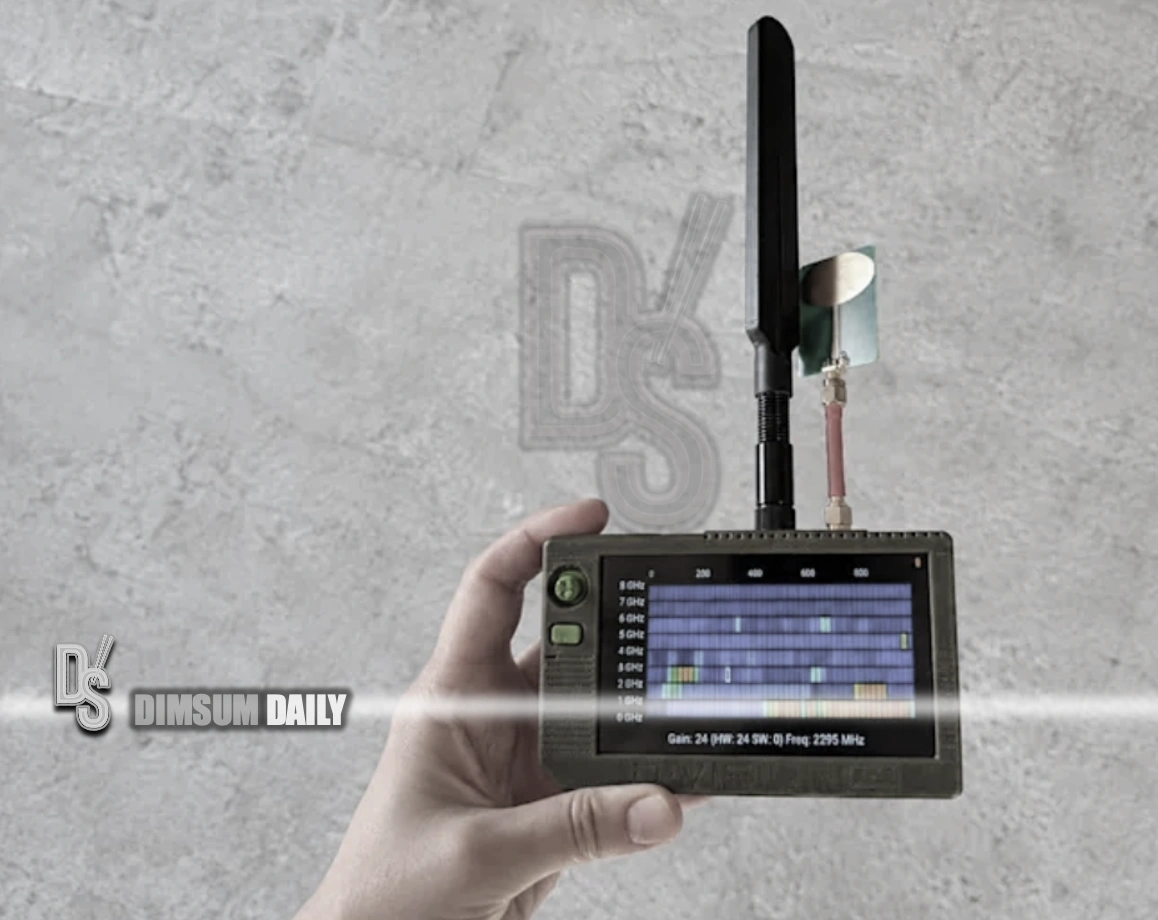
26th October 2026 – (Kyiv) A Ukrainian engineering team has unveiled a software‑defined radio detector that not only flags incoming unmanned aircraft but also decodes their transmissions to display, in real time, the same video a Russian drone operator sees. The portable unit, named D·Vision SDR and built by Kyiv‑based communications maker Code380, was combat‑tested with Ukrainian troops and is being iterated through frequent software updates to keep pace with shifting enemy tactics. Reports from Ukrainian defence outlets and international technology media describe the system as a step‑change in frontline awareness, giving units a live window into hostile reconnaissance and strike missions.
Unlike fixed analogue receivers traditionally used at the front, D·Vision SDR digitises wide slices of spectrum and processes them in software, enabling rapid retuning as frequencies and modulation schemes change. Developer materials state the detector sweeps approximately 500 to 8,700 MHz, with its software‑first design allowing capability gains to be delivered over the air rather than through hardware refreshes—an approach users say has proved essential amid weekly shifts in Russian drone behaviour.
Operators emphasise that converting an intercepted link into watchable video is more than a technical flourish: it helps ground units judge whether they are being targeted and decide, within seconds, whether to disperse, jam, take cover or hold position. Ukraine has been developing similar interception tools, including Babai’s Vydun 7.5, which also reads adversary feeds and tracks drones at range, illustrating a broader domestic push to out‑adapt rapidly evolving threats with agile radio‑frequency sensing.
In a parallel advance, drone maker Ptashka Drones has disclosed that its fibre‑optic first‑person‑view airframes now carry onboard microphones, allowing passive detection of Russian troops and vehicles at tactically useful distances without revealing the aircraft’s position. Company statements and independent reporting indicate the microphones can pick up loud conversation at roughly 20 to 30 metres, light vehicles at 50 to 100 metres and heavy vehicles out to about 200 metres, enabling “waiter” ambush tactics in which drones lie low until a target approaches.
Together, these developments point to a contest increasingly defined by software agility and multi‑sensor fusion: detectors rebuilt by code every fortnight rather than by hardware every quarter, and low‑cost airframes gaining a new sense for the price of a microphone. How long any single edge will last remains uncertain as Russian operators alter radio habits and tactics, but Ukrainian engineers are betting that rapid updates and modular add‑ons will keep their tools relevant through the next cycles of the war.