































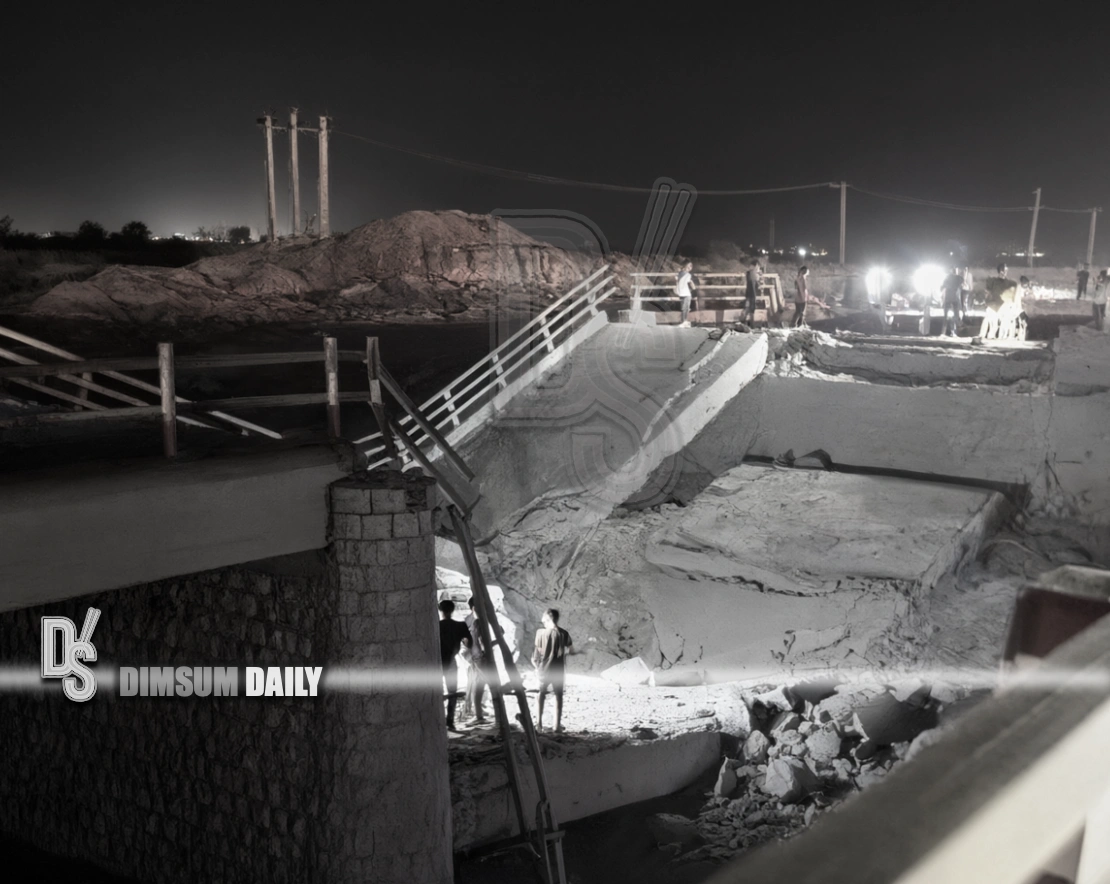
19th July 2026 -(Tehran) Iran is experiencing widespread electricity outages as a severe heatwave and renewed United States military action compound strain on the grid, turning sporadic cuts into a daily ordeal. A student at Sharif University of Technology said the blackouts had upended academic schedules, noting that exams and classes were frequently cancelled at short notice, sapping the will to study.
Amid the energy crisis, regional security tensions intensified. Israel reported detecting missile launches from Iran towards Jordan’s Red Sea city of Aqaba and warned that some projectiles could fall within Israeli territory, urging residents in the south to seek shelter if sirens sounded. In Amman, air‑raid alarms were heard as the US embassy cautioned citizens about potential threats.
Tehran’s atomic energy authority condemned what it called a US strike on the under‑construction Darkhovin nuclear power plant in Khuzestan, describing the attack as a violation of international law and portraying the facility as a symbol of national scientific self‑reliance. Iranian media said the site was hit in the early hours, with the organisation denouncing Washington’s actions as “terrorist” in nature.
Instability spread beyond Iran’s borders. Kuwait’s energy ministry said a power generation and water desalination complex had been attacked for a second time in as many days, triggering a fire that damaged multiple generation units as crews fought to contain the blaze. In Bahrain, authorities said missile and drone assaults launched from Iran had been thwarted after warning sirens sounded.
The Arab League’s secretary‑general, Nabil Fahmy, cautioned that spiralling confrontation between the US and Iran threatened to deepen violence and accelerate economic decline across the Middle East. He condemned attacks on Arab states, urged all parties to de‑escalate, called for adherence to freedom of navigation in the Strait of Hormuz and pressed for a return to negotiations.
Analysts questioned the likelihood of a US ground campaign in Iran despite an intensifying air war. Paul Musgrave of Georgetown University in Qatar argued that Washington remained casualty‑averse and unlikely to undertake a large‑scale invasion, suggesting that any operation to seize southern islands would face heavy artillery fire and could resemble the grinding attrition seen in Ukraine. He said President Donald Trump lacked the political capital and will to deploy ground forces, pointing instead to a deliberate expansion of the air campaign.
Iran’s Revolutionary Guard said it had downed another US MQ‑9 Reaper over the city of Ahvaz, claiming four such drones had been brought down in the past eight days and about 30 since the outbreak of the latest conflict, with more than 150 US drones reportedly shot down overall. Iranian officials touted newer air‑defence systems and cast doubt on earlier US assurances of airspace control. The IRGC also reported incidents involving ships attempting to exit the Strait of Hormuz via “unsafe routes”, while strikes were claimed against an ammunition depot and air‑defence radars in Kuwait. Separately, at least eight members of the exiled Kurdistan Freedom Party in north‑western Iraq were wounded in a drone attack.
Against this backdrop, political messaging sharpened. After Tehran said it would no longer abide by a memorandum of understanding agreed last month, President Trump responded that he “couldn’t care less”. In Jordan, however, officials said operations at Aqaba’s airport and seaport were normal and that no evacuation orders had been issued, despite a US embassy advisory urging Americans to avoid the facilities due to what it called a specific and credible threat