



























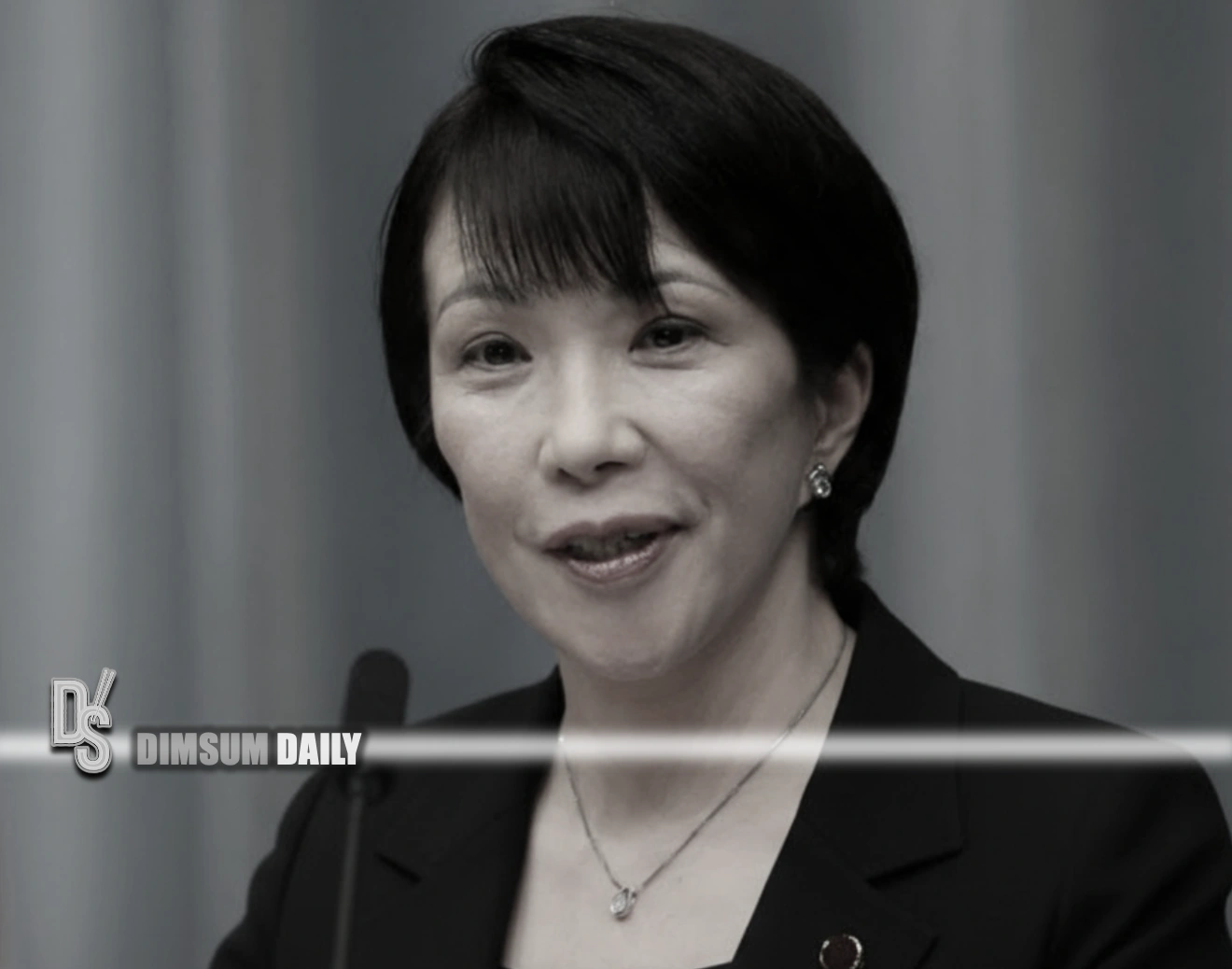
25th November 2025 – (Hong Kong) U.S. President Donald Trump and Japan’s Prime Minister Sanae Takaichi spoke by telephone on the 25th, discussing China among other issues, in their first conversation since Takaichi’s remarks on Taiwan sparked a sharp diplomatic dispute with Beijing.
Japanese media reported that the call was initiated at Trump’s request. Takaichi told reporters the U.S. president briefed her on the latest state of U.S.–China relations, including the leaders’ phone call the previous night. She said the discussion reaffirmed close U.S.–Japan coordination and noted that Trump described her as a close friend and encouraged her to call him at any time.
Takaichi did not disclose whether the conversation covered the immediate frictions between Tokyo and Beijing stemming from her earlier comments that Japan could mount a military response if China attacked Taiwan. Citing diplomatic sensitivity, she declined to provide details. Kyodo News reported the two leaders appeared to discuss next steps in light of the Xi–Trump call.
The Trump–Takaichi exchange followed Trump’s conversation with Chinese President Xi Jinping on the 24th. According to the White House-confirmed account reported by CNBC, the two leaders addressed a wide agenda that included the war in Ukraine, fentanyl, and agricultural trade. Trump later wrote on Truth Social that they had reached what he called an important arrangement benefiting U.S. farmers, particularly soybeans and other farm products. He added that both sides would hold reciprocal in‑person meetings, with a visit to Beijing in April and a subsequent state visit to the United States later in the year, and agreed to maintain frequent communication.
Beijing’s readout, cited by CNBC, said both governments are implementing all elements agreed when the two leaders met in Busan last month, including U.S. moves to lower tariffs on Chinese goods and China’s pause on new export controls on rare earth minerals. Xi was quoted as supporting efforts conducive to peace in Ukraine and reiterating that Taiwan should return to China. Beijing’s statement added that Trump conveyed U.S. understanding of the importance of the Taiwan question to China, and praised Xi as a great leader.
Trump’s social media post did not separately mention Taiwan or the escalating tensions between Japan and China. However, the call comes against a backdrop of worsening ties between Tokyo and Beijing following Takaichi’s parliamentary remarks earlier this month asserting that a Taiwan contingency could trigger Japanese military action. China condemned the comments and has since sharpened its rhetoric. The dispute has already chilled exchanges, with travel advisories, cultural cancellations and trade frictions adding to the strain.
Security dynamics around Taiwan have also become more acute. Japan plans to deploy a Type‑03 medium‑range surface‑to‑air missile unit to Yonaguni, roughly 110 kilometres from Taiwan, a move framed in Tokyo as defensive and deterrent. Beijing has warned the deployment is an attempt to inflame regional tensions and provoke confrontation. The decision underscores how the flashpoint has widened beyond the Taiwan Strait into Japan’s southwestern islands, where Japanese, Chinese and Taiwanese security concerns increasingly overlap.
While Takaichi has sought to project steadiness by emphasising alliance coordination with Washington, she has declined to retract her earlier remarks. For China, the remarks and the Yonaguni deployment challenge the post‑war understandings that have governed the relationship, particularly on Taiwan, and risk hardening positions on both sides. For Japan, the political calculus is complicated by domestic support for a stronger defence posture and the imperative to manage economic exposure to China.
What happens next will hinge on whether the renewed dialogue between Washington and Beijing can place a floor under the broader regional downturn. The Busan consensus—lower U.S. tariffs and a pause on fresh Chinese rare‑earth controls—has helped cool parts of the economic rivalry. If sustained, that momentum could reduce the risk of miscalculation at a time when U.S. assurances to allies, Japan’s defence moves, and China’s insistence on sovereignty over Taiwan are pulling in opposing directions.
For now, Tokyo is signalling alignment with the United States while keeping its counsel on the specifics of the Trump–Takaichi call. Beijing, for its part, is likely to read the U.S.–Japan coordination through the prism of the Taiwan issue and Japan’s missile deployments. The diplomatic space opened by the Xi–Trump engagement—reciprocal visits and more frequent leader‑level contact—offers a potential channel to de‑escalate. Whether it is used to that effect, and whether Tokyo adjusts its rhetoric or timing on deployments, will determine if the current spiral can be arrested.