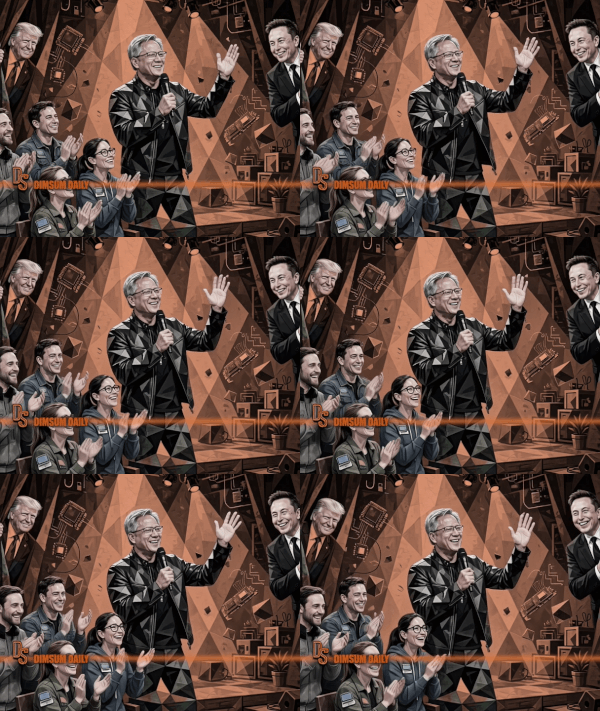

























24th November 2026 – (Washington) On 8th November, Jensen Huang admitted to an extramarital affair. On 12th November, he resigned. On 17th November, Nvidia’s chairman said the board had no intention of bringing him back. Over the following weekend, Vice President JD Vance carried two guarantees to the directors. The first said Huang was no national security risk. The second said he faced no criminal charges. On 23rd November, the board voted unanimously to reinstate him. The shares jumped 31.5% to $165.05 and recovered most of the roughly $800 billion they had lost.
Nvidia’s business didn’t change in those eleven days. Its revenue, supply deals and engineers stayed exactly where they were. The thing that changed was the pressure on the board.
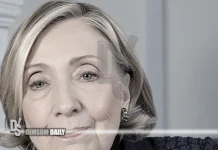
Hillary Clinton asked that question in four parts. Was this a national security scandal, a corruption scandal, an insider trading scandal and a market manipulation scandal? She answered yes to each one and called the affair “Supergate.” Lawmakers from both parties have reached similar conclusions in more measured language. Senator Elizabeth Warren called the reinstatement “reckless.” Republican Senator John Curtis asked the simplest question of all: “I’d like to know what changed.” Even Newt Gingrich, a loyal Trump ally, objected.
Nothing has been proven against Alice Huang. US officials suspect she kept in contact with an officer of China’s Ministry of State Security, and the Financial Times has linked her to a smuggling network involving the sanctioned Prince Group. Beijing has dismissed the espionage claims as a “smear,” and she has not commented publicly. A fair observer has to hold both facts at once. There are serious allegations, and there is no verdict.
The White House acted before the evidence was in. Investigations into Megaspeed and the alleged chip diversion are still running. The Securities and Exchange Commission is reportedly examining Nvidia’s accounting. Huang is due before House panels on Dec. 1 and the Senate Banking Committee on Dec. 3. Yet the president had already declared him “a Great Patriot and National Treasure” and said the attorney general had found no evidence of unlawful conduct. The verdict came before the hearing. Security doesn’t work that way. Security is a process, and here the process was skipped.
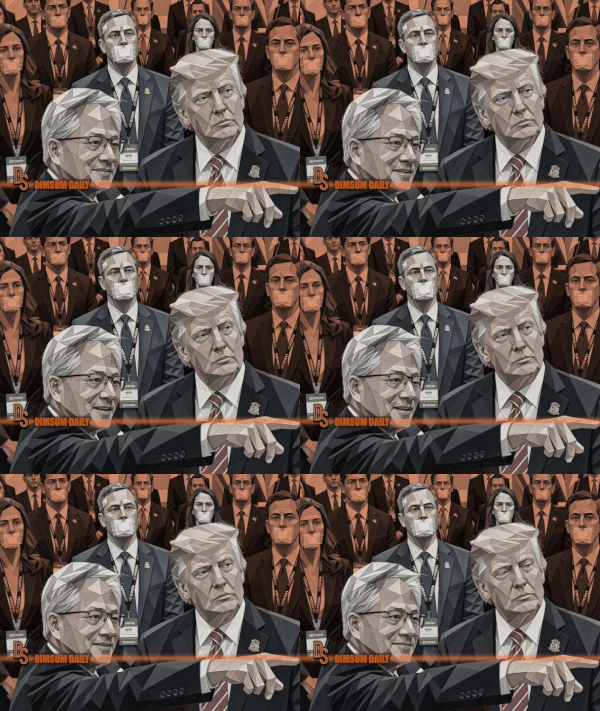
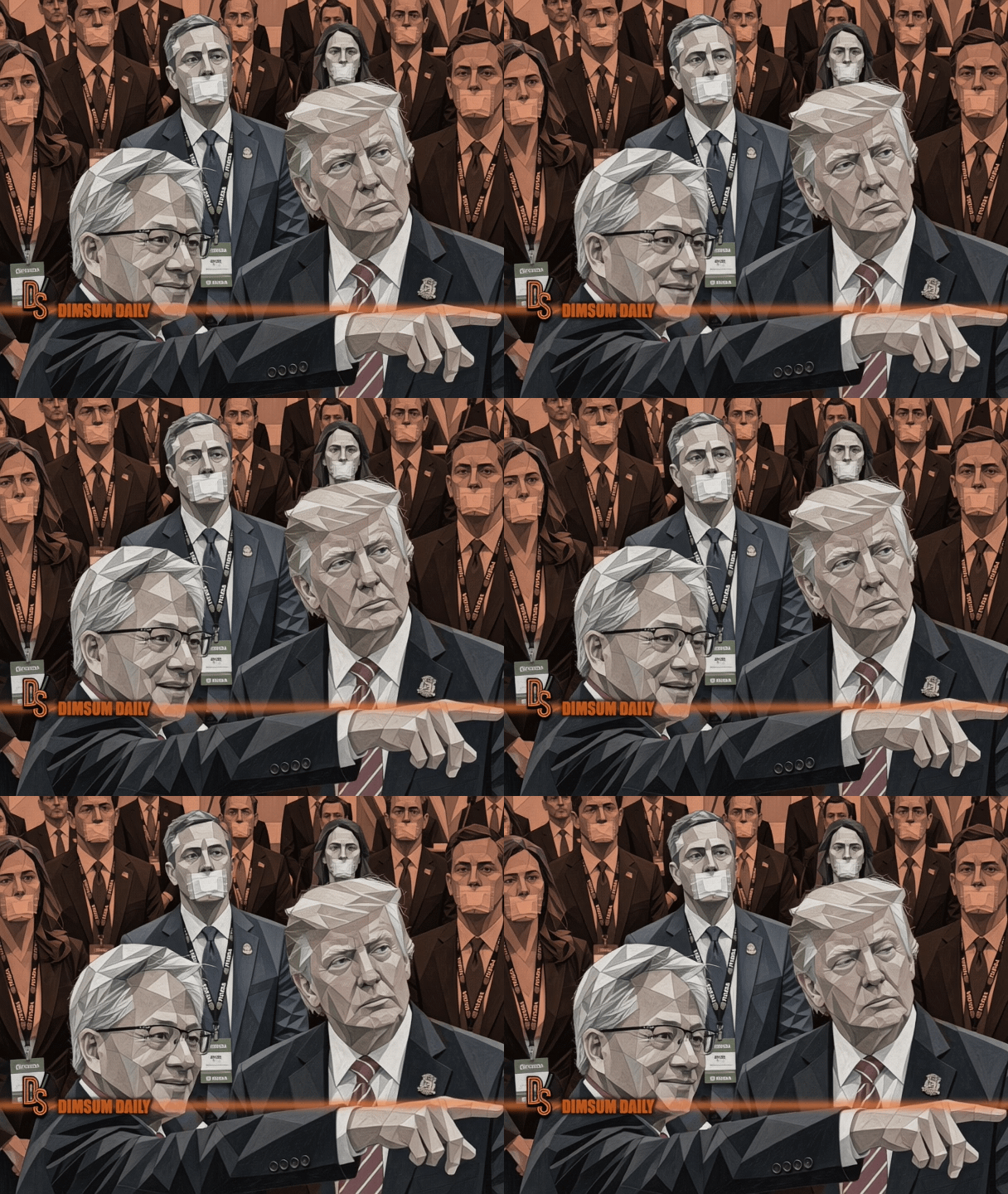
Under these conditions, national security is not mainly threatened by any one woman in Taipei. It is threatened by a system that lets a stock chart overrule its own procedures. President Trump told CNBC he “watched” the market fall and decided he “better get involved.” The board said it acted on “input from senior levels of the United States government.” When the head of state chooses the chief executive of a private company because indexes slid into correction, a security decision has become a market decision.
Meanwhile, Trump’s financial disclosure showed Nvidia holdings worth between $12.5 million and $58 million at the end of 2025. His spokesman says those sit in discretionary accounts with no input from the president or his family. That may be true. Even so, the appearance is a problem. Then there is the unverified report of a trader who spent $3.4 million on Nvidia call options the Friday before the reversal. If the report is accurate, that position could have been worth about $312 million by Monday morning. Nobody has shown wrongdoing. However, a decision negotiated in secret over a weekend, which moves nearly a trillion dollars by Monday, gets the scrutiny it invites. The Senate should demand the call logs and the trading records together.
There is also a quieter irony that Beijing has long pointed out. For years, Washington has described chip export controls as sacred lines of national defence, enforced on allies and rivals alike. Yet its Commerce Department approved sales of more than 800,000 AI chips to Chinese firms, and the White House arranged a revenue share on certain China sales. Now it has waved its own investigations aside to protect a share price. A policy that bends this easily looks less like security doctrine and more like commercial leverage that gets labelled security when that’s convenient. China should not be blamed for noticing.
The governance lesson stands apart from geopolitics. A board that reversed itself within six days under political pressure has shown how little independence it has. A company that can’t picture itself without its founder hasn’t solved succession. It has only put it off. Nvidia now carries what may be the largest key-person risk in corporate history, and the market has priced that risk at about $800 billion.