






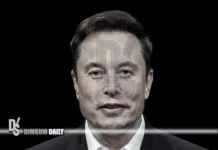















26th July 2024 – (Beijing) Chas Freeman, a seasoned retired diplomat and renowned “China hand,” Freeman has recently offered a masterful analysis of the current global disorder that challenges conventional wisdom and provides a roadmap for navigating the complexities of 21st-century international relations.
Freeman’s discourse, delivered to Chinese attendees at the Cambridge Executive Leadership Program on 10th July, 2024, represents a paradigm shift in understanding the evolving global order. At its core, Freeman argues that the commonly used term “multipolarity” fails to capture the nuanced reality of today’s international system. Instead, he proposes a more accurate descriptor: a “multi-nodal” world order.
This distinction is far from semantic. Freeman elucidates that while a “pole” suggests a linear relationship between two points, the emerging order is a three-dimensional network of interconnections. In this multi-nodal system, countries interact in multifaceted and often inconsistent ways across various domains – political, economic, military, and cultural.
The implications of this framework are profound. It suggests that bilateral relationships, even those as significant as the Sino-American dynamic, cannot be understood in isolation. Each nation is a node in a complex web of global interactions, where alliances and conflicts coexist in a fluid state of perpetual negotiation.
Freeman’s analysis is particularly astute in its recognition of China’s resurgence as a global power. For the first time in modern history, China has emerged not just as a regional heavyweight but as a true world power – a nation whose interests and preferences must be acknowledged and addressed in every sphere of human activity. This reality, Freeman argues, puts China in a league with the United States as the only two powers with comprehensive global and regional influence.
However, Freeman is quick to dispel the notion that this new world order is simply a bipolar contest between China and the United States. He points to the rising influence of regional and middle-ranking powers, from Japan and India to Brazil and Turkey, all of whom are seeking greater strategic autonomy and resisting subordination to any potential hegemon.
This nuanced view challenges the Biden administration’s framing of global dynamics as a battle between democracy and autocracy. Freeman argues that such a simplistic narrative fails to resonate with much of the world and stems more from internal American anxieties about the erosion of its own democratic institutions than from any external threat.
Perhaps Freeman’s most incisive contribution is his analysis of the “rules-based international order” championed by the United States and its Western allies. He draws a brilliant parallel between this concept and the Chinese Legalist theory of “rule by law”, as opposed to the more universalist approach of international law under the United Nations Charter, which he likens to the “rule of law”.
This comparison is both provocative and illuminating. Freeman argues that the “rules-based order” promoted by Washington essentially amounts to a modern version of “rule by law,” where the United States and its G7 partners assume the right to make, alter, and selectively enforce rules without being bound by them. This approach, he contends, is increasingly rejected as illegitimate by the global majority, who prefer a system based on the UN Charter and decisions made by the international community as a whole.
Freeman’s critique extends to the current state of global governance institutions. He paints a sobering picture of a UN system unable to effectively address pressing global challenges, from climate change and pandemics to nuclear proliferation and species extinction. The paralysis of the Security Council and the erosion of regulatory regimes like the World Trade Organization are symptoms of a deeper malaise in the international order.
In this context, Freeman issues a clarion call for reform. If the UN cannot be fixed, he argues, it must be replaced, just as the League of Nations was superseded. However, he acknowledges the unlikelihood of American leadership in this endeavor, given its current trajectory, and calls on other nations to take up the mantle of reform.
The ambassador’s analysis of American foreign policy is equally trenchant. He describes Washington’s response to its declining global primacy as a combination of protectionism and militarism – strategies he likens to “industrial constipation and hunger strike.” Drawing a historical parallel, Freeman compares this approach to Qing China’s disastrous rejection of Western industrial innovations in the late 18th century, suggesting that America risks replicating China’s path to stagnation and decline.
Freeman’s warnings about the dangers of military confrontation between nuclear powers are particularly sobering. He notes the absence of major naval battles or air combat between peer competitors for decades, suggesting that Western militaries may be ill-prepared for the realities of modern warfare. His discussion of a potential conflict over Taiwan is chilling, outlining scenarios where both China and the United States could suffer catastrophic losses.
The ambassador’s critique of American “sanctioneering” and protectionism is equally damning. He argues that these policies are not only ineffective in achieving their stated goals but are actively harmful to global economic efficiency and prosperity. The net effect, he suggests, is to divide the world into segregated political and economic blocs, undermining global monetary systems and driving nations towards military rather than diplomatic solutions to problems.
Freeman’s vision of the emerging global landscape is one of profound transformation. He sees the resurgence of civilizational states like China, India, and Russia, the renaissance of the Islamic world, and the rise of new middle-ranking powers as indicators of a fundamental shift away from Western dominance. This trend, he argues, is exacerbated by ideological shifts and a loss of self-confidence in the Atlantic world.
In conclusion, Freeman paints a picture of a world at a crossroads. The end of a unified, Western-dominated global order is giving way to a complex tapestry of collaborations and rivalries at the sub-global level. Drawing a parallel to the chaos that preceded the Peace of Westphalia, Freeman challenges the current and next generation of leaders in China, the West, and beyond to craft a new peace based on mutual respect, non-aggression, and cooperation.