



























22nd November 2026 – (Huntsville) At 6pm on Thursday, a church bell rang in Huntsville, Texas, and a small group of witnesses climbed the concrete steps of a prison that opened in 1849. Then they waited. A large clock on the wall of the reception office ticked on. Twenty minutes passed, then thirty. Michael Graczyk of the Associated Press has watched nearly 500 lethal injections since 1983, and he knew what the delay meant. Something behind the walls was going wrong.
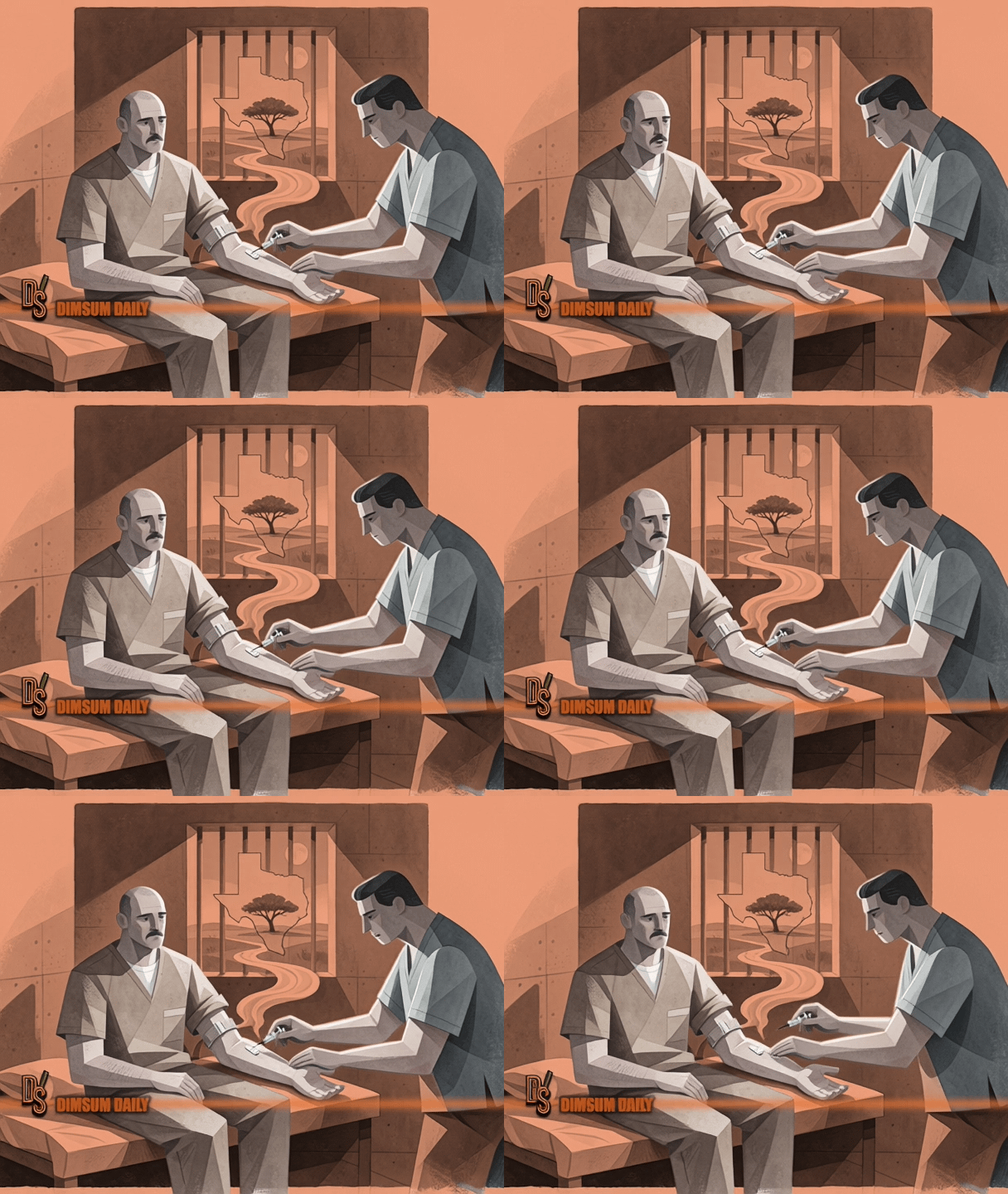
The problem was simple. The execution team could not find a vein in Reinaldo Dennes. He was 70 years old and had spent three decades on death row for the 1996 murder of Janos Szucs, a Houston diamond dealer. After repeated attempts, which the state has not counted publicly, the team placed one line in his foot and another in his neck. The pentobarbital began to flow at 6.52pm. Dennes had been calm and even cheerful in the waiting cell, but now he cried out. “The pain!” he said. His leg was “killing me.” Then he spoke with a clarity that should trouble everyone who approved the procedure. “I don’t think this is normal,” he said. He was pronounced dead at 7.08pm, 63 minutes after he was strapped down.
The Texas Department of Criminal Justice saw things differently. Its spokeswoman, Amanda Hernandez, said it was “100 per cent not a botched execution” and called it “a successful execution.” She said an hour was “not atypical.” She also suggested Dennes might have been faking his pain, because he complained about parts of his body where no needle had gone in.
Few things a government does are watched as closely as an execution. The law requires witnesses. Reporters, lawyers, victims’ relatives and spiritual advisers stand behind the glass so the public can know what the state does in its name. The witness is the system’s own safeguard, its promise that nothing is hidden. Yet again and again, when witnesses report what they saw, the state tells them they saw something else.
The Rev. Jeff Hood kept his hand on Dennes’s shoulder the whole time. He said the dying man pushed against his palm and strained at the leather straps like “a bucking bronco.” Graczyk is no campaigner, and he wrote that Dennes was “like no other.” Neither man could see the injection sites. A sheet covered the feet, and only the right side of the neck was visible. The parts of the scene the state controlled were hidden. The parts it could not control, the voice and the body, were dismissed as theatre.
This keeps happening. In Arizona in 2014, a reporter counted 640 gasps as Joseph Wood took nearly two hours to die, and officials said the execution was not botched. In Alabama in 2024, witnesses watched Kenneth Smith convulse on a gurney during a nitrogen execution, and the state attorney general called it “textbook.” The Death Penalty Information Center counts at least 66 botched executions in 17 states, using what critics call a deliberately conservative standard. Texas, the country’s busiest executioner, leads the list with at least a dozen.
Then there is Christa Pike. On 30th September, Tennessee tried to kill her and failed. Her lawyers had warned that a blood-clotting disorder had damaged her veins. The state used a doctor who reportedly had not placed a central line in 13 years and had already failed for more than an hour to set an IV in an earlier execution attempt. The team went through about 10 needles. Two doses of pentobarbital ended up largely in the tissue of her arms instead of her bloodstream. She woke up in a hospital. A week later her lawyer said she was “up and walking” but mentally foggy, with arms so swollen she could barely use them.
Pike tortured and murdered 19-year-old Colleen Slemmer in 1995. Dennes took the life of Janos Szucs. None of this lessens those crimes or the grief of the families left behind. Even Slemmer’s mother, who wanted Pike executed, called the attempt a “mess.” That word cuts across the usual divide. Whatever people think of capital punishment, nobody voted for a mess.
Tennessee at least paused. Gov. Bill Lee halted executions for the rest of the year, and the state’s prisons chief is resigning. Texas has instead doubled down on calling it a success. If death is the only test, every execution passes. A state that judges itself that way has stopped asking whether it can do the job properly. It only asks whether the job got done.
The proposed fixes share the same blind spot. In Tennessee, Sen. Marsha Blackburn, the Republican candidate for governor, has said, “Bring back the electric chair.” Changing the method treats the failure as a problem with the equipment. A slower look shows the failure lies in the institutions: the hiring, the secrecy, the refusal to count attempts and the habit of denial.
The death penalty asks the public for an unusual amount of trust. It asks us to believe the state will convict the right person, sentence fairly and then kill with care. On the day Dennes died, Florida carried out its 20th execution of the year, a record. The pace is speeding up while the people running it cannot find a vein and will not admit it.
The witnesses in Huntsville did their duty. They watched, took notes and reported what they saw. The least the state owes them, and the public they serve, is to stop pretending they were looking at something else. A government that will not accept what its own witnesses see should not be trusted with deciding who dies.