



























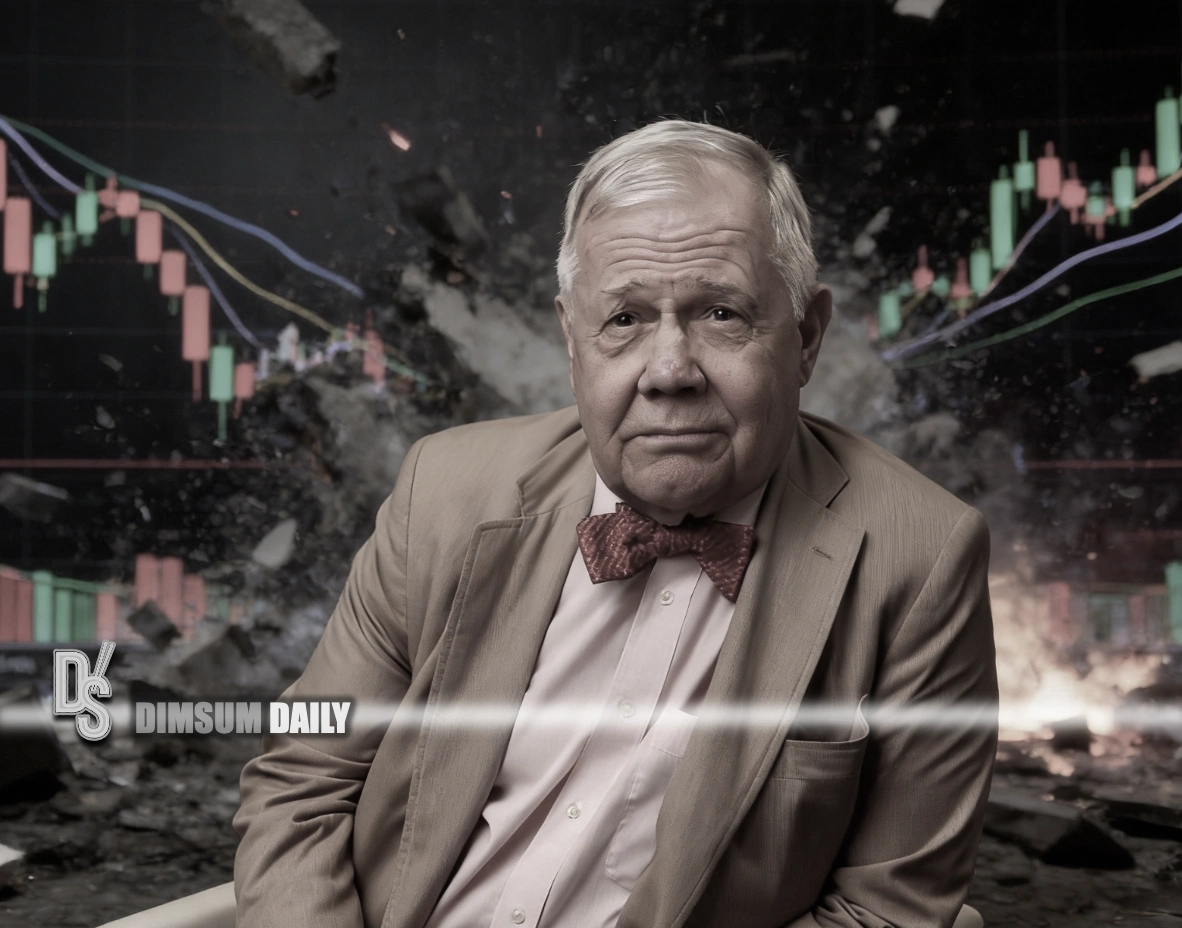
26th December 2025 – (Tokyo) Japan’s conservative daily Sankei Shimbun has reported that renowned American investor Jim Rogers is forecasting what he describes as the “most severe” global financial crisis in history by 2026, while also casting doubt on the sustainability of Japan’s public finances. In a recently published discussion with Miki Watanabe, founder and chief executive of the Watami Group, Rogers was asked whether a major market collapse could materialise at any time. He replied that both the United States and the wider world are already on course for serious turbulence in the coming year.
“Next year, whether in the United States or globally, we will see problems erupt,” Rogers said. “Conditions in America will become the worst we have ever experienced, and Japan will be hit hard by a debt shock. Overall, the global economy will suffer a massive blow.”
Rogers, whose comments were carried by Sankei Shimbun, argued that the extraordinary build-up of sovereign and corporate debt following the COVID‑19 pandemic has greatly amplified systemic risk. If a major downturn occurs, he warned, the fallout will be on a scale without modern precedent.
“The next financial crisis will be the most painful of our lifetimes,” he cautioned, noting that unprecedented levels of borrowing across advanced and emerging economies alike have left the global financial system acutely vulnerable.
The veteran investor pointed to the rapid expansion of U.S. federal debt – which has surpassed US$30 trillion for the first time, translating to tens of thousands of U.S. dollars in liabilities per citizen – and the mounting pressure in Japan’s bond market, where yields on government debt are edging towards 2 per cent. Analysts have warned that such moves risk triggering a funding crisis for heavily indebted governments if borrowing costs continue to climb.
Asked how investors might best protect their wealth in this environment, Rogers suggested that, in relative terms, the U.S. dollar still offers a measure of safety. He also proposed that individuals consider diversifying a portion of their assets into overseas jurisdictions perceived as stable, including Switzerland.
Turning to Japan’s domestic policy debate, Rogers was sharply critical of Prime Minister Sanae Takaichi’s flagship concept of “responsible proactive fiscal policy”. The approach, which leans on large‑scale tax cuts and inflation‑fighting measures financed via deficit‑funded government bonds, may be politically popular in the short term, he argued, but is likely to create serious long‑term strain.
Rogers warned that continuous reliance on debt issuance to underwrite expansionary programmes would place sustained upward pressure on long‑term interest rates. As yields rise, the annual cost of servicing Japan’s already enormous stock of government bonds would increase, crowding out other spending and narrowing policy options.
“In the long run, this will bring enormous pain,” he said. “Historically, every country that has faced a shrinking population and ever‑increasing debt has, without exception, ended up in bankruptcy.”
On geopolitics, Rogers urged Tokyo to avoid being drawn too deeply into the strategic confrontation between Washington and Beijing. In his view, Japan would be exposing itself to unnecessary risk by aligning too rigidly with the United States in a potential flashpoint such as a conflict over Taiwan, particularly given his assessment that a U.S. victory in such a scenario would not be guaranteed.
He further cautioned that trade disputes are rarely confined to tariffs and sanctions. “Trade wars often evolve into real wars,” he warned, suggesting that miscalculations in economic statecraft could spill over into open military confrontation.