























7th February 2024 – (Hong Kong) Lionel Messi, the Argentine football superstar, who now leads Inter Miami, faced controversy after posting on Weibo, a popular Chinese social media platform. In a post written in both Chinese and Spanish, Messi expressed regret for not playing in the exhibition match against the Hong Kong team, citing his absence due to injury. He stated, “I’m very sorry about this and I hope to have the opportunity to visit Hong Kong again and give a match to the fans in the region. I also look forward to returning to mainland China soon and sharing the joy of football with everyone.”
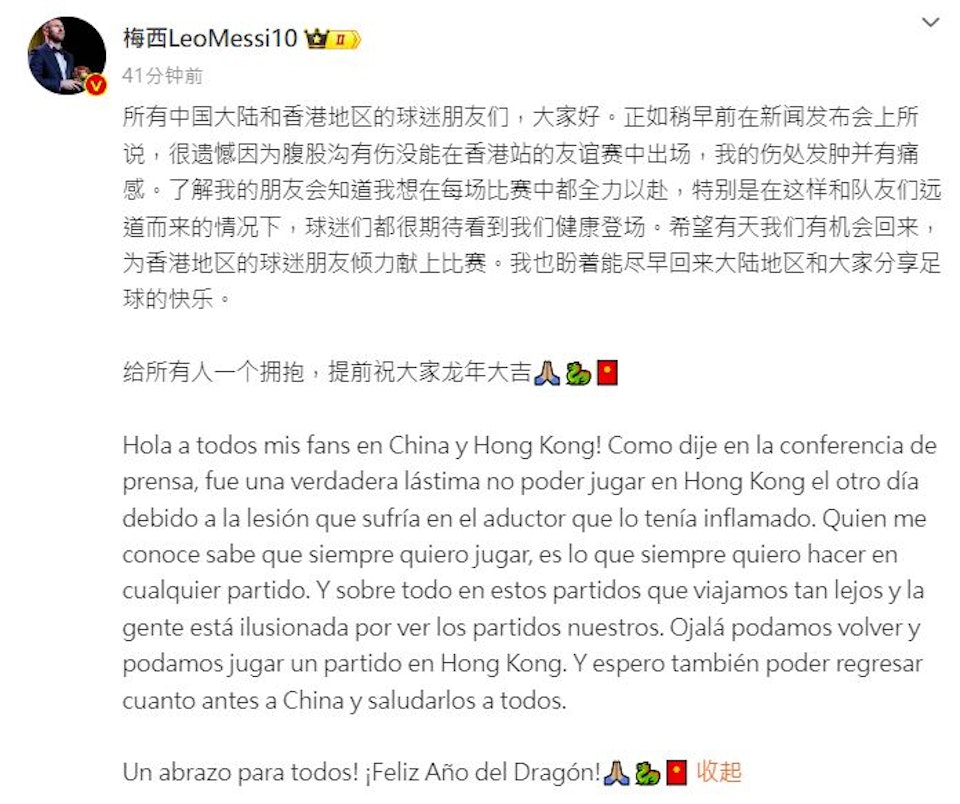
The Weibo post sparked heated discussions among Chinese netizens. Some forgave Messi and expressed their support, saying, “We’re waiting for your recovery. Give you a big hug!” However, there were also many netizens who felt that Messi had not apologised and remained unsatisfied with his explanation. Furthermore, some netizens raised concerns about a specific word used in Messi’s post, questioning whether it implied an intention to divide China. Comments such as “Why would a foreigner want to divide our country?” and “China doesn’t welcome you, don’t come back” could be seen on the platform. Nevertheless, there were also netizens who believed that this issue should not be blown out of proportion.
The attention garnered by Messi’s Weibo post surpassed even that of the Spring Festival, showing the significant influence and interest surrounding the football star’s actions. Many fans expressed their forgiveness and continued support for Messi, hoping for his prompt recovery and a chance to see him play in China. However, others criticised the post, pointing out that the IP address associated with Messi’s Weibo account was located in Sichuan Province, questioning his sincerity and expressing disappointment over the lack of an apology.
Some netizens focused on the Spanish portion of Messi’s post, specifically the mention of “China and Hong Kong”, raising concerns about potential intentions to divide the country. These comments highlighted the sensitivity surrounding issues related to national unity and territorial integrity.