































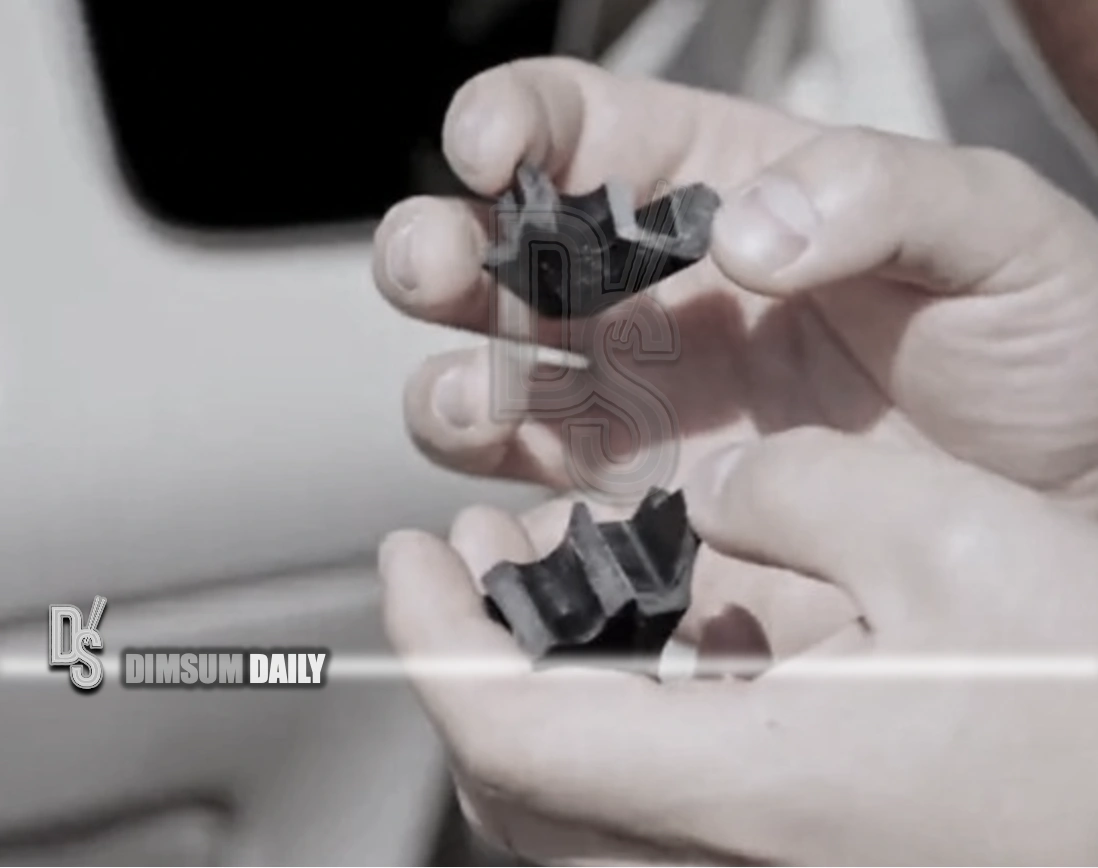
13th October 2026 – (Beijing) Maextro has released third-party laboratory findings on its V800 brake pedal as mainland debate over cracked pedal brackets continues, saying inspected parts met the industry strength standard — while the tester who first filmed the failures disputed whether a slow bench load matches a real emergency stop.
The ultra-luxury electric MPV brand, jointly built by Huawei and JAC Motors, today issued a “Maextro V800 brake pedal inspection statement.” It said that on 11th October a nationally accredited third-party laboratory examined the V800 brake pedal. Under a 1,500-newton longitudinal-force check, mean displacement was 2.61 millimetres, and the strength items tested complied with QC/T 788-2018. Testers then raised the longitudinal force gradually to 3,000 newtons at 20 millimetres per minute, held it for five seconds and released it, repeating the cycle five times. Fourteen complete pedal assemblies were checked; visual inspection found no cracks or damage in any of them.
The row began after mainland car platform Dongchedi put the V800 through hard stops and recorded brake-pedal fractures. Public concern about Maextro safety followed. The brand had already said it would offer free upgrade options to owners who have taken delivery.
This morning, staff in the archives of the China Automotive Engineering Research Institute’s testing centre were quoted as confirming that, by the report number supplied, the document came from their company and was based on a sample vehicle provided by the enterprise at the time. They said they could not guarantee that versions circulating outside had not been altered.
The Dongchedi tester behind the filmed stops, posting under the handle Dongche Da Corgi Dongmen, answered the results with sharp questions. Was static loading the same as dynamic loading, he asked; was polypropylene reinforced with 40 per cent glass fibre (PP+GF40) under a slow static load the same as under an instantaneous dynamic one; and if a one-minute, 20-millimetre loading path already passed, why still offer an upgrade — and where was the inspection stamp from the testing body?
He argued that the company already runs extensive laboratory bench work, has ample sample parts, a proving ground, vehicles, equipment and staff, and that randomly pulling a production car for six 1,500-newton stops from 100 kilometres per hour in ten minutes should not be hard — yet the firm had spent more time on static bench loads and shipped parts to Chongqing for inspection. In a later post, he said sample 01002 showed permanent deformation of 4.07 millimetres under 1,500 newtons against a 5-millimetre limit — “right against the limit,” he wrote, and that for a carefully chosen submission piece used by people who engineer cars, he was left speechless.