




























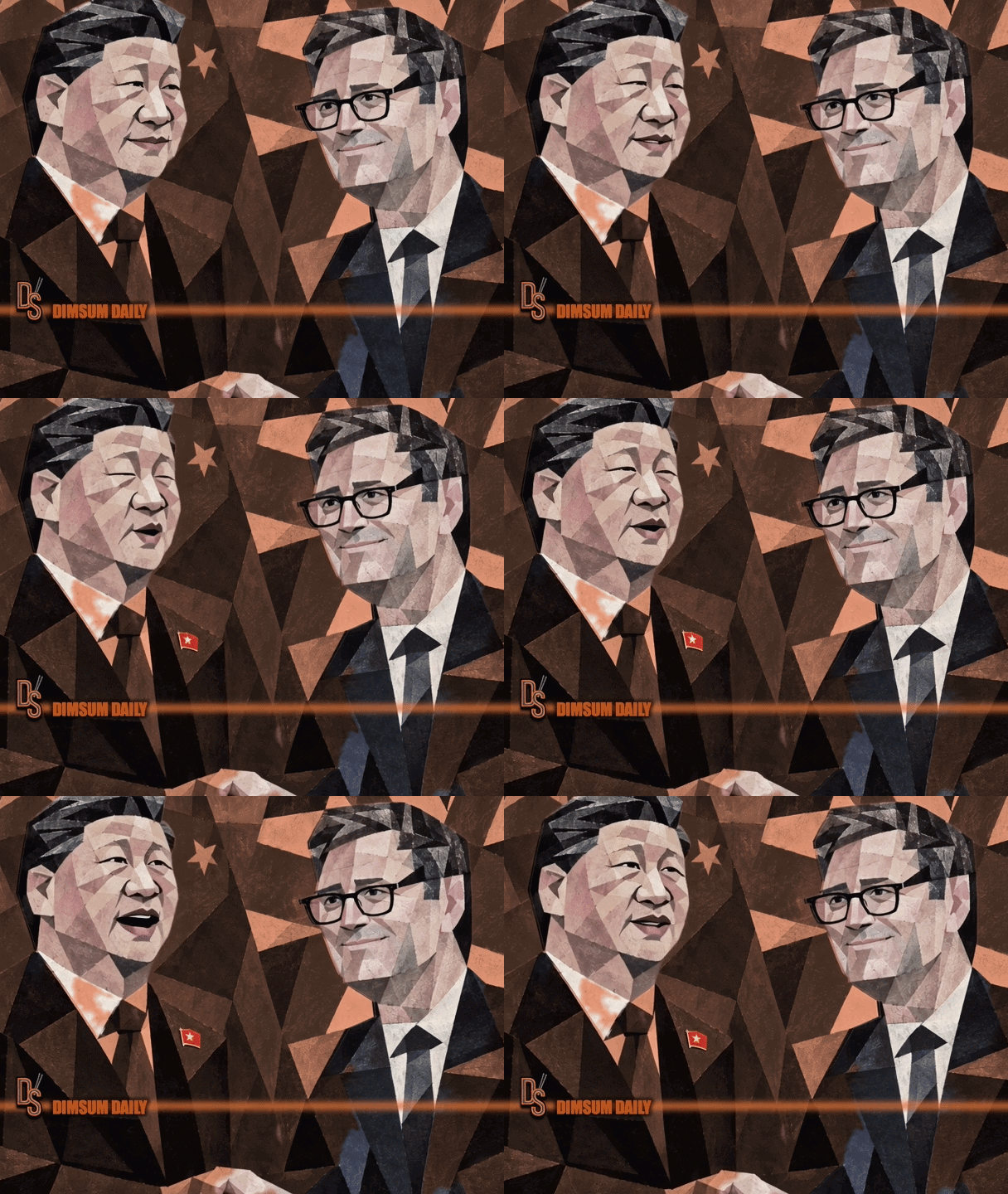
11th September 2026 – (Beijing) A single phone call rarely rewrites the arc of relations between two nations, yet the exchange between President Xi Jinping and British Prime Minister Andy Burnham on Tuesday deserves to be studied less for what was said and more for what its timing quietly reveals. Conversations of this kind are seldom spontaneous. They are the product of long deliberation on both ends of the line, and the fact that Burnham requested the call within weeks of assuming office signals a deliberate recalibration of London’s instincts toward Beijing after years of drift.
The setting itself explains part of the weight. Global economic recovery remains sluggish, protectionism is hardening into policy in several capitals, and the aftershocks of geopolitical conflict continue to ripple across trade and supply chains. Against this turbulence, the leaders of two permanent members of the UN Security Council choosing dialogue over distance is not a small gesture. Xi framed the two countries as comprehensive strategic partners whose common interests exceed their differences, and he urged both sides to transcend those differences rather than magnify them. Burnham, for his part, spoke of restoring bilateral relations to their historic high. The vocabulary of both men points in the same direction, even if their domestic pressures pull in others.
What is worth observing patiently is the structure beneath the diplomatic language. Xi did not offer vague goodwill. He named specifics – during the 2026-2030 five-year plan period, China intends to further open its education, healthcare and financial sectors. These are precisely the fields in which Britain holds traditional strength, which means the complementarity here is not rhetorical but material. A British economy searching for growth, investment confidence and market access cannot afford to treat the world’s second-largest economy as an abstraction to be managed at arm’s length. And a China intent on attracting high-quality capital and expertise finds in Britain a natural counterpart. The logic of cooperation, in other words, is written into the economic fundamentals of both countries rather than imposed upon them.
Xi’s appeal that Britain protect the legitimate rights and interests of Chinese investors carries an edge that should not be missed. It arrives less than two months after London nationalised the loss-making steelmaker British Steel from the Chinese conglomerate Jingye Group, a move Beijing warned would undermine Chinese firms’ confidence in the UK market. The request, then, is not ceremonial. It reflects a genuine concern that when economic questions are dressed in the language of security, the country doing the dressing ends up eroding its own credibility. Investment requires stable expectations, and enterprises require a level playing field. A market that appears to protect itself through politicisation often diminishes the very confidence it claims to guard.
The British readout, notably, differed in emphasis from the Chinese one. Burnham raised Hong Kong, human rights, Ukraine, domestic security and consular cases, promising to engage frankly and constructively. This divergence is not a contradiction to be smoothed over but a feature of mature relations between unlike systems. The measure of a partnership is not the absence of disagreement but the capacity to hold disagreement without allowing it to consume the whole. What matters is whether ideology and geopolitics are permitted to hijack the relationship, or whether both sides can seek common ground while reserving their differences. Burnham’s reaffirmation that Britain’s position on the Taiwan question remains unchanged sits at the heart of this equilibrium, because respect for the one-China principle forms the political foundation upon which everything else is built.
Burnham recalled his exchanges with China during his years as mayor of Manchester and the impression left by Xi’s 2015 visit to the city. These are not sentimental footnotes. They point to where the durability of the relationship actually lives, in subnational partnerships, in trade, in universities and in the movement of people. National policy fluctuates with elections and headlines, but these deeper channels tend to survive the weather above them. Britain’s China policy in recent years has swung under the weight of domestic politics and external pressure, and the results have been instructive: short-term calculation has neither resolved Britain’s economic difficulties nor enhanced its standing abroad.
The larger question the call poses is one of agency. Does Britain define its China relations through the strategic priorities of others, or does it exercise the strategic autonomy that its history and its Security Council seat entitle it to? The former reduces a major nation to a follower; the latter allows it to pursue its interests on their own terms. For a country navigating a multipolar world, rational engagement serves better than borrowed hostility.
Ultimately this conversation should be read as a starting point rather than a conclusion. Two economies of consequence have signalled a willingness to communicate, and the coming months will show whether words translate into policy on investment, market access and coordination within the UN, the G20 and the WTO. The world is not short of confrontation. What it lacks, and what these two nations are now in a position to supply, is the steadier commodity of predictability between major powers who have decided that talking is more useful than turning away.