


























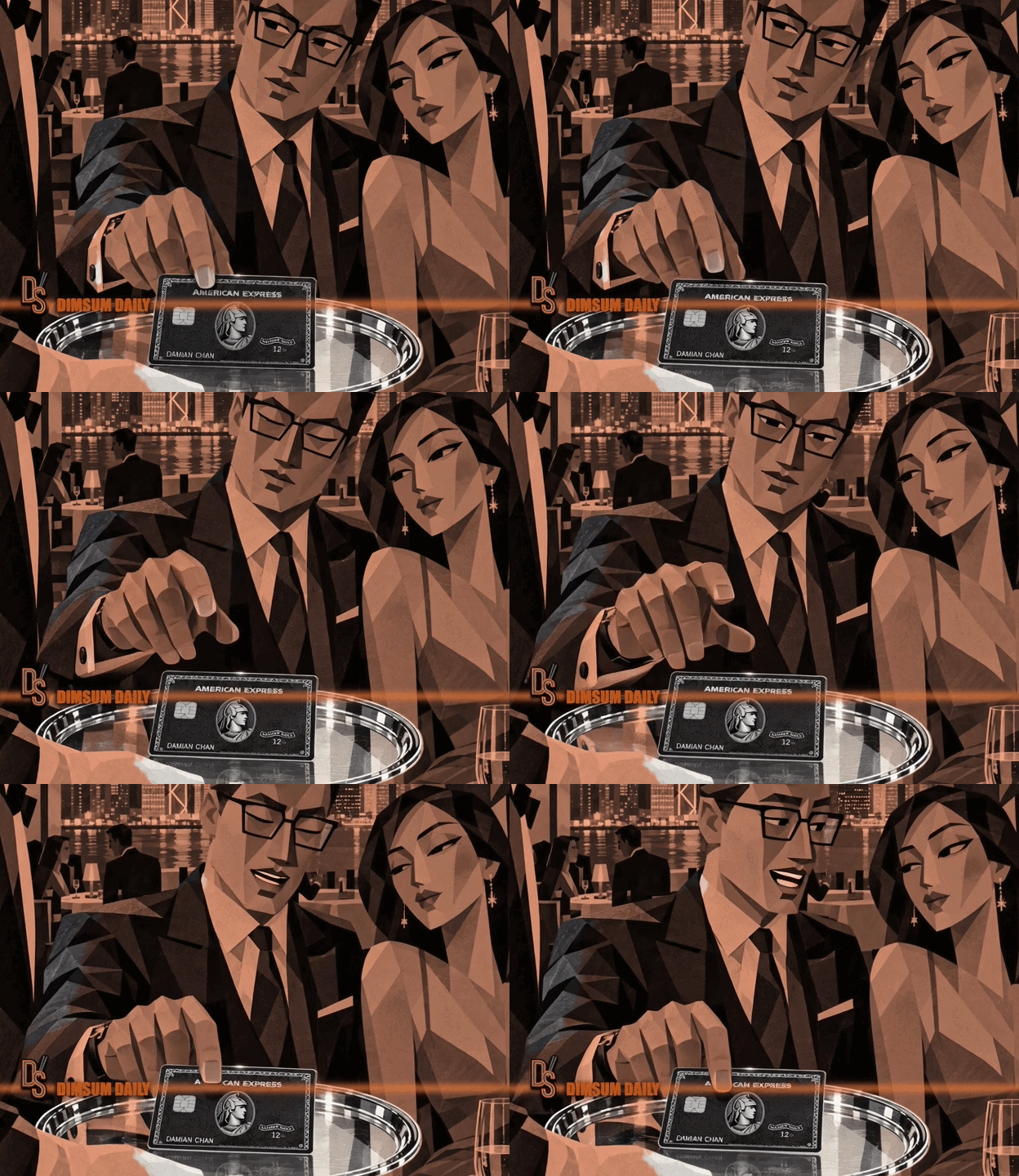
28th September 2026 – (Hong Kong) Spend an evening at The Peridot in The Henderson 38 and you’ll see the same small scene more than once. The bill comes in a leather folder. Most diners tap a phone or wait for the server to bring a handheld terminal. At one table, though, someone reaches into a jacket, takes out a dark metal card and sets it on the tablecloth so that it makes a soft, heavy sound. The card is the American Express Centurion, usually called the Black Card, and the sound is the reason for the gesture.
The waiter is the one person certain to see the card up close. However, a server sees hundreds of cards a week and gains or loses nothing from what the customer carries. Credit card expert Brian Kelly remembers that when metal cards first became common, cashiers and waiters often commented on how heavy they were. That comment is a small moment of recognition. The waiter acts as a witness, but a witness is not the real audience.
The manager is a more practical target. In some restaurants, being recognised as a big spender can mean a better table next time or an easier reservation. For this diner, the card works a bit like a business card. It says the customer is worth remembering. It is a calculated move, but it’s a small one.
The next table is more interesting. Diners there only catch a glimpse of the card and will never learn the holder’s name. Yet this is often the audience the gesture is aimed at. Strangers can’t check anything, so the card has to do all the talking. It says the holder has been screened and approved by an institution that doesn’t approve many people. American Express doesn’t publish its criteria. The fees have been widely reported as a $10,000 initiation fee plus a $5,000 annual fee. As NerdWallet’s Sara Rathner puts it, “If you have to ask, you can’t.” The card is a way of showing that you never needed to ask.
The most important audience, though, is usually at the same table: a client, a date, an in-law or a rival. Rathner compares the heavy card to a luxury car. “Having a heavy metal credit card and treating a friend to lunch, you’re the deep pockets,” she says. “It makes you seem like a certain type of person.” Kelly is more blunt: “It feeds the ego that you made it.”
That points to one last audience, which is the holder. Many people who flash the card are reassuring themselves as much as anyone else. That is where status anxiety comes in. A person who is truly secure seldom needs a witness. A person who worries about being overlooked wants one every time the bill arrives.
Digital wallets have quietly weakened this ritual. Apple Pay makes every card look the same at the moment of payment. A Centurion card loaded into an iPhone does show its dark card art on the screen, but only for a second, on a small display, and usually only the holder sees it. A card worth thousands a year produces the same tap as a supermarket debit card.
Only a few settings still preserve the old ritual. In restaurants where the server takes the card away to a terminal, a physical card still has to be handed over. Airport lounges and luxury hotels may still ask to see the physical card along with photo ID. Everywhere else, the phone has made the gesture pointless.
The prestige is also easier to copy now. When Chase launched its metal Sapphire Reserve in 2016, demand was so strong that the bank reportedly ran out of metal to make the cards. More than half of the first applicants were under 35. Metal cards have spread widely since then, and some companies will even turn an ordinary plastic card into metal for a fee. “It’s rare, and then it becomes more and more available to the general public, and it becomes pedestrian,” Rathner says.
The card’s image of total security has also taken some damage. In September, a Taiwanese influencer described how an acquaintance who had held the card for 24 years had his account frozen while travelling abroad. According to that account, purchases of Pokémon cards were flagged as suspicious, and his credit line was later cut to 700,000. The story is secondhand and hasn’t been verified. Still, it makes a real point. A Black Card isn’t a crown. It is a contract with a bank, and banks keep the right to review it.
The more important change is happening somewhere else. Gen Z is putting real pressure on what counts as status, and the industry has noticed. American Express told Fortune that Gen Z and millennials made up 75 per cent of new consumer Platinum and Gold accounts in 2023. These customers still want a premium card, but they use it differently.
Gillian Brooks, an associate professor of marketing at King’s College London, argues that for this generation status only counts once it is posted online. “The status is attention,” she says. In her lecture halls, students sit next to each other with the same trendy product and never mention it. “There’s a look but there’s never an acknowledgement,” she observes.
Capital One research found that 83 per cent of Gen Z have bought secondhand, and 47 per cent called thrifting cool or trendy. Bank of America data shows Gen Z has spent more at premium grocery stores than at value chains every year since 2021. Young consumers are showing that status now comes from knowing the rules, not from displaying money. Brooks adds that a symbol loses its value once older generations adopt it.