































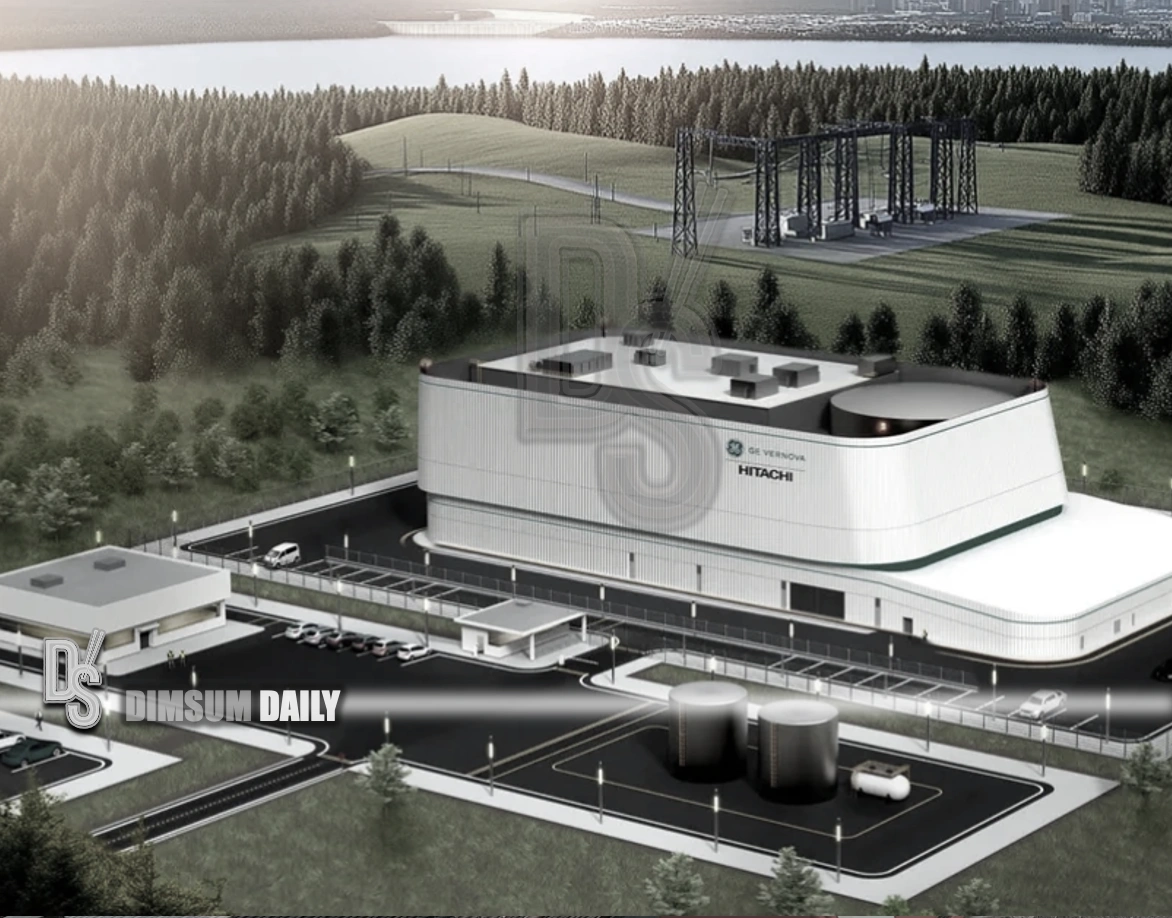
6th October 2026 – (Washington) United States regulators have given the green light for the construction of the country’s first small modular nuclear reactor designed specifically to power data centres, highlighting the rapidly rising demand for stable electricity supplies driven by artificial intelligence infrastructure. The Tennessee Valley Authority (TVA) has secured authorisation to proceed with building a single BWRX-300 reactor at the Clinch River site, following a fourteen-month review by the US Nuclear Regulatory Commission. While the utility will need to secure an additional licence before fuelling the reactor and commencing commercial operations, approval represents a significant milestone for future American nuclear development. TVA may ultimately construct up to four units at the Tennessee facility, though specific timelines for further expansion remain undetermined.
Developed by GE Vernova Hitachi, the BWRX-300 is a 300 megawatt system that operates using boiling-water reactor technology, incorporating natural circulation and a design prioritising passive safety features such as gravity, pressure and stored water to ensure continued operation in the event of external power loss. Each unit would generate approximately a quarter of the electrical capacity supplied by the most recent reactors at Georgia’s Vogtle plant. Mike Skaggs, TVA’s interim president, described the permit as a fundamental step towards strengthening the role of nuclear energy in meeting the nation’s long-term requirements.
There is mounting international interest in adopting the same reactor technology. In Britain, investor-backed proposals envisage a fleet of BWRX-300 units deployed across several sites, aligned with the United Kingdom’s advanced nuclear policy framework. SGE’s programme alone might involve an investment of around £35 billion, or roughly 46.5 billion US dollars, to support the UK’s future electricity supply. In Canada, Ontario Power Generation is planning its own project using this reactor design. Meanwhile, Texas-based Blue Energy is seeking approval to install BWRX-300 reactors intended to provide direct power to data centre operations.
Proponents argue that repeated deployment of standardised reactors could create greater efficiency in procurement, manufacturing and construction, potentially driving down costs and reducing delays that have previously hindered large-scale nuclear builds in the United States. The American TVA project will serve as a key test of whether these more compact, streamlined reactors can reliably serve energy-intensive facilities without encountering earlier difficulties.
The surge in interest in nuclear-powered solutions arrives as utilities across the US and abroad search for sources capable of delivering uninterrupted output regardless of weather, an essential requirement for increasingly critical digital infrastructure. Despite notable progress, concerns persist over high construction costs and elongated development periods—issues which the BWRX-300’s simplified design aims to address.
In parallel developments, the approval process for large-scale data centre projects on public land remains closely watched. Plans for the Townsite Data Center outside Boulder City, Nevada, faced a regulatory setback after environmental groups challenged a federal decision that would have allowed data centre construction to avoid additional scrutiny by reusing a solar farm’s environmental review.