



























2nd September 2025 – (Hong Kong) The story of Hong Kong’s street markets has long been told through the language of heritage and habit—baskets of choy sum at dawn, fishmongers calling out prices, the daily ballet of brisk trade beneath corrugated roofs. Lately, another vocabulary has entered the scene: vacancy rates, delivery backlogs, and a new acronym on every parcel label. What looks like decline at first glance is, with a little imagination, a restart. The rise of self pick-up locations for Taobao and Pinduoduo in market stalls—once written off as relics—has opened an accidental business opportunity hiding in plain sight. It is distinctly Hong Kong in its pragmatism, deeply local in its placement, and surprisingly modern in its economics.
By the end of 2024, vacant stalls in public markets managed by the authorities stood at close to 18%, roughly 2,400 out of some 13,500 pitches sitting idle. In certain locations, like the market along Po On Road, the vacancy rate climbed past a fifth, with about 95 of 450 booths empty. For those inclined to fatalism, these numbers signal a terminal fade in traditional trade. For those with an eye for arbitrage, they represent an untapped network—low rent, embedded in residential neighbourhoods, minutes from lifts and bus stops, already mapped into the muscle memory of the city.
That is exactly how a growing cohort of small operators and logistics partners has begun to treat them. Scan the collection points listed by major e-commerce platforms and cross-border consolidators and you see a pattern emerging across Kowloon, Hong Kong Island and the New Territories. Self pick-up counters are cropping up not only in the public markets but also in the retail arcades serving large housing estates. The pitch is straightforward: parcels travel to the closest communal node, costs fall because last-mile delivery shrinks, customers pick up at their convenience, and the market itself sees a lift in footfall at hours when trade once ebbed.
The economics are compelling precisely because they are modest. Rents in markets are materially lower than on high-street frontages; flows of families, retirees and schoolchildren remain resilient even in a flat retail cycle; and the cost base can be kept spare—scanner, racks, a counter, and a human who knows the rhythms of the building. A single stall receiving about a hundred parcels a day is not a headline business in Central. It is, however, a viable livelihood in Sham Shui Po or Tuen Mun when replicated with discipline. In a peak month, takings that once struggled now cover the rent, wages and a cushion for the unexpected. It is neither glamorous nor speculative. It is dependable—exactly what a city searching for new micro-avenues of growth needs.
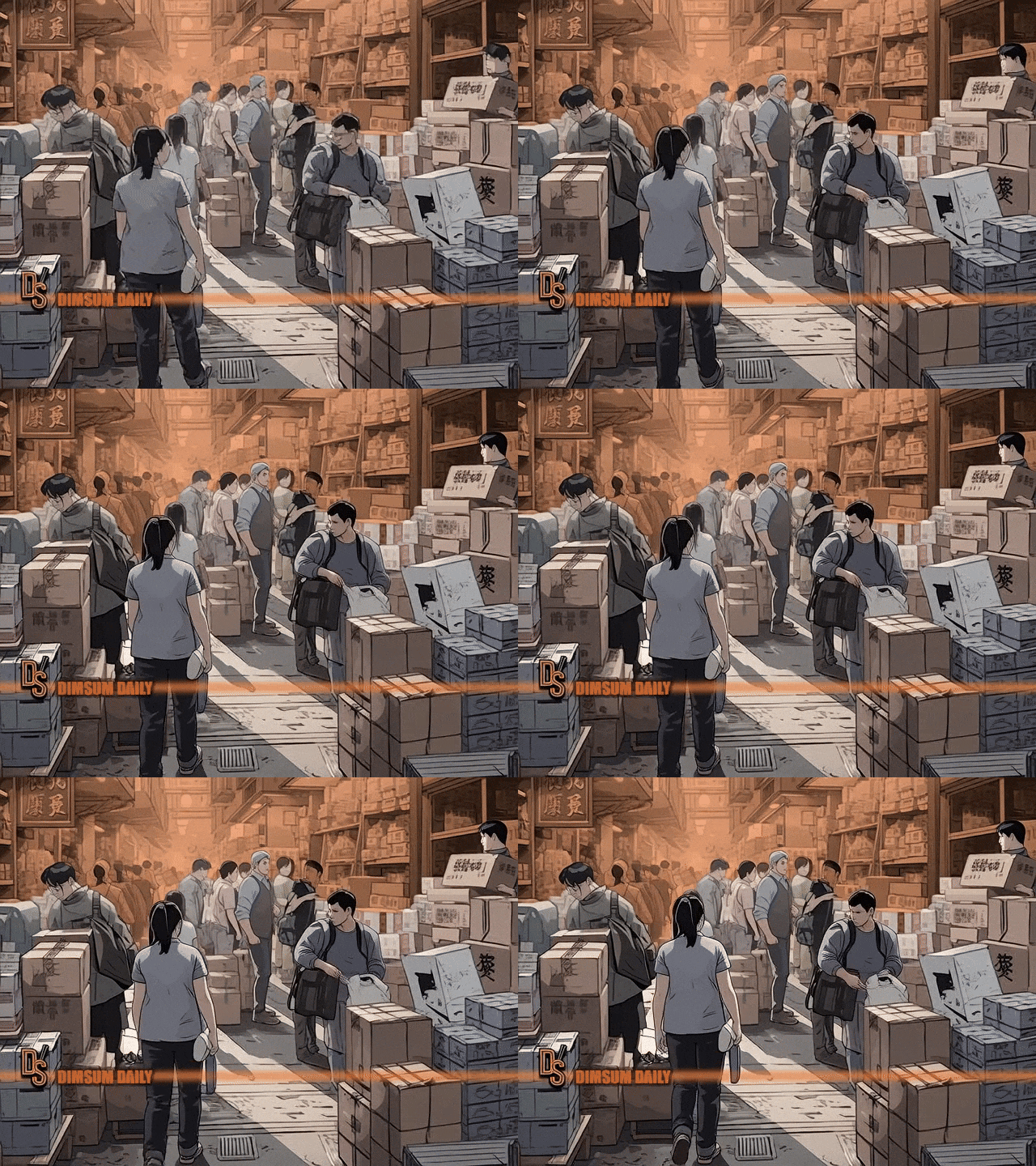
What makes this development notable is not the novelty of parcel collection, a commonplace in mature e-commerce ecosystems, but the way Hong Kong is localising it. Rather than cordoning off logistics into remote depots or carving new boxes into scarce land, the city is reusing old bones. A butcher’s stall becomes a barcode station; a corner unit by the tofu press turns into a community locker counter; a general store that sells incense and stationery quietly adds a revenue stream by handling parcels between customers paying their utility bills. The result is a layered market day: a parent grabs herbs for soup, collects a package ordered on a mainland app, then lingers to buy a snack from a neighbouring kiosk that benefits from the renewed footfall. This is what good urban economics looks like—complementary uses, small margins accruing to many, and the knitting back together of online and offline worlds.
Many of those who have taken over these self pick-up units were not set on entrepreneurship. They stumbled into it. The rents were affordable by Hong Kong standards; the learning curve favoured grit over pedigree; and the work, though repetitive, offered structure and a route to self-sufficiency. In some cases, a single operator runs the counter alone, sorting parcels, scanning codes, messaging recipients, and fielding questions about misdirected boxes or delayed shipments. The day stretches in familiar beats—morning intake from couriers, lunchtime surges of collection, an afternoon lull when the floor is mopped and paperwork is filed, then the early evening rush as residents pass through on their way home. By month’s end, a consistent operator can clear a five-figure profit in Hong Kong dollars in ordinary times, and double that in peak seasons. For those who once struggled to find a steady role, it is not merely a living; it is a path to dignity and, with discipline, savings.
The broader retail environment makes the case for these hubs stronger. Consumers are buying more online, and not just gadgets and fashion. Household staples, appliances, art supplies and the miscellany of daily life are in the mix, often ordered from platforms across the border and shipped to the city in thick green bags, brown cartons and the occasional oddly-shaped protective wrap. A resident who tells you candidly that monthly e-spend has drifted past HK$5,000 is not showing off; she is explaining why her visits to brick-and-mortar shops have tapered, and why she now expects the pick-up process to be easy, efficient and close. When weather turns foul, when a Black Rain Warning Signal is hoisted and buses run slowly, people still come. The psychology is simple: retrieving a parcel is a micro-victory in a day that may otherwise be inconvenienced by the elements.
There is, of course, nothing automatic about success. The logistics chain is only as strong as its fiddliest compliance rule, and the city has had recent taste of how quickly friction can escalate when partnerships between platforms and couriers fray. When a major e-commerce platform parted ways, even briefly, with a key local delivery partner, a cascade of parcels flowed unexpectedly into independent self pick-up points, overwhelming counters with four-hour queues and jittery crowds. The city adapted, as it tends to do. New arrangements were struck. Staffing schedules were padded. Operators posted clearer instructions. The lesson landed across the network: resilience is not an option; it is the job.
This is where policy can play a constructive role without heavy-handed intrusion. The low vacancy in some markets is a lagging indicator; the high vacancy elsewhere is an opportunity cost. Turning that cost into benefit requires simple, predictable frameworks. Stall licensing that recognises parcel handling as a permissible use; safety standards that are clear and sensible for storage limits; sanitation rules that preserve the market’s character while acknowledging new flows; and digital support from the city’s mapping and data teams to ensure that wayfinding apps correctly display collection sites. Even small improvements—QR-coded signage at entrances, standardised opening hours during peak seasons, and coordination with estate managers—produce outsized gains in customer experience and operator sanity.
Looking ahead, the most durable gains will come from integration. Platforms can pilot smarter batching that assigns parcels to pick-up points based on real-time capacity, not just geography. Estate managers can coordinate micro-zones for short-term loading so couriers do not clog pedestrian aisles. The government can open up anonymised data on market footfall to help operators plan staffing and hours. Payment providers can bundle loyalty for small purchases made adjacent to pick-up, nudging incidental trade that keeps the mix healthy.
There is a quiet optimism in all this that deserves notice. At a time when global headlines push cities toward grand gestures—rebrandings, megaprojects, silver bullets—Hong Kong is doing what it has always done when it is most itself. It is taking a set of challenges—market vacancies, a soft patch in retail, a surge in cross-border e-commerce—and turning them into a network of small, sturdy enterprises embedded in the heart of everyday life. It is creating jobs that suit the city’s unique tempo, offering pathways for people who might not thrive in more credentialed sectors, and drawing new energy into spaces that had fallen silent.