





















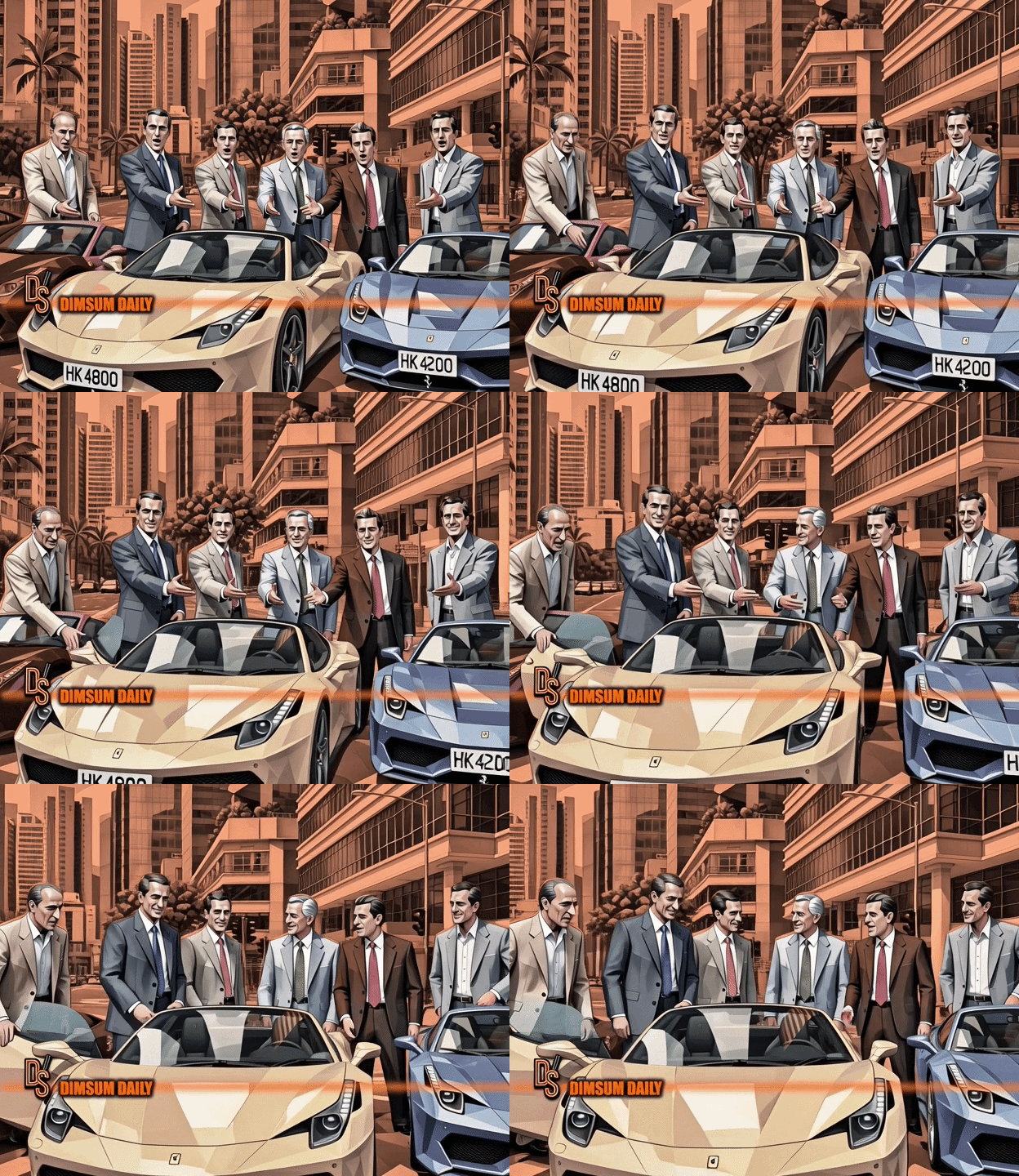
11th September 2026 – (Hong Kong) Once earning between $2.5 million and $5 million a year as Deutsche Bank’s head of equities for Asia Pacific—and reportedly on track for $11 million—Robert Ebert bought a Ferrari 458 Spider to navigate one of the world’s most congested cities. In June 2015, during his commute, the car left the road and killed security guard Ku Lap‑chi. Ebert served 14 months in a Hong Kong prison, was deported, and later pursued millions from Ferrari, claiming its brakes failed. A London judge recently ruled he cannot bring the case in England, finding Hong Kong or Italy to be the proper forum, even though he now runs a modest financial firm in Britain on roughly £80,000 a year.
One can leave aside, for a moment, the legal merits of the claim. Ferrari did later recall thousands of vehicles over a brake reservoir fluid cap that “may not vent properly,” and Ebert’s own 2012 car fell within that net. Perhaps he has a point about the machinery. But even granting him every mechanical benefit of the doubt, a stubborn question remains that no recall notice can answer. Why does a banker in Hong Kong own a Ferrari at all?
The city offers no plausible answer rooted in driving. The single highest speed limit anywhere in Hong Kong is 110 km/h, and it applies only to a stretch of the North Lantau Highway. Most expressways cap out at 100, urban roads at 50, rural carriageways at 70 or 80. A Ferrari 458 will reach 100 km/h in roughly three seconds and carry on past 300 if you let it. To own such a machine in Hong Kong is to buy a thoroughbred racehorse and stable it in a broom cupboard. The car spends its life idling in the bumper-to-bumper crawl of Central, its 4.5-litre V8 reduced to a very expensive way of moving four metres forward at a time. The paddle shifters, engineered for the apex of a racetrack corner, are deployed instead to inch toward a red light in Admiralty.
So the car cannot be about driving. It must be about something else, and the something else is the tell.
There is a revealing pattern in the garages of the genuinely wealthy. When you survey the vehicles of the world’s billionaires, the sports cars are conspicuously absent. Carlos Slim drove a Bentley he pointed himself to the office. Ingvar Kamprad, the founder of Ikea, kept a fifteen-year-old Volvo. Warren Buffett drove a Cadillac. Mark Zuckerberg was seen for years in an Acura worth about $30,000. The logic is quietly brutal. A Ferrari signals that its owner can spend a few hundred thousand dollars on transport, which places him, in the cold reckoning of status, somewhere in the low millions. It is a middle-class flourish dressed in racing red, the purchase of a man who has enough money to be noticed but not so much that he no longer needs to be. The truly rich buy yachts and islands and let their cars fade into practicality. It is the striver, the man still climbing and still anxious about the climb, who needs the world to hear his engine.
The Ebert affair reads less like an engineering failure and more like a parable of ego. It remains a tragedy for the family of Ku Lap‑chi, who had no part in anyone’s status games. For Ebert, it looks like a high‑speed machine meeting a slow city, driven by a man seemingly unable to resist the one purchase guaranteed to broadcast his salary to strangers.
Ferrari’s own history should give any owner pause. The marque’s romance has always been braided with disaster. In 1957, Alfonso de Portago’s 335 S suffered a tyre failure near Guidizzolo during the Mille Miglia and ploughed into the crowd, killing the driver, his navigator and nine spectators, and ending open-road racing in Italy overnight. In 2006 a $1 million Enzo split cleanly in half against a utility pole on the Pacific Coast Highway. Even Charles Leclerc, a professional, lost the brakes of Niki Lauda’s 1974 car at Monaco in 2022 and spun into the barriers. These machines were built to be extraordinary in the hands of people with somewhere extraordinary to drive them. Hong Kong’s traffic offers no such place.
The lesson, if the financial class cares to absorb it, is not that Ferraris are dangerous, though occasionally they are. It is that a car incapable of reaching a fraction of its purpose is not really transport at all. It is a declaration, and a rather insecure one. The men who own the banks tend to drive something sensible. It is the men who merely work at them, still needing to be seen, who wrap their bonuses around a lightpole.