





























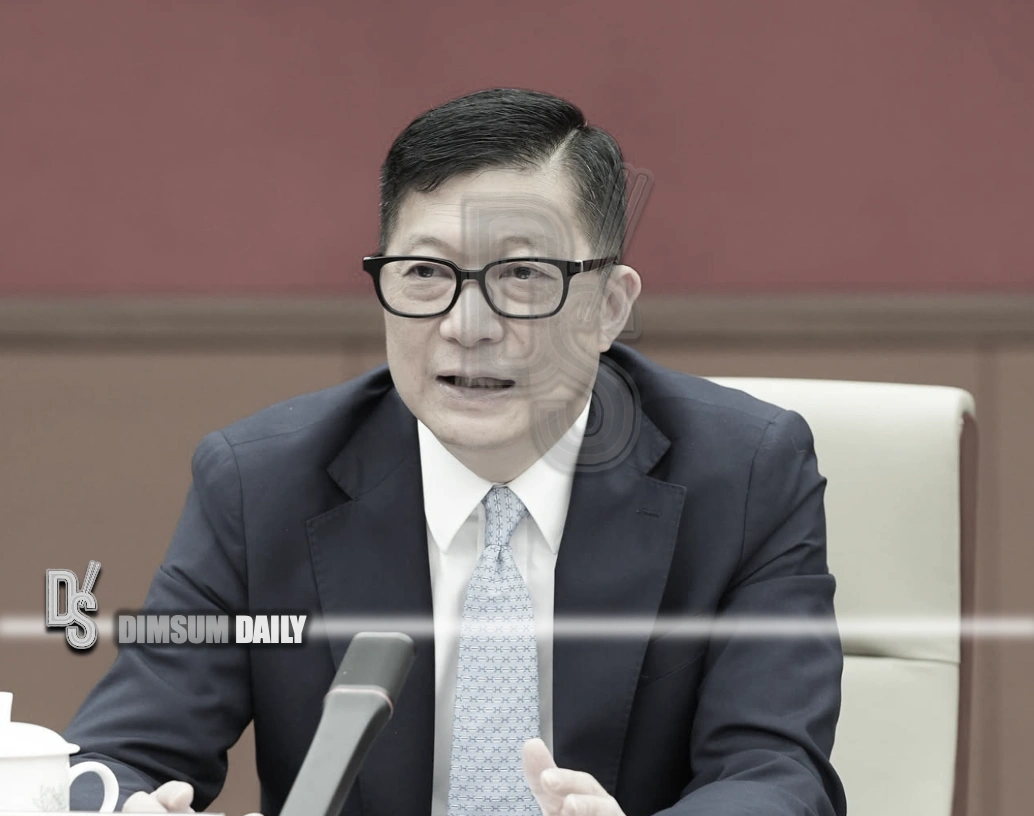
11th September 2026 – (Hong Kong) Secretary for Security Chris Tang Ping-keung said the now-disbanded Hong Kong Alliance had for years deliberately planted seeds of hatred against the Communist Party of China and the Central People’s Government, insisting today’s jailed leaders were prosecuted for illegal acts — not for political opinions — after the High Court handed down sentences for inciting subversion.
Chow Hang-tung received seven years and three months, Lee Cheuk-yan seven years and Albert Ho Chun-yan, who pleaded guilty before trial, five years and two months. The Alliance itself was fined HK$1.5 million. The Court of First Instance, which convicted the Alliance, Lee and Chow on 21st August under Article 23 of the Hong Kong National Security Law, today classed the case as of a “serious nature”.
Mr Tang said the group had long staged unlawful assemblies under various guises and, through publications, online posts, media interviews and public speeches, stirred residents toward confrontation with the aim of overthrowing the Party’s leadership under the Constitution. That conduct, he argued, had already gone beyond lawful free expression and required a lawful deterrent. He rejected recent overseas attacks on the earlier conviction, stressing the court had repeatedly made clear that the defendants were not on trial for their political views or beliefs and that all of them received a fair hearing under the Basic Law and the Hong Kong Bill of Rights, free from interference. “No country’s constitution allows its citizens to subvert the constitutional order and fundamental system established by that constitution,” he said.
On the wider security picture, Tang warned that while Hong Kong looks calm on the surface, undercurrents remain: external forces keep smearing the government, absconders abroad agitate for sanctions, and soft resistance persists locally. Citizens, he said, must recognise that Party leadership is the core of the state’s constitutional order and must not be shaken in any form.
The court’s sentencing reasons, echoed in an official summary, said that even after the security law took effect some people still refused to accept the state’s exercise of sovereignty over Hong Kong or the constitutional order set by the Constitution and the Basic Law. The defendants, the judges found, incited amid a turbulent social atmosphere, possessed mobilising power and influence, kept up criminal activity for as long as 14 months across city-wide events and online platforms reaching different age groups, and — despite believing their agenda might breach the Constitution and the security law — recalcitrantly pressed on after the law’s commencement. The court reiterated that the National Security Law has no retrospective effect and that the convictions rested solely on prohibited acts after it came into force, not on ideology or pre-law conduct.
Chief Executive John Lee Ka-chiu said the earlier verdict had already shown the Alliance’s aim was to overthrow and undermine Party leadership under the Constitution by stirring hostility and division. After the law took effect, he said, the defendants “refused to pull back from the brink” and tried to use the Alliance to subvert state power. “The law never allows anyone to openly harm one’s own country and compatriots under the pretext of human rights, democracy and freedom,” Mr Lee added, calling today’s terms confirmation that the offences were extremely serious and warranted stern punishment to uphold the rule of law. A government spokesman linked Article 22 of the security law to the Constitution’s protection of the Party’s governing role, dismissed Western and anti-China smears, and pledged continued strict enforcement against threats to national security — a line Tang’s remarks placed firmly at the centre of the day’s official message.