





























24th May 2026 – (Beijing) Rescue teams deployed mine‑inspection robots underground early on Sunday as efforts intensified to locate missing workers following a gas explosion at a coal mine in northern China that has left 82 people dead.
The blast occurred on Friday at the Liushenyu coal mine in Qinyuan County, Shanxi Province, operated by Shanxi Tongzhou Group. By Saturday night, authorities confirmed that 82 miners had died, two remained missing and 128 had been injured.
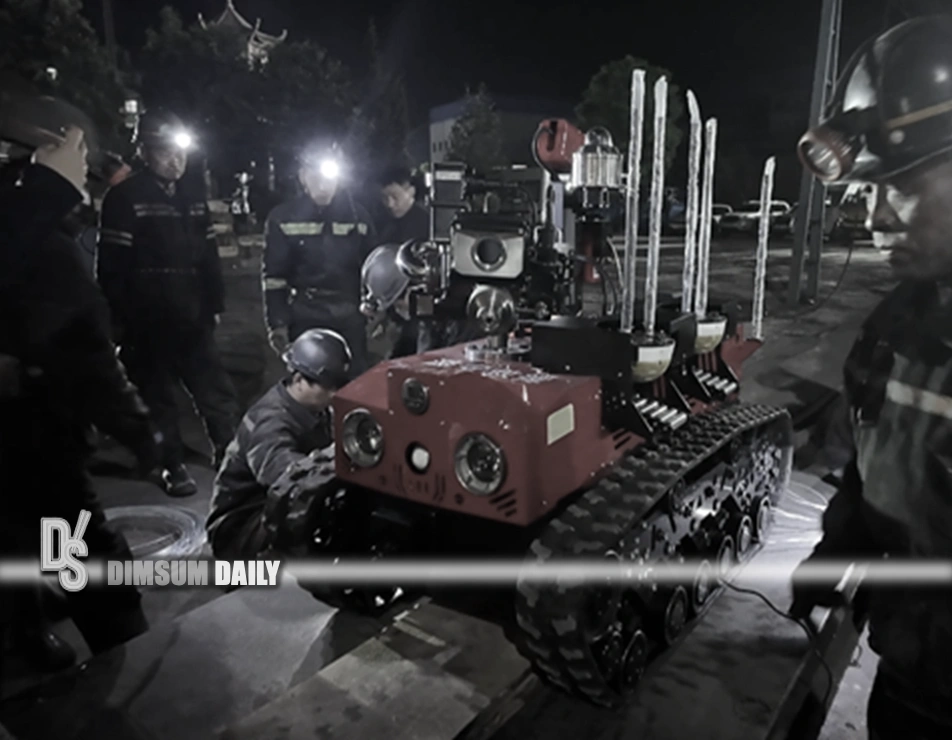
According to state news agency Xinhua, the robotic units are fitted with gas detection sensors and live‑feed cameras, allowing them to access areas too dangerous or inaccessible for human rescuers. Specialist personnel accompanied the equipment into the shaft to guide operations and gather real‑time data.
The on‑site rescue command centre said Sunday’s priority was to conduct repeated and comprehensive searches underground, including re‑examining previously covered zones to ensure no area is overlooked. China Central Television reported that 335 professional rescue workers and 420 medical staff have been assigned to the operation.
Investigations into the number of miners underground at the time of the explosion revealed discrepancies in official records. An electronic notice board initially indicated that 124 people had entered the pit. However, cross‑checks later established that 247 individuals were actually below ground, with 123 lacking valid registration information in the system.
Officials stated that of the 128 injured, 124 sustained minor injuries, two were seriously hurt and two remain in critical condition. The most recent updates indicate that the two severely injured patients being treated at Changzhi People’s Hospital are now in stable condition, while those with minor injuries have been transferred to tertiary hospitals for observation and care.
In total, seven rescue and medical teams comprising 755 personnel have been mobilised to assist with search and treatment efforts. Despite the large‑scale response, progress has been hampered by tunnel collapses and flooding. Five rescuers in waterproof gear have ventured deeper into the mine, but hazardous conditions continue to complicate operations.
Shanxi authorities have activated a provincial medical emergency response mechanism, coordinating local healthcare resources and dispatching senior specialists to support frontline treatment. The National Health Commission has arranged remote multidisciplinary consultations involving trauma, respiratory and intensive care experts from leading Beijing hospitals, while three specialists have been sent directly to the site.
A State Council investigation team has pledged a comprehensive inquiry into the cause of the explosion, examining local oversight, regulatory supervision and corporate responsibility. The mine’s controlling shareholder and several senior executives have been placed under compulsory legal measures as the investigation proceeds.
Local officials have also begun post‑incident arrangements, including setting up dedicated teams to liaise individually with affected families, verify personal details and provide counselling and emotional support. Compensation procedures are being advanced, with particular attention given to elderly and financially vulnerable relatives requiring assistance with daily needs.