




























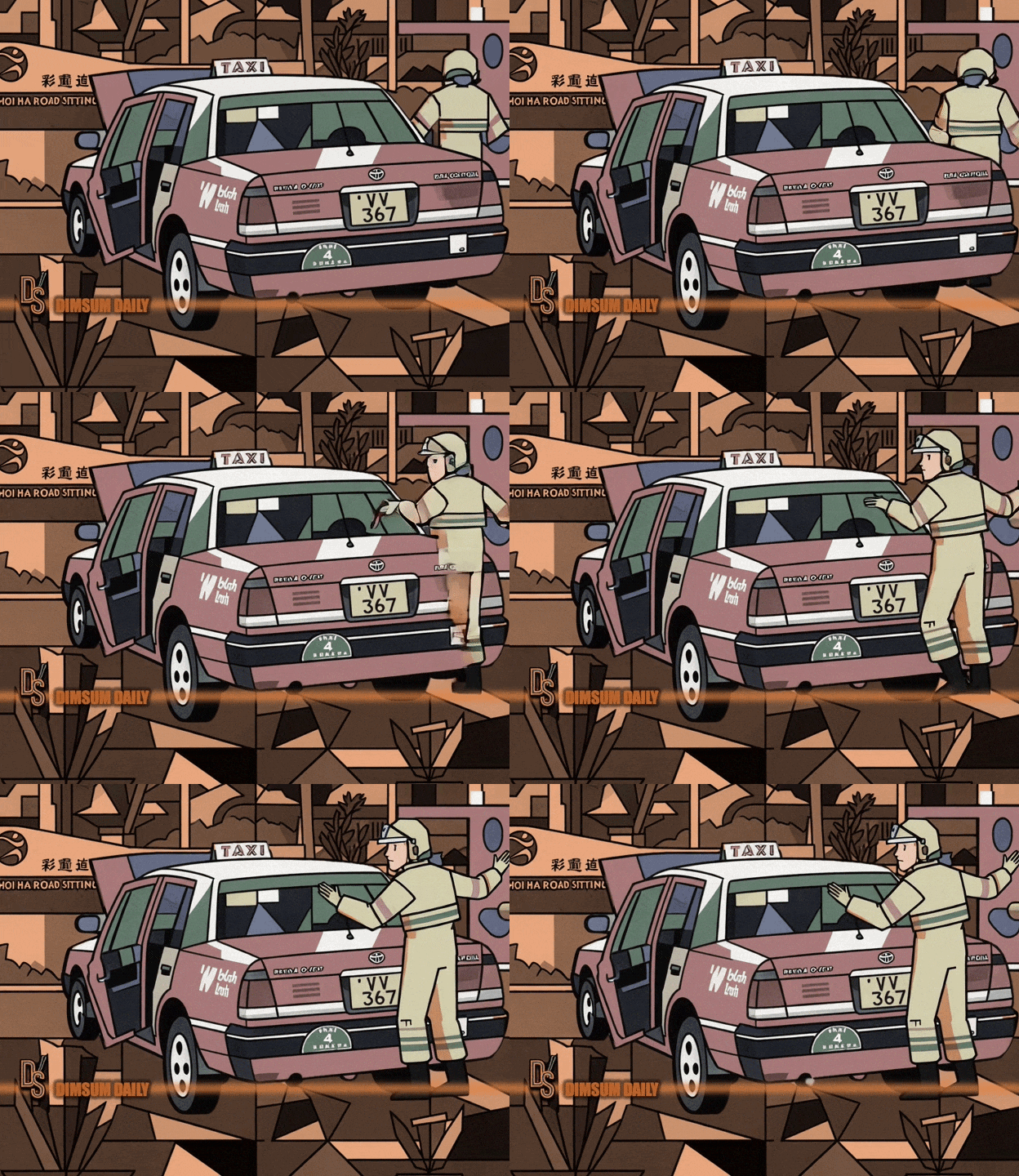
16th May 2026 – (Hong Kong) The latest crash involving an elderly taxi driver has again pushed a familiar question into public view. Why are so many men over 70 still behind the wheel of taxis in one of the most demanding urban traffic environments in the world. The usual answers arrive quickly. Tighten health checks. Raise scrutiny. Consider age caps. Punish dangerous driving. These responses are understandable, yet incomplete.
Hong Kong is confronting a public safety issue, but it is also confronting a social failure. Elderly taxi drivers are not simply an ageing workforce. They are the visible outcome of a city that has allowed retirement insecurity, punishing work patterns and transport market distortions to converge on the road. If policy only asks whether a 70-year-old should still be driving, it misses the more important question. Why does he have to.
The Ngau Tau Kok crash on 13th May, when a taxi mounted the pavement on Choi Ha Road and caused one death and four injuries, has intensified calls for tougher controls. The fatal Nina Hotel accident involving an 80-year-old driver who reportedly felt dizzy before losing control did the same. These incidents are not arguments for lazy stereotyping. They are warnings that a fragile system has been left in place for too long.
The first point that requires honesty is this. Age alone does not explain the whole risk. Raw accident totals can easily mislead because Hong Kong’s taxi workforce is heavily concentrated among older drivers. When a profession is dominated by older workers, the number of incidents involving them will naturally appear high. The more meaningful measure is exposure and rate, not headlines alone.
Yet the second point is equally unavoidable. Taxi driving in Hong Kong is not ordinary driving. It is long-duration, high-density, high-pressure labour. It demands constant scanning, rapid judgment, physical endurance and emotional control across congested roads, difficult passengers, erratic schedules and financial stress. A younger person can be worn down by such conditions. An older person faces even greater strain, especially if underlying illness, fatigue or slower recovery are present. That is why the issue cannot be reduced either to age discrimination or to age denial.
Hong Kong therefore needs a two-track response. One track must protect the public. The other must protect elderly drivers from being trapped in work they can no longer safely sustain.
Public safety reform should begin with realism. Medical certification for commercial drivers cannot remain light-touch, delayed or vague. If the government believes annual health checks should start at 65 rather than 70, the check should go beyond eyesight and basic declarations. It should assess cardiovascular risk, cognitive alertness, medication effects, sleep conditions and functional stamina for commercial driving. A paper exercise will not identify the driver who can still steer capably for two hours but becomes unsafe in the tenth hour of a shift.
A stronger medical regime, however, will fail if it is designed as a blunt exclusion tool. Elderly drivers fear screening not because they dismiss safety, but because failing a test can mean immediate income loss. In that setting, every reform is interpreted as a threat to survival. A credible policy must therefore include a transition guarantee. If a driver over 70 loses commercial fitness certification, he should not fall straight into destitution. There should be a time-limited income support mechanism tied to retraining, retirement planning or transfer into lighter work.
That leads to the deeper issue. Hong Kong has too many elderly taxi drivers because it has too little retirement security for self-employed and low-income workers. Many drivers spent decades outside robust pension accumulation. Many worked on thin margins. Many rented vehicles rather than built assets. Many entered old age with little buffer against rent, food, healthcare and family obligations. In such circumstances, work after 70 is rarely a lifestyle choice. It is a last line of defence against poverty.
This is why calls for a maximum age cap, while understandable, are not enough on their own. An age ceiling may eventually be necessary for the highest-risk forms of commercial driving. Yet if introduced without economic cushioning, it would simply move danger from the road into the home. A city cannot congratulate itself for removing an 80-year-old from the driver’s seat if it then leaves him unable to pay for basic living costs.
The right policy approach is a managed exit, not an administrative expulsion. That managed exit should include five measures.
First, introduce phased work limits from age 70 onward for commercial taxi drivers. Shorter licensed driving windows, mandatory rest intervals and restrictions on consecutive long shifts would reduce fatigue exposure without instantly removing income. Safety often collapses not at the start of a workday, but deep into it. Second, create a publicly supported Senior Driver Transition Fund. This should subsidise medical examinations, provide temporary earnings support for those ruled unfit, and finance movement into lower-strain jobs such as depot support, fleet administration, community transport assistance or non-driving service roles.Third, reform the economics of taxi labour. As long as drivers remain squeezed by vehicle rental costs, fuel expenses and unstable takings, they will keep extending their hours beyond what is safe. Road safety cannot be separated from the commercial pressures of the trade. A system that rewards exhaustion is a system that manufactures risk.
Fourth, build targeted retirement protection for ageing self-employed workers. Hong Kong has debated retirement adequacy for years while large groups remain structurally exposed. Elderly cabbies are among the clearest examples of what happens when social protection arrives too weakly and too late.
Fifth, prepare older drivers for the industry transition already under way. Ride-hailing competition, digital dispatch systems and autonomous vehicle trials are changing transport economics. Drivers in their seventies should not be the final group asked to absorb all the shock. If the city wants smarter mobility, it must also fund a humane off-ramp for those displaced by it.
The public is right to demand safer roads. No family accepts the language of complexity when a loved one has been killed on a pavement. Government, however, should resist the temptation to offer a narrow fix for a broad failure. Elderly taxi drivers are not the entire problem. They are the point where multiple neglected problems become impossible to ignore.