































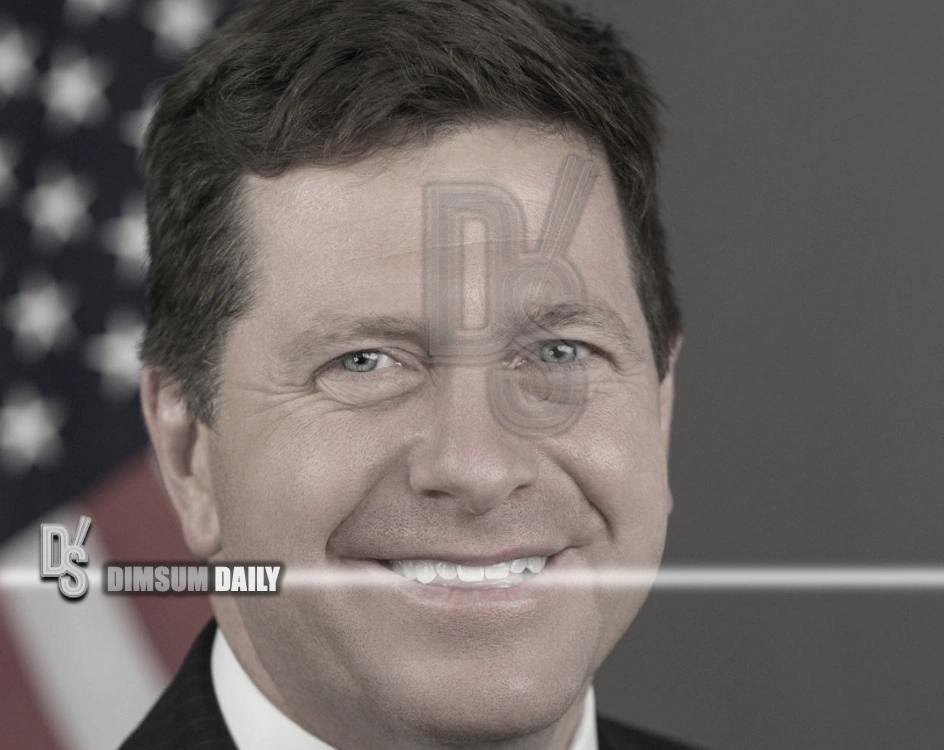
4th October 2026 – (Washington) The White House has appointed Director of National Intelligence Jay Clayton to coordinate the administration’s response to artificial intelligence—rebranded by the president as “super intelligence”—and to chair a task force charged with delivering a comprehensive report within 120 days. The move follows an executive order signed on 29th September that formalises the “Super Intelligence Force” and directs officials to adopt the new terminology across government. Clayton said the group’s aim is to keep the United States in the lead while safeguarding the interests of the American public.
The task force has been instructed to identify threats and opportunities arising from advanced systems, recommend strategies to manage them, and review existing laws and government notification mechanisms for compromised or vulnerable models, with advice on whether Congress should act. Its structure includes three vice‑chairs with distinct remits: Emil Michael at the Department of Defense to liaise with technology companies; Scott Kupor at the Office of Personnel Management to engage critical‑infrastructure operators and industry; and Federal Trade Commission chairman Andrew Ferguson to oversee consumer issues, including matters affecting privacy, children, speech and freedom of association. Core decision‑makers include Vice President Jd Vance, Defense Secretary Pete Hegseth, Treasury Secretary Scott Bessent and White House Chief of Staff Susie Wiles, while outside advisers include David Sacks and former Secretary of State Condoleezza Rice. The charter allows the work to extend beyond 120 days and to transition into permanent agency responsibilities if required.
Officials signalled a preference for dialogue‑led governance over new regulation, indicating that risk identification will be developed in partnership with industry and complemented by voluntary frameworks rather than prescriptive rules. The announcement comes after a White House meeting with leading developers at which participants backed voluntary safety standards the president described as “morally binding.” While figures such as Anthropic’s Dario Amodei and OpenAI’s Sam Altman have urged federal guardrails for frontier models, the administration has so far favoured industry self‑regulation and prioritising a competitive edge over China.
Clayton’s selection draws on a track record as chair of the Securities and Exchange Commission from 2017 to 2020, during which the agency pursued dozens of crypto‑related enforcement actions and took the position that many newly issued tokens were securities. The SEC’s case against Ripple Labs, filed in December 2020, later produced a mixed ruling in 2023 and a significantly reduced civil penalty in 2024, with appeals withdrawn in 2025. After leaving the SEC, Clayton served as U.S. Attorney for the Southern District of New York and was confirmed in July as Director of National Intelligence.