
























4th September 2026 – (Hong Kong) Few markets stage a comeback as decisively as Hong Kong has in 2026. The city that spent the pandemic years being written off as a fading financial center raised HK$209.9 billion across 85 new listings in the first half alone, its strongest first-half showing in five years, with proceeds nearly doubling year-on-year on more than twice as many deals. LSEG data puts combined Hong Kong and Shanghai proceeds at over $54 billion so far this year, roughly 21 percent of the global total, trailing only Nasdaq. The one caveat is instructive: Deloitte’s Edward Au noted that had SpaceX’s record $75 billion listing gone anywhere but New York, Hong Kong would have narrowly claimed the world’s top spot. The gap is a technicality, not a verdict.
Underneath the headline numbers sits a clear thesis about what is driving this boom, and it is not the property developers and consumer brands of the last cycle. Artificial intelligence and its supply chain now sit at the centre of the pipeline. CXMT, the mainland’s largest memory chipmaker, raised more than $8.6 billion on Shanghai’s STAR market in July and saw its shares leap 466 per cent on debut. Humanoid-robot maker Unitree jumped 460 per cent on its first day in August. In Hong Kong, Nvidia supplier Zhongji Innolight’s $7.8 billion listing was the city’s biggest in seven years, and Moonshot AI’s confidential filing for a $3 billion offering at a $50 billion valuation signals that frontier model developers now see Hong Kong as their natural venue. Information technology and healthcare, powered respectively by AI and biotechnology, were the two largest sectors for new listings over the past year.
What gives this cycle durability is structural rather than sentimental. Tighter regulatory scrutiny on both sides of the Pacific has made a New York listing slower and riskier for Chinese companies in strategically sensitive sectors, and capital has responded by staying closer to home. A+H share listings and specialist technology flotations together accounted for more than 70 per cent of first-half proceeds, and by late June some 121 mainland A-share companies had filed to list in Hong Kong. The city’s role as a superconnector is functioning exactly as intended: mainland champions in hard technology use its common-law framework, free capital flows and convertible currency to reach global investors, while international money gains regulated access to the most dynamic industrial base on earth. Hong Kong now clears roughly 75 per cent of the world’s offshore renminbi settlement.
The pull is now extending well beyond the mainland. Shein, the China-founded fast-fashion giant, weighed New York and London before choosing Hong Kong for its $1.7 billion debut. Jollibee, the Philippine fast-food operator, abandoned a planned US listing for its international unit in favour of Hong Kong, citing better price discovery and access to a regional investor base that understands its growth story. These are not companies with obvious ties to Beijing’s industrial policy. They are choosing Hong Kong on the merits of liquidity and audience, which is the more telling signal of where the market’s gravity now sits.
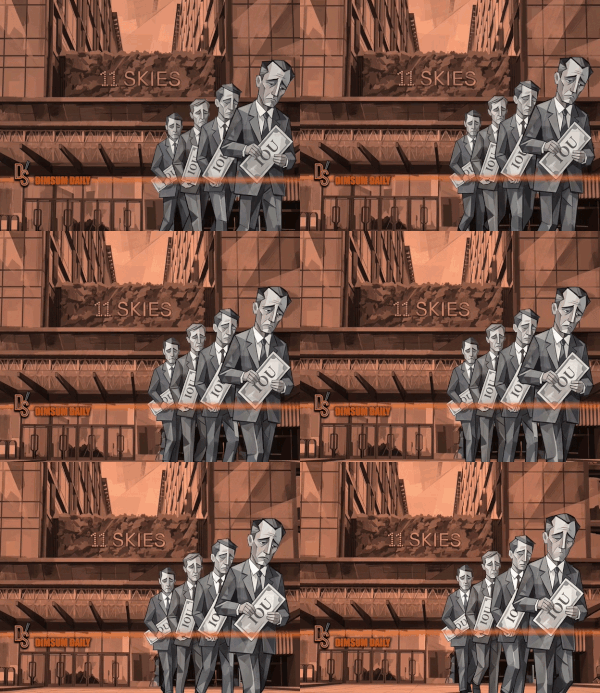
More than half of Hong Kong’s ten biggest listings this year are now trading below their offer price, Unitree has shed over 40 per cent from its debut peak, and S&P’s Ruiying Zhao rightly warns that AI sentiment alone cannot sustain a durable cycle without sustainable revenue, visible margins and realistic valuations. There is also the question of allocation discipline. As first-day gains have averaged nearly 30 per cent, companies have increasingly handpicked “friends and family” investors, crowding out traditional funds and raising legitimate concerns about mispricing and transparency that the Securities and Futures Commission is now actively probing.
The HKEX’s August 2025 overhaul of the IPO pricing and allocation mechanism requires issuers to place at least 40 per cent of shares in the bookbuilding tranche, sharpening price discovery to align with international standards. The early evidence is encouraging: of 109 IPOs through end-April 2026, close to 80 per cent held or rose on their first trading day, up from around 70 per cent before the change. The SFC’s parallel moves on upfront subscription deposits, sponsor due diligence quality and bookbuilding oversight suggest a supervisor trying to preserve the integrity of a hot market rather than merely ride it, which is precisely the posture that keeps a boom from curdling into a bubble.
The forward case is strong and grounded in more than momentum. BDO expects the listing surge to run through the second half of 2026 and well into 2027, supported by a deep pipeline of A-share leaders and AI firms, average daily turnover above HK$250 billion, and overwhelming subscription demand. October’s APEC Finance Ministers’ Meeting, the city’s most significant ministerial gathering since 2005, offers a platform to demonstrate that “one country, two systems” is a competitive advantage rather than a slogan. Hong Kong has rebuilt its market on the industries that will define the next decade, attracted issuers from Manila to Guangzhou, and paired the revival with visible regulatory tightening. That combination of demand, diversification and discipline is what separates a genuine franchise from a passing rally, and it is why the city’s financial ascent looks set to continue.