




























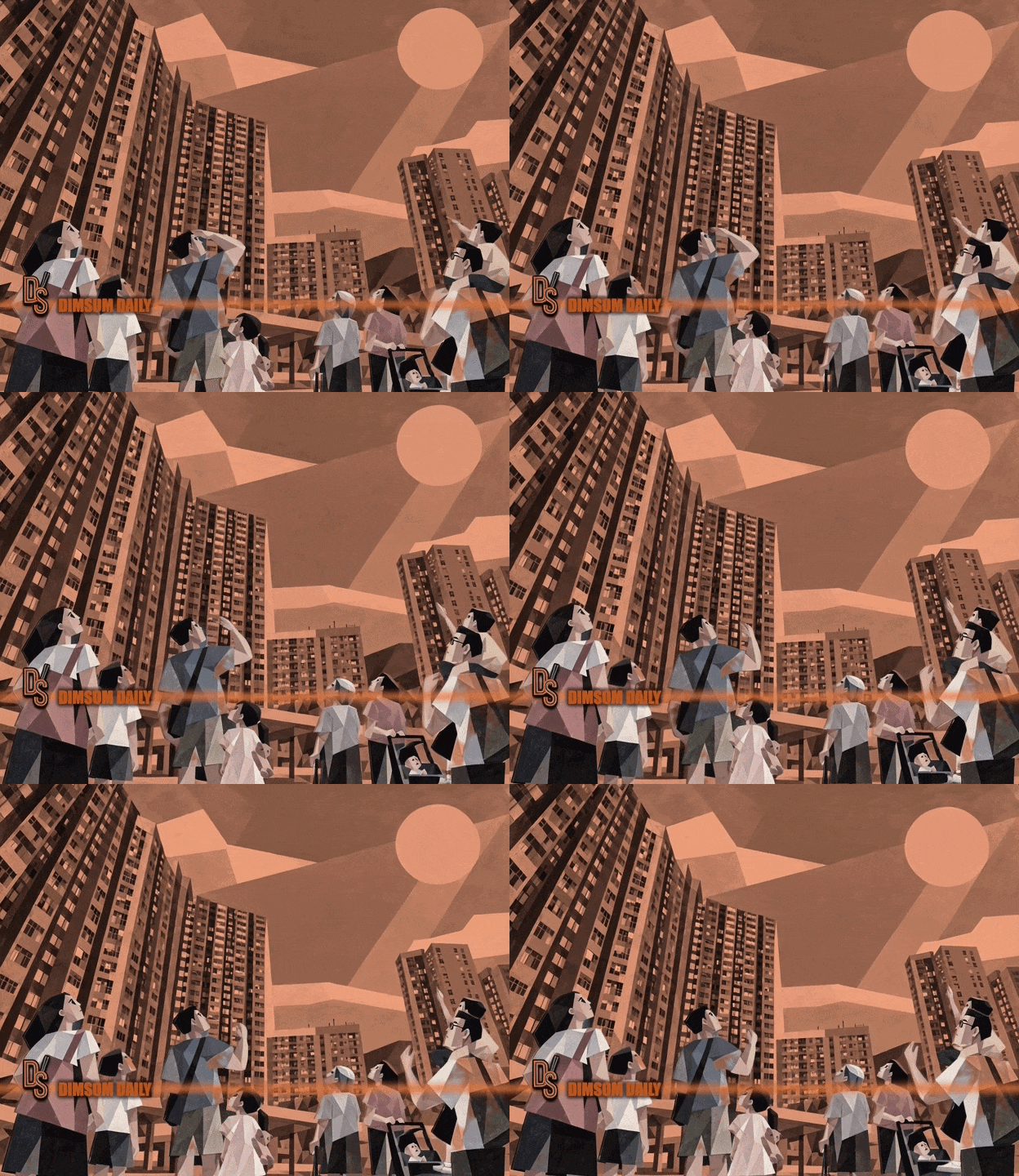
29th September 2026 – (Hong Kong) The Long Term Housing Strategy Annual Progress Report 2026, released on September 28, estimates gross housing demand for the next decade at 419,300 units. The government has set its supply target at 420,000. For once, the target meets demand instead of trailing behind it. The 70:30 split between public and private housing stays in place, which means 294,000 public units and 126,000 private ones.
The government says it has already found enough land for the whole public housing target. Over the next five years, it aims to deliver more than 35,000 public units a year on average. It says this is about 73 per cent more than the five-year output when the current administration took office, and the highest level in 25 years.
The results can already be seen. The average wait for public rental housing has fallen from a peak of 6.1 years to 4.8 years, the lowest level in more than eight years. The target is 4.5 years in 2026-27. Between July 2022 and June 2026, more than 133,000 families moved into public rental flats or bought subsidised flats. That is more than 35 per cent above the roughly 97,000 families in the previous four years. The number of subsidised flats offered for sale almost doubled, from about 25,000 to about 48,000.
In 2022, University of Hong Kong economist Michael Wong wrote a paper for the Hong Kong Economic Policy Green Paper that explains why. He found that real home prices rose 239 per cent between 2004 and 2021, while real wages grew only 7.1 per cent. The cheapest flats quadrupled in value while flats worth HK$5 million only doubled.
Wong’s explanation is subtle. Public housing rents barely respond to market conditions. When private rents climbed, public tenants had little reason to move out, so waiting times grew. The poorest households were left competing for a small pool of cheap private flats, and those prices soared. His recommended fix was to shift policy away from rigid rental housing and toward subsidised ownership.
That is the direction the government has taken. In 2024, it announced a gradual move to a 60:40 ratio between public rental flats (including the Green Form scheme) and other subsidised sale flats. For the new decade, that means 176,000 rental units and 118,000 sale units. Supply under the Home Ownership Scheme is about 100 per cent higher than first projected. The report also sets four priorities: helping residents move up the housing ladder, improving subsidised sale flats, eliminating substandard subdivided units under the new Basic Housing Unit regime, and using building technology to cut costs. The aim is not only to build more flats but to make it easier for people to move up the ladder.
In 1997, Hong Kong’s first Chief Executive, Tung Chee-hwa, promised 85,000 flats a year. Then the Asian financial crisis hit, property prices fell sharply and the government retreated. As academic Ken Ip has noted, the city still faces the same dilemma: how much land can it release without undermining the value of land already on the market?
The Northern Metropolis tries to change that equation. Instead of earning money from land only by selling it, the plan wants land to generate value through jobs, research and industry. The 30,000-hectare district is planned to house about 2.5 million people. It will include three university campus sites and about 650,000 jobs once fully developed.
The early signs are mixed. At Wheelock’s Park Silicon project in Kwu Tung, 56 of the first 100 flats sold on launch day, at more than HK$17,000 per square foot. The district won’t have full metro connections until 2034, and one recent land sale drew only two bids. But those prices largely reflect land that developers bought near the 2021 market peak, not what the district will become. The real lesson is that jobs have to arrive at the same time as homes.
That is what Hong Kong’s first five-year plan, announced by Chief Executive John Lee on 16th September, is designed to achieve. It links land, housing, jobs, education and healthcare in one roadmap. It speeds up the Northern Metropolis and focuses on technologies such as AI, robotics, microelectronics and new energy. Housing is no longer treated as a separate policy area. It has become part of the plan for economic growth. People will move north when the work does.
It’s also worth looking at Hong Kong herself. Under the plan, she is positioning herself as a “super connector” between China and the world. She aims to strengthen her role as a global hub for offshore renminbi and as a centre for international legal and dispute resolution. She is also building closer technology ties within the Greater Bay Area. The Northern Metropolis is the physical form of that role, a bridge to Shenzhen. Mainland buyers already account for about half of first-hand home sales by value. Hong Kong’s influence depends on being useful to both sides, and she is using that position carefully.
Risks remain. Analysts warn about uncertain interest rates and tighter controls on cross-border investment. The Wang Fuk Court fire, which killed 168 people, is a painful reminder that safe housing matters as much as the number of flats. Even so, the evidence points one way. Queues are shorter, the housing mix is tilting toward ownership and the land has been secured. After years of darkness, the end of the tunnel is finally in sight.