

























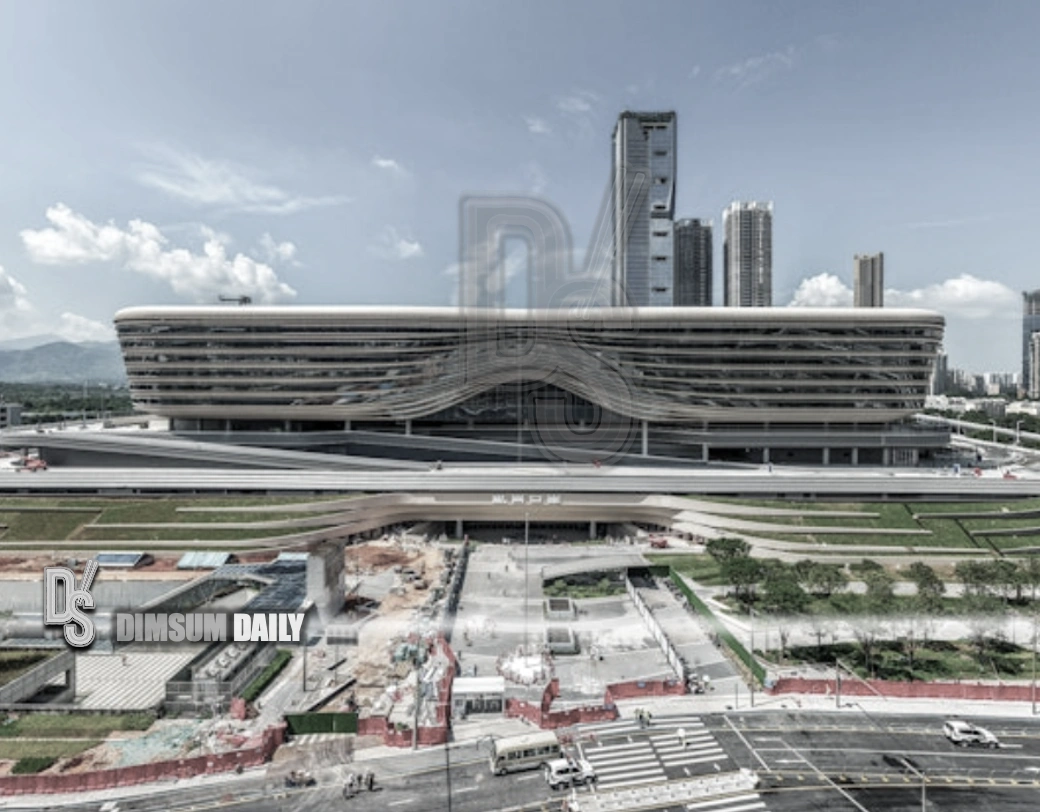
4th November 2026 – (Hong Kong) The government has detailed the early operation of the redeveloped Huanggang Port, saying performance has been broadly smooth since its opening at 6.30am on 12th October under a co‑location arrangement with Shenzhen. Secretary for Security Tang Ping‑keung, responding in writing to a Legislative Council question from the Hon Erik Yim, said the land boundary control point now provides 24‑hour clearance for passengers and passenger vehicles using a “collaborative inspection and joint clearance” model.
Officials said the port is fitted with 134 automated channels and 68 traditional counters. Weekday passenger volumes have averaged more than 86,000, more than twice the previous flows at Lok Ma Chau, while weekends and holidays have approached 140,000. Waits at the automated channels are mostly within five minutes, and even at peaks are generally kept below 15 minutes through pre‑emptive opening of all gates and counters.
Authorities acknowledged some first‑time users were unfamiliar with the new process, including those who had not enrolled with Hong Kong e‑Channel or registered for the Mainland e‑Channel in advance. To ease throughput, the Immigration Department has opened an extra enrolment office outside the departure hall on the fifth floor, increased on‑site staffing to guide users and strengthened queuing and diversion so ineligible or unregistered travellers are directed to manual counters. Publicity has been stepped up, including reminders for parents and guardians to complete enrolment for children aged seven to 17 before travel.
On surface access, transport planning has leveraged existing networks around San Tin Public Transport Interchange. Four franchised bus routes and four green minibus routes, including overnight services, link the port and San Tin with a shuttle journey of about five minutes. The interchange has been re‑spatialised to provide an air‑conditioned waiting area, with the nearest pick‑up and drop‑off zone designated for local non‑franchised buses and coaches. The Transport Department is working with the Travel Industry Authority and the Travel Industry Council of Hong Kong to keep tour operators informed, monitor daily tour‑group usage and deploy buses with luggage racks where needed.
The Hong Kong Port Area remains a closed zone to manage limited space. Only cross‑boundary vehicles with valid Closed Road Permits and designated public transport — franchised buses, green minibuses, urban and New Territories taxis, and approved taxi fleets — may enter. No pick‑up or drop‑off spaces are provided for private cars or ride‑hailing vehicles, and there are no plans to reserve such areas within the port precinct.
Rail connectivity has been integrated into the design. Passenger halls have provision for a direct connection to the Northern Link Spur Line, which will tie into the Shenzhen and Hong Kong metro networks under the co‑location model. The government said the programme for the Spur Line has been accelerated by two years to achieve simultaneous commissioning with the Northern Link Main Line by 2034 or earlier. Publication of the Hong Kong Railway Standards and the creation of a dedicated Railway Checking Unit this year are intended to streamline approvals, with the administration pledging to work with the MTR Corporation to apply innovative delivery methods and bring the project into service as early as practicable.