
























1st October 2026 – (Hong Kong) Some damage is easy to miss. A beam rots slowly. A crack spreads behind the plaster. By the time anyone notices, the people who built the house have long gone. Cultural commentator Mathias Woo makes this point well in his recent HK01 column. Woo is co-artistic director and chief executive of Zuni Icosahedron and a member of the Chinese Association of Hong Kong and Macao Studies. He recalls a remark he attributes to Singapore’s founding prime minister, Lee Kuan Yew. When the British left their colonies, Lee reportedly said, they behaved like careless clients who hid time bombs in dark corners for the new owners to defuse. Woo names three: the end of rent control, the freeze on hawker licences and the sidelining of Chinese-medium schools. He calls them slow poisons rather than bombs. Their harm builds up quietly, and twenty years later you notice you’re limping.
The colonial government owned all land, leased it out at auction and paid for itself largely through land sales. Scarcity was not an accident. It was the business model. The 1898 lease of the New Territories created a second, separate land system. Then the 1972 Small House Policy gave male indigenous villagers a hereditary right to build village houses, tying up scarce rural land for a small group. Mass public housing began only after the 1953 Shek Kip Mei fire left more than 50,000 people homeless. It was crisis management to keep order, not a promise to the public.
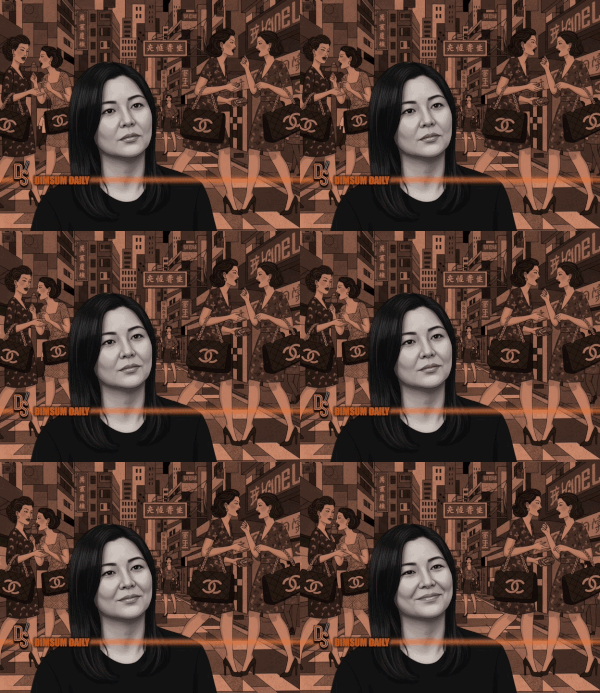
Rent control followed the same logic. Woo traces tenant protections from the 1947 Landlord and Tenant Ordinance to the 1973 consolidated law. The phase-out started before 1997 and was finished afterwards. Rent control ended in 1998 and security of tenure in 2004. Woo himself notes the complicated timing, and a fair reader should too. The point is not who signed the final bill. It is that a land-revenue system had already narrowed the choices. The result was what Woo calls “property-ism”. Small bookshops, cafés and workshops were priced out, and the economy narrowed to finance, property and professional services.
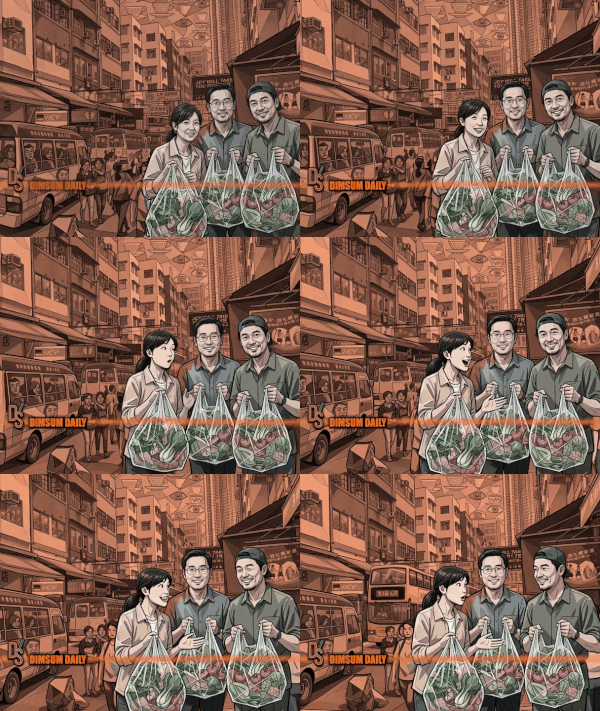
The hawker freeze was the second bomb. From 1970, no new itinerant hawker licences were issued. The number of licensed hawkers fell from about 20,000 in the 1980s to about 6,300 by 2014, and most were over 60. Street trade had once let people save up for a shop of their own. That route quietly disappeared.
Language was the third. From 1860, colonial policy favoured English. From 1895, new schools that didn’t teach in English couldn’t get government grants. By 1980, 87.7% of secondary schools taught in English. Language became a way of sorting people by class. Generations grew up with a thin, purely practical knowledge of Chinese history and culture. Chinese did not become an official language until 1974, more than 130 years into British rule.
Now look at the record since 1997. The ten-year supply target of 420,000 units now matches estimated demand of 419,300. Land has been found for all 294,000 planned public units. The average wait for public rental housing has fallen from 6.1 years to 4.8 years. More than 133,000 families moved into public rental flats or bought subsidised flats between July 2022 and June 2026. The Northern Metropolis and the first five-year plan, announced on 16 September, link homes to jobs. The colonial land system never tried to do that.
On rent, Woo asks for a new form of protection rather than a return to the old controls. That is already happening. Tenancy control for subdivided units took effect in January 2022. It gives tenants a four-year term and caps rent rises when the lease is renewed. The Basic Housing Units regime goes further, setting minimum standards for floor area, windows, toilets and safety. In education, teaching in Chinese became the norm from 1998. Chinese History became a separate compulsory subject in junior secondary school from 2018.
Being patient also means not claiming victory too early. Four gaps remain.
First, the Basic Housing Units regime needs a safety net. By August 2026, more than 34,000 units had applied to register, but only a small share had been certified. Some tenants earn too much for public housing but can’t afford market rents. Landlords may evict them rather than renovate. Transitional housing and Light Public Housing should be a guaranteed bridge for these households.
Second, the hawker ladder can be rebuilt with modern rules. Designated hawker zones, night markets and time-limited permits for young and low-income traders would make street trading a starting point again. Woo’s question about enforcement is also fair. Hawker control now costs HK$1.36 billion a year and has 2,441 posts. That spending should be judged against results. The officers’ uniforms should also be clearly different from police uniforms.
Third, the Small House Policy needs an honest review based on data, as the Northern Metropolis reshapes the New Territories.
Fourth, Chinese teaching should go beyond slogans to real cultural depth. It should do this while keeping the English skills that support Hong Kong’s role as a “super connector” between China and the world.
Woo ends with an image – find a broom, sweep away the debris, and plant some flowers again. The sweeping has started. The planting will take time but the city now decides for itself what grows.