































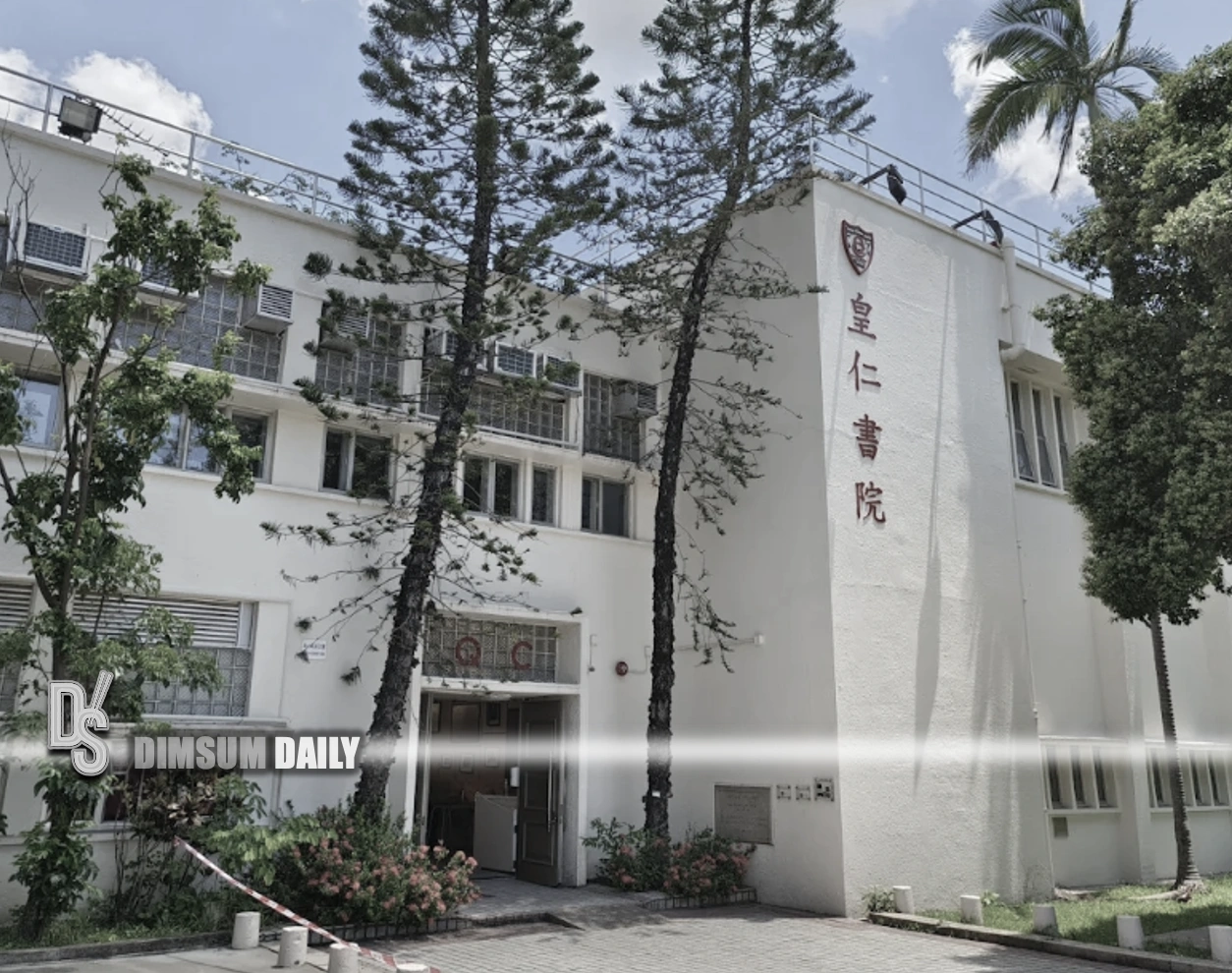
6th November 2025 – (Hong Kong) Five government-aided secondary schools have received approval to expand to five Form One classes for the 2026 central allocation, with four English-medium institutions among them: Queen’s College, Wah Yan College, Tung Wah Group of Hospitals Kap Yan Directors’ College and Tung Wah Group of Hospitals Li Ka Shing College. Christian Alliance S W Chan Memorial College is the only Chinese-medium school in the group.
In the Northern District, three schools had already been operating with five classes on a provisional basis in recent years, meaning only Queen’s College and Wah Yan College, Hong Kong, in Wan Chai will move up from four to five classes. Wah Yan principal Chan Wai-lun said demand at the school remains intense; last year it received more than 460 discretionary place applications, approaching ten times its quota.
The Education Bureau is piloting a scheme this academic year allowing selected aided schools to expand from four to five Form One classes for allocation. Principal Vincent Kwong Wing-sun of Christian Alliance S W Chan Memorial College said applications for discretionary places have exceeded available quotas for three consecutive years and continue to rise. With junior-form places fully utilised this year, the school sought expansion to address parental demand and in response to the bureau’s initiative, having also consulted neighbouring primary school heads who expressed support.
Tung Wah Group of Hospitals said both Kap Yan Directors’ College and Li Ka Shing College have long aligned with education development and parental expectations, and remain popular choices. The approval provides greater room and resources to strengthen whole-person education, broaden and balance curricula, and deliver more diverse, high-quality learning experiences tailored to students’ needs.
Wah Yan College, Hong Kong, expects to increase its Form One intake from 144 to around 180 students after expansion, adding roughly 36 places. Chan said facilities are being upgraded, including new student activity rooms and a research centre, and the campus size should comfortably accommodate the larger cohort. Of the additional places, about 20 will be allocated to the feeder Pui Ching Primary School in the Eastern District, while discretionary places will rise from 43 to 54. Intake from non-feeder primaries is projected to edge up from about 14 to 17, a small increase that Chan believes will have limited impact on other schools.
Despite the approvals, falling school-age demographics pose challenges. Government projections estimate around 58,800 twelve-year-olds citywide this year, dropping to 51,500 by 2030. By district, the Northern District counts about 2,700 twelve-year-olds in 2025, potentially rising to 3,000 by 2030; Wan Chai faces a steeper decline from roughly 1,100 this year to 700 by 2030.
Chu Kwok-keung, Legislative Council member for the education sector and vice-president of the Hong Kong Federation of Education Workers, warned that allowing individual schools to expand amid a shrinking cohort could intensify enrolment competition, particularly affecting mid- and lower-band schools in the same districts. He urged the Education Bureau to keep reviewing supply and demand for school places and to decide prudently on any future approvals. Chu also cautioned that, as most of the expanded schools are already popular, competition for discretionary places next year may become even fiercer, without necessarily increasing students’ chances of admission. He advised parents to prioritise schools that suit their children’s abilities, interests and needs rather than flocking solely to expanding flagship institutions.