






















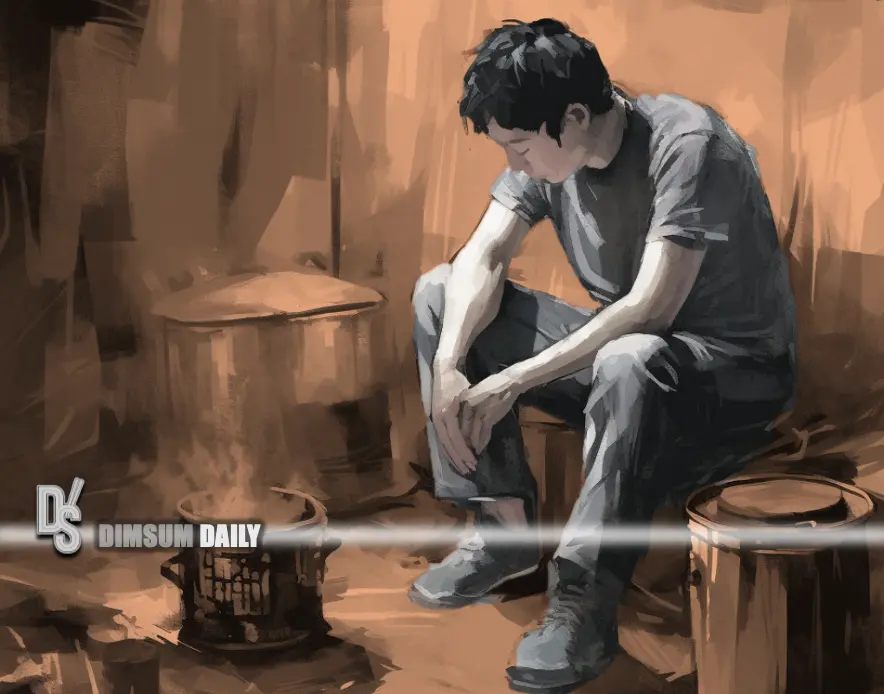
13th February 2024 – (Hong Kong) In the intricate urban tapestry of Hong Kong, there lurks a silent and pervasive predator – an alarming method of suicide that has stealthily woven itself into the fabric of the city’s public health concerns. The method? Charcoal burning – a grim and increasingly prevalent approach to self-harm that sees individuals, alarmingly often the young, taking their own lives in sealed rooms, succumbing to the toxic tendrils of carbon monoxide. This phenomenon presents a chilling tableau of despair, a crisis that demands an urgent and multifaceted response before the city counts more lost lives.
Hong Kong, a city teeming with life and energy, has long grappled with the spectre of high suicide rates. However, the emergence of charcoal burning as a means to a tragic end was virtually unknown until 1998. The method was catapulted into the public consciousness when a woman, versed in chemistry, chose to end her life in this manner, prompting extensive media coverage which, wittingly or unwittingly, painted charcoal burning as ‘effortless’ and ‘without pain’.
This coverage set off a macabre domino effect. The subsequent months witnessed a worrying replication of this method among the city’s residents, particularly the youth. By the turn of the millennium, what had been an unheard-of method had become the third most common means of suicide in Hong Kong. The figures were stark: from representing a mere 2% of all suicides in 1998, charcoal burning jumped to 10% in 1999, and by 2001, accounted for a staggering 25%, overtaking even hanging. This contagion of despair highlighted the profound impact that media representation of suicide can have on public behaviour.
The contagion did not stop at Hong Kong’s borders; the method spread to other Asian communities, with reports emerging from mainland China, Taiwan, and Japan. The demographic profile of the victims was telling – they were predominantly younger than those who died by more violent means. This demographic shift suggests that charcoal burning may be perceived as a method that preserves the physical form, hinting at deep cultural currents influencing the choice of suicide method.
While the method of suicide is a critical focus, it is imperative to peer beneath the surface and address the underlying mental health crisis that fuels such despair.
The data speaks unequivocally: charcoal burning has burgeoned into a public health emergency in Hong Kong. However, any intervention must be nuanced to ensure the response doesn’t inadvertently exacerbate the issue. This is a delicate balance, where the dissemination of information must be managed with the utmost care.
Efforts to stem the tide of charcoal-burning suicides must confront the foundational socioeconomic and mental health issues that drive the city’s overall suicide rates. Given the youth profile of many victims, there is an acute need for initiatives that provide accessible mental health support to the city’s younger population.
In tandem with this, there is a strong case for restricting access to means of suicide, including charcoal. However, the public discourse surrounding such restrictions must be handled sensitively to prevent the dissemination of knowledge that could lead to harm.
The role of the media in this crisis cannot be overstated. There is a dire need for responsible reporting guidelines that prevent the media from providing detailed descriptions of methods that could lead to imitative behaviour, particularly among the most vulnerable sections of society. The media must eschew reports that erroneously present charcoal burning as a simple or painless end and focus instead on the harrowing reality of the method and its irreversible impact on victims and their families.
Shifting societal attitudes towards suicide is a slow and challenging process, but it begins with acts of individual compassion. Those contemplating suicide need support and understanding, not stigmatisation or blame. Similarly, the families and loved ones left behind require compassion, not censure.
Through a culture of empathy and understanding, Hong Kong can nurture a community that cherishes each life. This reinforces the belief that no crisis is beyond overcoming, that help is always at hand, and that those in distress are deserving of help and understanding, not judgment.
Every preventable death is a tragedy that resonates through families, friends, and the broader community. Yet the combined forces of targeted policy, careful awareness-raising, and a culture of compassion offer a beacon of hope for reversing the grim tide of charcoal-burning suicides in Hong Kong. When a community stands in solidarity against the tide of preventable mortality, it affirms the resilience and indomitable spirit of a city that refuses to let its most vulnerable citizens slip silently away into the night.