

























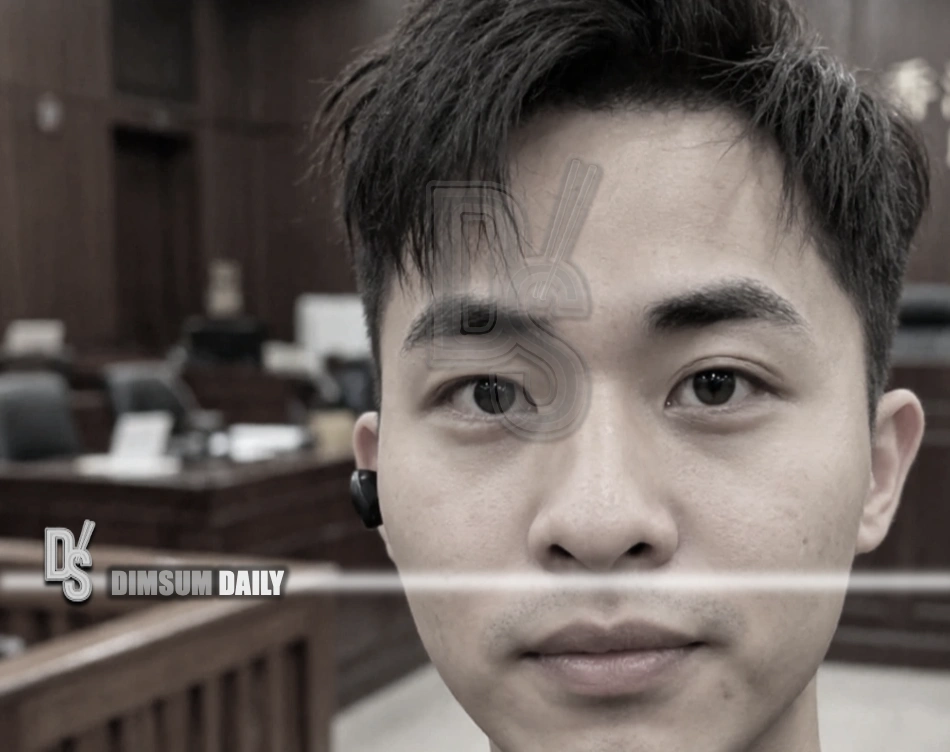
12th October 2026 – (Hong Kong) On the 14th day of the Abby Choi murder trial, her mother angrily rejected defence claims that she was drowning in gambling debts — branding former son-in-law Alex Kwong Kong-chi a “beast” for smearing her — while counsel for Kwong put that he had earned money as a Macau casino intermediary and in mainland restaurants and watches.
Cheung Yin-fa remained under cross-examination by Andrew Raffell in the High Court. Raffell suggested Kadoorie Hill was kept off Cheung’s name and a Manhattan Hill flat remortgaged because she needed her daughter to cash out for gambling debts, and that Kwong had paid about HK$370,000 to clear those debts for her. Cheung denied every debt allegation. “Impossible! He had money for me?” she shot back, telling counsel to examine his conscience: she had treated Kwong as a son since he was 15 — would he repay gambling debts for her? The HK$370,000, she insisted, came from selling a mainland car and a Hainan flat, not from Kwong’s charity, and she accused him of telling “such big lies.”
She did admit owing Kwong about HK$150,000 — but only for shopping he did for her — and sneered that he had “no conscience” for collecting even that sum. Shown photographs of her private car daubed with red paint, she said she had reported the incident and police found it was not about gambling debts. The main investigating officer, Ko Yan-kei, later told the court Cheung had linked the paint attack to an old money dispute with a woman, and that chat records never mentioned gambling liabilities. Cheung said she did play mahjong in parlours for entertainment, with swings of “eighty or a hundred thousand,” but never so badly that Choi or Kwong had to cover losses.
On mainland business, Cheung said Choi funded everything and that she knew of a profit-sharing pact: if the ventures paid, half would go to the eldest grandson and the rest to living costs. Raffell put that Choi, fearing creditors at Cheung’s door, had joined Kwong in hiding how well the businesses did — restaurants on the mainland, a Macau casino-introducing role, and luxury-watch dealing — and that Cheung simply did not know. She called that nonsense: his investments never made money, he spent what he got and “never brought back a dollar.” They almost video-called daily, she said; his “fresh radish skin” boasts should stop; every dollar came from her daughter.
Raffell also put sharper commercial claims. Besides watch trading, he said, Kwong had opened a Guangzhou restaurant with a partner known as “Ning Jie” or Lin Mei-ning, and had worked in Macau as a gambling intermediary introducing guests to casinos. Cheung said she had never heard of any Macau middleman role. As for the restaurant — named, on the defence case, something like “Teng” — she understood “Ning Jie” or “Ling Jie” had put up the capital alone; Kwong had “nothing,” had never even supported his own children, and should “stop boasting.” She had eaten around the mainland with him but was never told he was a co-owner; the defence suggested he could not register a mainland firm himself.
Asked about watches, she said she only knew he bought from a Hong Kong shop — Aristocrat Watch — and that “whatever they sold, there was no money coming back.” She denied that Choi stopped talking about profits because Cheung kept asking her to repay gambling debts, and said Kwong himself had admitted in quarrels that the mainland trade made nothing. She also denied that Kwong had funnelled HK$7.5 million to her in two transfers through a watch-company account: it was not him giving her money, she said — when had he ever given her a dollar?
On the day Choi went missing, Raffell said Kwong had scolded Cheung for calling the police because he was wanted. She replied she had not been told about a warrant — only that things had been “sorted” earlier — and when pressed that he remained wanted despite a lawyer’s work, she said: “Don’t force me — I really don’t know.” She rejected the claim that she did not know whether Kwong paid for the children’s upkeep, saying she had raised the grandchildren from ages one to eight, moved food into their home and bought appliances for Lee Sui-heung and the whole Kwong Kau household.
As for the Kadoorie Hill sale, Raffell again cast Kwong’s trip with his father to solicitors as proof of willingness. Cheung said he only moved after Choi spoke of legal action and she herself scolded him. The defence argued the real rupture came when Kwong Kau brought a girlfriend to see the grandchildren in early 2023, enraging Choi into blocking contact. Cheung denied that framing and repeated that the fight was about reclaiming property and assets.
Anthony Kwong Kong-kit, Kwong Kau and Alex Kwong Kong-chi deny murdering Choi on 21st February 2023; Anthony and Alex have admitted preventing lawful burial between the 21st and 23rd, while Kwong Kau denies that count.