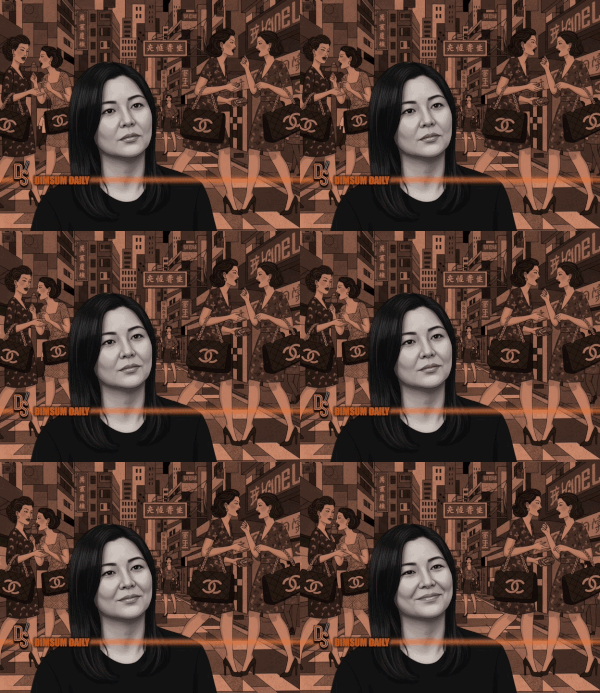







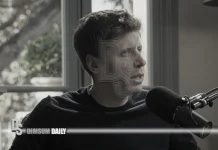










30th September 2026 – (Hong Kong) The comments tell you more than the video does. The clip is about a minute of quick-fire satire from Dorna K, who posts on Instagram as @yourtrustfunddaughter. Her bio reads “No PR team, just me and my audacity.” It has passed 7,000 likes, which is a lot for a local joke. The replies are more revealing. Nobody is arguing with her. People are confirming what she said and adding details.
Her portrait of the Hong Kong rich kid starts, tellingly, with a school. You went to St Paul’s Co-educational College, as your father did. Your cousins went to Diocesan Boys’ and Diocesan Girls’. If the family chose international schools, it was CIS or HKIS for the Southside, German Swiss for the Peak, and ESF if the family was “rich but not rich.” At 13, you were sent to Wellington, Sevenoaks or Wycombe Abbey, or to Le Rosey if the family was serious. Then came LSE, Imperial or Oxbridge, or HKU medicine if your grandmother insisted.
In this world, education is passed down rather than earned. A school is less a place to learn than proof of which family you belong to, and the next generation is placed in it the way property is left in a will. One commenter wrote that her siblings went to St Paul’s like their father, her cousins went to DGS and DBS, and they were all sent to England. “The Niseko is so true,” she added.
The corrections are the most telling part. An expatriate pointed out that the real meeting place was the Mandarin Oriental lobby, not the Peninsula. She remembered a daughter’s horse stabled at Beas River, birthday parties at the Yacht Club, and domestic helpers cutting spaghetti with scissors to feed seven-year-olds. Some locals would add that Fook Lam Moon is no longer the fixed point it once was.
People who belong to a world don’t deny a caricature of it. They fix the details. The venues change and the lobbies swap places, but the circle stays closed.
Inside that circle, life follows well-worn paths: the Jockey Club, the Hong Kong Club, the Royal Hong Kong Yacht Club. Homes on Barker Road, Pollock’s Path or Deep Water Bay. A black Alphard with a driver and curtains in the back. Chinese New Year in Niseko, where, as Dorna puts it, a whole year group pretends not to see each other in the gondola queue.
The rich in Hong Kong are rarely alone, but they are seldom among strangers. The curtained car is the right image for it. You can see out and nobody can see in, and after long enough you stop looking out at all.
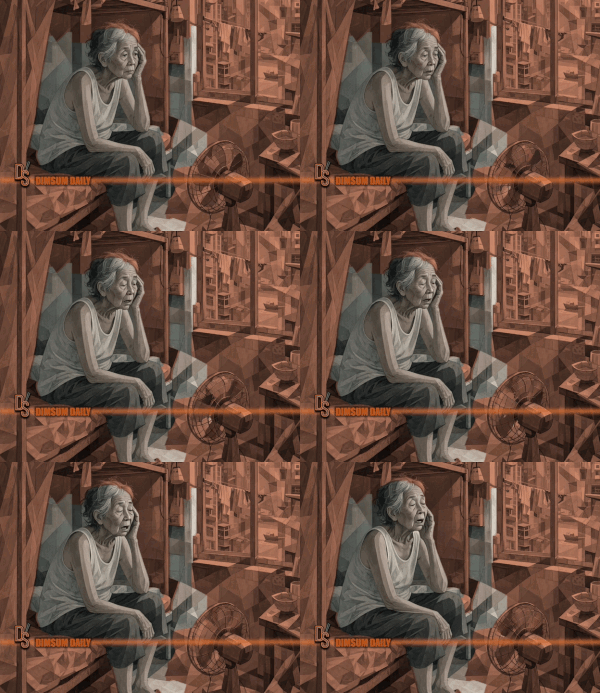
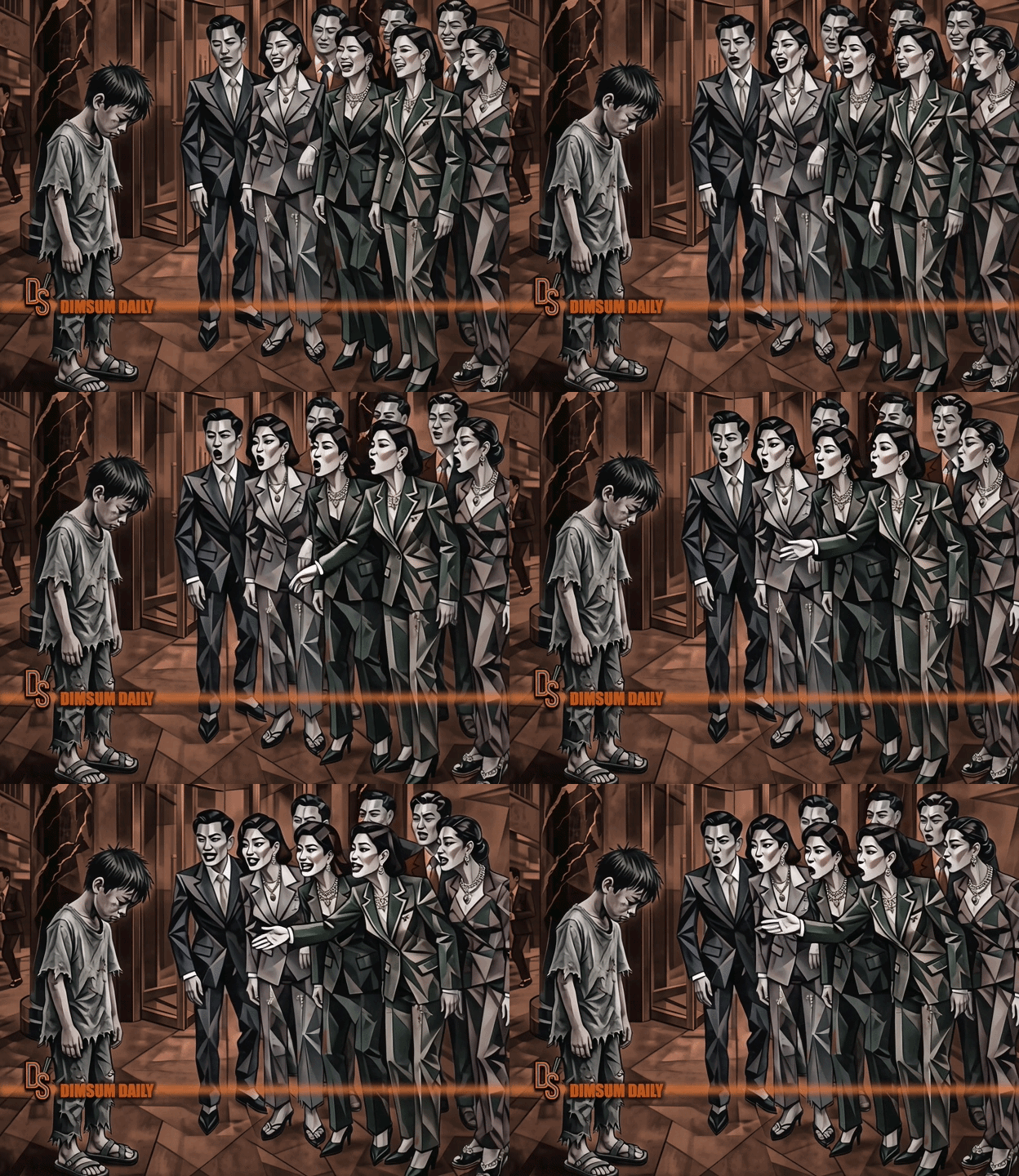
A short drive away, often less than an hour, childhood looks very different. The Society for Community Organisation has cited a child poverty rate of about 22.5 per cent, roughly one child in five. Many of these children live in subdivided flats, cubicle rooms or cage homes. Many have no proper desk and do their homework on a bed or a folding stool. Around three in ten disadvantaged households lack a reliable computer or stable broadband, which left these pupils behind whenever lessons moved online. Tutoring, piano lessons and summer camps are out of reach. Parents working shifts or several jobs have little time to help with homework and few contacts to offer.
These children mostly attend government and aided schools, which provide 12 years of free education. Direct Subsidy Scheme schools and international schools, with their fees, are largely beyond them. One commenter joked that he was “so poor” he lived in Yuen Long and went to school in Tin Shui Wai. It was meant to be funny, but it maps class onto geography quite accurately.
The gap between these two worlds is about more than money. It is about how many choices a person has. Researcher Yidan Yin has found that people with power tend to assume others have as many choices as they do. A rich child’s dilemma is Wycombe Abbey or Cheltenham. A poor child’s dilemma is whether to ask for field-trip money at all, knowing that asking will upset parents who cannot pay.
People who grew up poor describe money as something that takes up space in your head all the time. It is tiring, and it makes everything cost more. An untreated toothache turns into a bigger bill. A late fee turns into debt. A child in a 100-square-foot room learns early not to want things out loud.
This is not a moral failing of the rich. It is a lack of friction. A child who never had to tie his own shoelaces has never had to struggle with small things, and understanding others often comes from that kind of struggle.
One commenter noted proudly that he went to a subsidised school and still reached a top British university, collecting three degrees on the way. His achievement is real, but it doesn’t disprove the pattern. The effort his story required shows how steep the climb is for everyone else.
Dorna K is a satirist, not a sociologist. Her power lies in specific detail. Comedy lets a city talk about class without the defensiveness that policy debates provoke. The wealthy laugh because they recognise themselves. Everyone else laughs from a distance, somewhat ruefully.
There is a risk, though. Satire can turn privilege into an aesthetic, something to aspire to rather than question. Many viewers may be taking notes rather than taking stock. Her followers are already asking for São Paulo, Singapore and Jakarta next. That suggests something important: the codes of wealth she mocks are shared by elites everywhere. The joke works because the wall between the two Hong Kongs is real. What matters is whether anyone on either side is willing to look over it.